
Moscow ready to resume trilateral Ukraine talks in November as Putin-Zelensky-Trump summit is discussed
Russia says it could return to talks with Kyiv and Washington in November, likely in Abu Dhabi, after Steve Witkoff met Vladimir Putin. Volodymyr Zelensky has proposed freezing the front line as a first step.

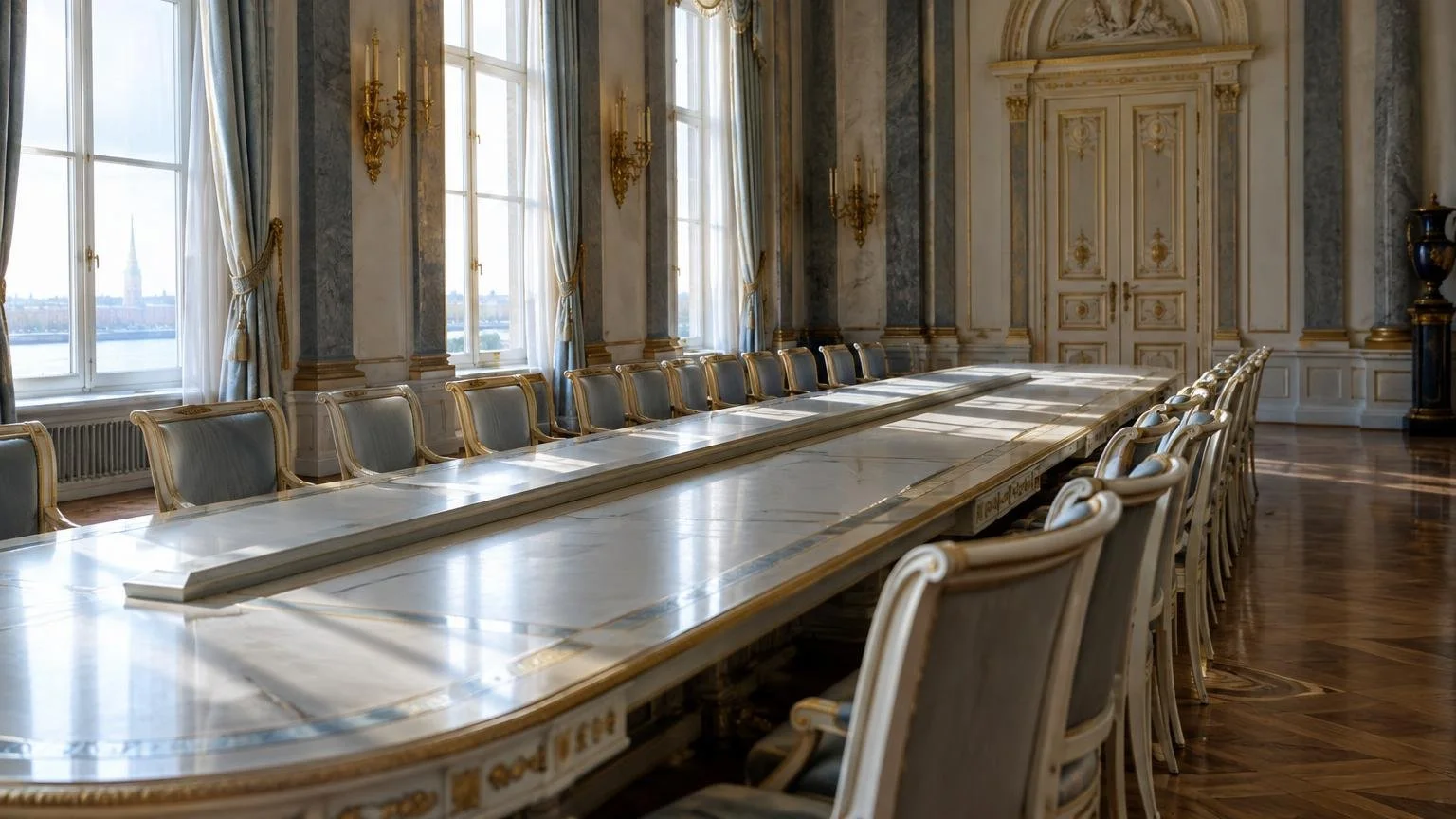
- 01Steve Witkoff met Vladimir Putin at the Constantine Palace in Saint Petersburg on Wednesday 21 October, with Jared Kushner attending virtually.
- 02Moscow says it is ready to resume trilateral talks with Kyiv and Washington in November, likely in Abu Dhabi.
- 03Volodymyr Zelensky has proposed freezing the current front line as an initial step toward peace talks.
- 04Brent crude topped $110 a barrel on 17 October, its first time since May, as supply concerns grew.
Russia says it is ready to resume trilateral negotiations with Ukraine and the United States in November, most likely in Abu Dhabi, following talks between President Vladimir Putin and US special envoy Steve Witkoff in Saint Petersburg on 21 October. Moscow is also discussing a possible summit involving Putin, Ukrainian President Volodymyr Zelensky and US President Donald Trump.
The signals matter for markets and investors because the war feeds directly into energy prices, defence supply chains and sanctions risk. Brent crude passed $110 a barrel on 17 October, and any real progress or breakdown in the Russia-Ukraine peace negotiations would shift the supply picture.
What happened
Witkoff met Putin at the Constantine Palace in Saint Petersburg on Wednesday 21 October, while Jared Kushner took part virtually. The envoy travelled to Russia to discuss an end to the conflict with Ukraine, just after Zelensky said late on Tuesday 20 October that discussions with US officials had been "constructive".
US-brokered talks on Russia's war are set to resume in Abu Dhabi, according to reports of the arrangement. The Emirati city has hosted earlier rounds: on 23 January 2026 Trump said both leaders wanted a deal, and the Kremlin said Putin had held talks it called "fruitful in all respects" with US envoys before security talks in Abu Dhabi among Russian, American and Ukrainian officials.
Zelensky has proposed freezing the current front line with Russia as an initial step toward peace talks. He also insists on the principle of "nothing about Ukraine without Ukraine", which he restated as Witkoff headed to Russia.
- 21 October: Witkoff meets Putin in Saint Petersburg, Kushner joins virtually.
- 20 October: Zelensky travels to Norway to meet US envoys and European leaders.
- 19 October: Trump says negotiations are making "great progress".
- Planned for November: trilateral talks, likely in Abu Dhabi.
What did Trump say about the talks?
Trump said on 18-19 October that talks to end the war were advancing, describing "great progress". He also accused Zelensky of missing a better deal two years ago and criticised Ukrainian strikes on Russian refineries.
On Monday 19 October Trump once again called for a new leader in Ukraine, according to reports, as tensions between Washington and Kyiv mounted. Washington has also been reported to be threatening to curb support.
What about a summit with Xi and without Zelensky?
A separate report said Putin proposed a three-way summit with Trump and Chinese President Xi Jinping on the war, without Zelensky. That summit is not confirmed. Ukrainian Foreign Minister Andrii Sybiha rejected the idea.
"By any pragmatic or moral measure, Putin has no place at the table with presidents Trump and Xi."
Andrii Sybiha, Ukraine's foreign minister, as reported in the coverage of the proposal. The brief's reference to a Putin-Zelensky-Trump format therefore sits alongside a rival Moscow idea that excludes Kyiv.
How has the diplomacy evolved?
The current push follows earlier attempts. After the Trump-Putin summit in Anchorage, Alaska, on 15 August 2025, which ended without a concrete deal, Trump said "No deal until there's a deal". At that time Putin was reported to demand that Ukraine give up the Donetsk and Luhansk regions as a condition for ending the war.
In November 2025 a US peace plan reportedly called on Ukraine to cede land and cap its military at roughly half its current size, drawing a negative reaction from Kyiv. Zelensky's freeze proposal is a different starting point, as it would stop the fighting where forces now stand.
How are battlefield and support pressures weighing on Kyiv?
Ukraine's air defences are under pressure. Starlink restrictions have hampered drone interceptions and Patriot missile stocks have reportedly run low, ahead of a tough winter.
Elon Musk ordered a Starlink slowdown that disrupted Ukrainian drones, according to a report, and accounts differ on whether Trump was involved. Zelensky said on 21 October that early-warning intelligence on Russian missile attacks had resumed after a call with US Secretary of State Marco Rubio. US officials deny any political directive to slow support, while European countries continue to allocate substantial funding.
Why it matters
Ukraine and Russia are negotiating under heavy outside pressure, and the format of any talks decides who sits at the table. Oil markets are already tense: Brent passed $110 a barrel on 17 October for the first time since May, as attacks around the Strait of Hormuz and renewed Russia-Ukraine hostilities heightened supply concerns. WTI recorded weekly gains above 10%.
Goldman Sachs warned that prices could reach $120 if shipping disruptions worsen, while easing tensions could bring crude toward $80. Ukrainian strikes on Russian energy infrastructure and Trump's criticism of them tie the war to energy costs.
What are the risks and counterpoints?
Nothing in the sources confirms a date or venue for the November round, and no meeting of Putin, Zelensky and Trump has been scheduled. Russia and Ukraine remain far apart on territory, and Kyiv rejects talks about its future without its participation.
Analysts quoted in earlier commentary, such as Rajan Menon after Anchorage, argued that Putin gained from diplomacy that left Kyiv and Europe more exposed. Zelensky also warned in August 2025 that Russia might step up attacks to create political circumstances for talks.
What to watch next
The next steps are the following, with dates only where the sources give them.
- November: the planned resumption of trilateral talks, likely in Abu Dhabi.
- Any official Kremlin or White House readout of the 21 October Witkoff meeting.
- Whether Washington confirms a Putin-Xi-Trump format or a summit including Zelensky.
- Ukraine's air-defence supplies, Starlink access and Patriot stocks through the winter.
- Brent crude, which was above $110 a barrel on 17 October.
Sources:business-standard.comcnbc.comapnews.comarabnews.comcnbc.comlivemint.comeconomictimes.indiatimes.comaljazeera.comeuronews.comeconomictimes.indiatimes.comlivemint.combbc.comtheglobeandmail.comindependent.co.ukcnn.comcnbc.comtheguardian.com
UCapital Asset Management LLP or group companies may have commercial relationships with the companies mentioned. This content is not financial advice.
Sign up for free to ask the AI about this article.
Elections, tariffs, sanctions and reforms: what changes for markets, countries and supply chains.