
Meloni's Ukraine speech draws unexpected applause from PD reformists and Calenda
Centre-left PD figures and Azione's Carlo Calenda broke ranks to applaud Prime Minister Giorgia Meloni's pro-Ukraine address ahead of the European Council, while M5S and AVS remained cold. Ukraine's President Zelensky thanked Italy.
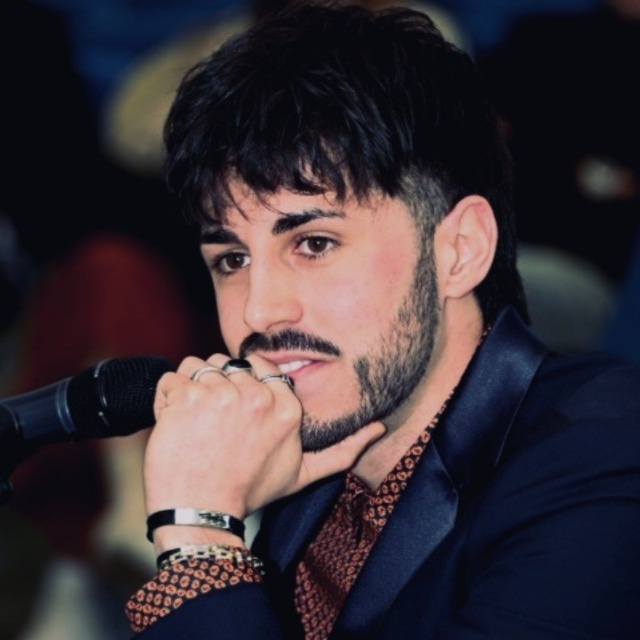
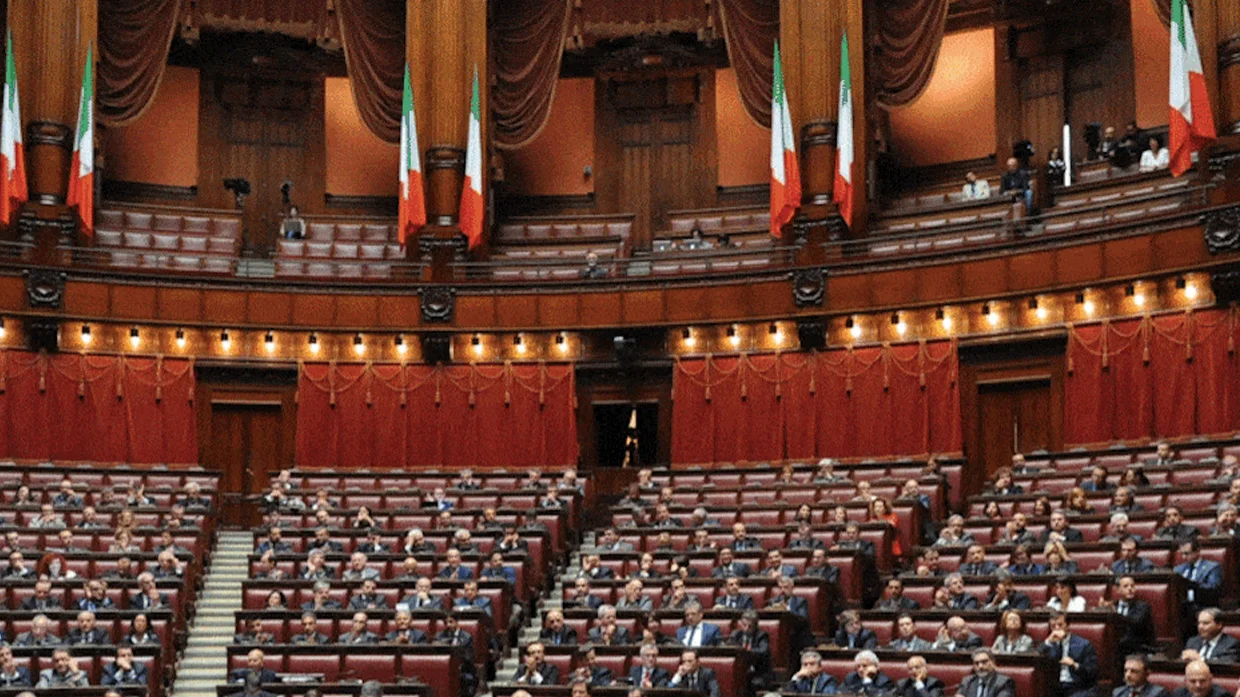
- 01PD reformists Delrio, Casini, Sensi, Verini and Zampa applauded PM Meloni during her pre-European Council address on 14 October 2026.
- 02Azione leader Carlo Calenda joined the unexpected show of cross-party support for Meloni's pro-Ukraine stance.
- 03Movimento 5 Stelle and AVS remained visibly cold during Meloni's remarks on Ukraine.
- 04Ukrainian President Volodymyr Zelensky thanked Italy following Meloni's address to parliament.
A rare moment of cross-party solidarity broke out in the Italian parliament on 14 October 2026, when a group of centre-left Partito Democratico reformists — Graziano Delrio, Pier Ferdinando Casini, Filippo Sensi, Walter Verini and Sandra Zampa — along with Azione leader Carlo Calenda, applauded Prime Minister Giorgia Meloni during her address to the chambers ahead of the European Council summit scheduled for 15–16 October.
The applause, directed at Meloni's firm pro-Ukraine stance, was as unexpected as it was politically significant: it exposed a fracture within the Italian centre-left, where the reformist wing of the PD and Calenda's Azione found themselves aligned with the government on one of the most divisive foreign-policy questions in Italian politics, while Movimento 5 Stelle and Alleanza Verdi e Sinistra (AVS) looked on in stony silence.
What happened
Prime Minister Meloni delivered her pre-European Council communications to both chambers of parliament on 14 October 2026, outlining Italy's positions on EU competitiveness, energy costs and the war in Ukraine ahead of the Brussels summit. The session produced a politically charged atmosphere, with the Ukraine question acting as the sharpest dividing line across the entire political spectrum.
The most striking moment came when PD reformists — Delrio, Casini, Sensi, Verini and Zampa — rose to applaud Meloni's words of support for Kyiv, joined by Calenda. The gesture was unscripted and immediately noted by observers in the chamber. It stood in sharp contrast to the reaction of M5S and AVS, whose benches remained cold and unmoved throughout the relevant passages of the premier's speech.
- PD reformists Delrio, Casini, Sensi, Verini and Zampa applauded Meloni's pro-Ukraine remarks on 14 October 2026.
- Azione leader Carlo Calenda joined the applause, signalling cross-party convergence on support for Kyiv.
- M5S and AVS maintained a visible freeze, reflecting their more cautious or critical positions on arms supplies to Ukraine.
- Ukrainian President Volodymyr Zelensky subsequently thanked Italy for its stated support.
What did Delrio say?
Graziano Delrio gave voice to the reformist PD position in terms that went beyond tactical politics. Speaking during the session, Delrio framed Italy's support for Ukraine as a matter of foundational European values rather than national interest.
«Stiamo con l'Ucraina non perché ci conviene. C'è un quadro di valori, di principi che sono fondanti di questa Ue e su cui abbiamo costruito un sogno di pace».
Graziano Delrio, speaking in parliament on 14 October 2026.
The statement drew a clear line between the reformist wing of the PD and the more ambivalent positions held by M5S and AVS, for whom the question of arms deliveries to Ukraine has remained a persistent sticking point. Delrio's framing — anchoring the pro-Ukraine stance in the founding principles of the European Union — also implicitly challenged those within the broader centre-left who have sought to condition or limit Italy's support for Kyiv.
How did the broader opposition react?
The session made plain that Italy's centre-left remains deeply divided on Ukraine. The PD, M5S and AVS adopted a formula of cross-abstentions on Ukraine-related resolutions: the PD abstained on the M5S and AVS Ukraine passages, while M5S and AVS abstained on the PD's equivalent text. PD secretary Elly Schlein described the outcome as progress, noting that in previous votes the parties had voted against each other's resolutions rather than abstaining.
The key sticking point across all three parties remained the question of arms supplies to Ukraine, with formulations in the resolutions having shifted compared to previous parliamentary rounds.
M5S president Giuseppe Conte used his floor time to attack Meloni on other grounds, accusing her of always being "in the rear carriage" on major European decisions and of having introduced an electoral law designed, in his words, to entrench her own position. AVS leaders Nicola Fratoianni and Riccardo Magi, meanwhile, responded to a pointed remark from Meloni — who had challenged the opposition to unite before trying to broker peace between Moscow and Washington — by posing for a photograph together in the Transatlantico, arms around each other.
Why it matters
The applause from PD reformists and Calenda for a centre-right prime minister on a core foreign-policy question is a rare event in Italian parliamentary life, and it carries implications that extend well beyond the session itself. It signals that a meaningful segment of the Italian centre-left is prepared to break with the logic of systematic opposition when it comes to Ukraine, prioritising continuity of support for Kyiv over party discipline.
For Meloni, the moment offered a degree of cross-party legitimacy on the European stage at a sensitive time: the European Council of 15–16 October was set to address EU competitiveness, energy costs and the ongoing war in Ukraine, and Italy's internal cohesion on the latter question carries weight in Brussels. The premier had also signalled a harder line on the EU budget, warning that Italy would not sign off on a framework that required it to contribute more while receiving less.
The freeze between M5S, AVS and the rest of the centre-left on Ukraine also matters for the medium-term architecture of Italian opposition politics. The cross-abstention formula adopted on 14 October represents a fragile compromise rather than a genuine convergence, and the arms-supply question remains unresolved as a fault line.
What to watch next
- European Council, 15–16 October 2026: Heads of government meet in Brussels to discuss EU competitiveness, energy policy and Ukraine; Italy's positions as outlined by Meloni will be tested in the room.
- EU budget negotiations: Meloni's threat not to sign a budget framework that increases Italy's net contribution without commensurate returns sets up a potential confrontation with EU partners in the weeks ahead.
- Centre-left unity process: Schlein's acknowledgement that the cross-abstention formula is a work in progress means further negotiations between PD, M5S and AVS on a common Ukraine position are expected; the arms-supply question remains the unresolved core.
- Italy–Ukraine relations: Zelensky's thanks to Italy following Meloni's address may open a further diplomatic channel; any follow-up contact between Rome and Kyiv will be watched closely by European partners.
Sources:repubblica.it
UCapital Asset Management LLP or group companies may have commercial relationships with the companies mentioned. This content is not financial advice.
Sign up for free to ask the AI about this article.
Elections, tariffs, sanctions and reforms: what changes for markets, countries and supply chains.