
Merz warns Europe is underestimating Russia as Zelensky meets Witkoff in Oslo
German Chancellor Friedrich Merz says Europe is underestimating the Russian threat and that Vladimir Putin wants more than Ukraine. Volodymyr Zelensky travels to Norway to meet US envoys.

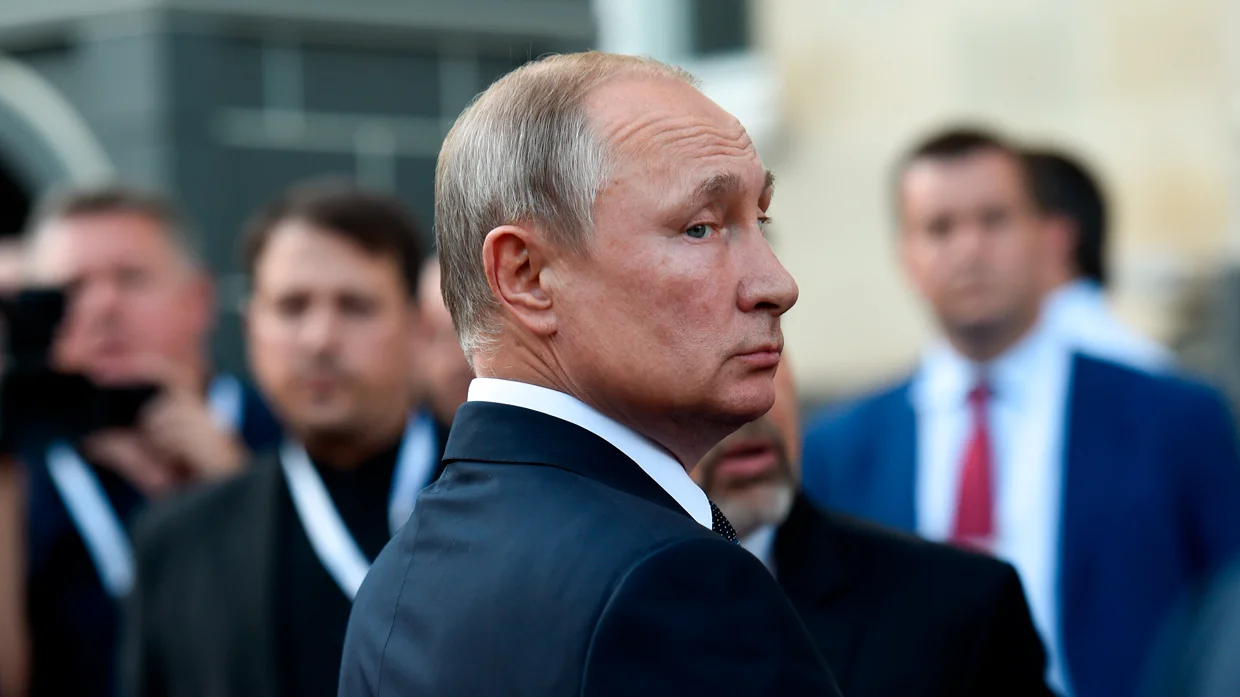
- 01Chancellor Friedrich Merz warned against complacency over Russia, saying Vladimir Putin is seeking more than Ukraine.
- 02Volodymyr Zelensky is travelling to Norway to meet US envoys, including Steve Witkoff, and European leaders.
- 03EU foreign policy chief Kaja Kallas said Russia is not winning on the battlefield and is targeting civilians and escalating hybrid attacks.
- 04Donald Trump again called for new leadership in Ukraine and said he is open to talks with Putin and Xi Jinping.
German Chancellor Friedrich Merz has warned Europe against complacency over Russia, saying President Vladimir Putin is seeking more than Ukraine. The warning came as Ukrainian President Volodymyr Zelensky travelled to Norway on 20 October to meet US envoys and European leaders.
The two developments show the Russia threat to Europe and the diplomatic track on Ukraine moving at the same time, with tension between Kyiv and Washington adding uncertainty. For governments and investors in European security, the question is how far Europe prepares for a confrontation that Merz says reaches beyond the Ukrainian front.
What happened
Merz said Europe is underestimating the danger posed by Russia. According to the reporting available, he argued that Putin is seeking to do more than take Ukraine, and that Moscow's push to destabilise Europe is not fully appreciated.
On the diplomatic front, Zelensky is travelling to Norway to meet US envoys, among them Steve Witkoff, and other European leaders. The meeting takes place as US President Donald Trump once again called on Monday, 19 October, for a new leader in Ukraine.
Trump has also indicated a readiness to meet Putin and Chinese leader Xi Jinping to discuss the war, and said negotiations can proceed even without Zelensky. He suggested the aim would be denuclearisation, and a meeting could be arranged during his visit to Asia.
- Merz: Europe is underestimating the Russian threat; Putin wants more than Ukraine.
- Zelensky: in Norway to meet Witkoff and European leaders, per the report of 20 October.
- Trump: renewed call on 19 October for new Ukrainian leadership.
- Trump: open to talks with Putin and Xi, with or without Zelensky.
What did Kaja Kallas say about the battlefield?
EU High Representative Kaja Kallas said Russia is not winning on the battlefield in Ukraine. In her words, Putin is openly targeting civilians and stepping up hybrid attacks across the rest of Europe.
She also singled out the Black Sea. According to Kallas, the escalation of attacks there deserves specific attention. Her statement frames the war as one in which Russian pressure is spreading beyond the front line.
Separately, the EU foreign policy chief has spoken of enlarging the sanctions list against Russia by a third, according to a report on her remarks, though the sources give no date or detail on the listings.
How serious are Russia's hybrid attacks in Europe?
Reports from earlier in 2026 describe a growing pattern of sabotage, cyberattacks and drone incidents in Europe. In an August report, Russia was described as expanding its hybrid campaign against countries that supply weapons and money to Kyiv, and as having caught Europe without a plan to respond.
That report pointed to mysterious damage at three European arms factories in a single month. A separate report of 27 August listed drones and explosives found in Germany linked to a suspected attack on Leipzig airport, a naval drone shot down near a gas platform in the Black Sea, and an assassination plot targeting a European figure. Some critics, it said, argue the conflict is no longer merely hybrid.
In February 2026 a US broadcaster reported that hybrid warfare against Europe had increased sharply since the full-scale invasion four years earlier, with military experts saying Russia operates in a gray zone to undermine support for Ukraine.
The Oslo trip itself was touched by that threat. A plane carrying Zelensky was delayed in Moldova when a Russian drone crossed the border, prompting an airspace shutdown, ahead of the funeral of Norway's King Harald V.
Why it matters
Merz's warning matters because Germany is Europe's largest economy and he has pressed for the continent to strengthen its own defences. In February 2025, as chancellor-in-waiting, he declared the US indifferent to Europe's fate and demanded that Europe boost its own defences quickly, according to a report of that time.
The Russia message also sits alongside a rift over peace diplomacy. In December 2025, Western leaders welcomed progress in talks after Witkoff and Jared Kushner proposed a NATO-style security pact, which Merz welcomed, though questions remained over contested territory and whether Russia would agree. In January 2026 both envoys were due to meet Putin in Moscow while Zelensky planned to meet Trump in Davos.
Now the US president is again criticising Zelensky and floating talks without him. That raises the prospect that decisions affecting Europe's security could be made without European or Ukrainian input, which is the scenario Merz's warnings about self-reliance anticipate.
What are the risks and counterpoints?
The picture is not one-sided. Kallas's assessment that Russia is not winning on the battlefield contrasts with Merz's concern that Europe is not alert enough. Both can hold: a stalled Russian advance may push Moscow towards pressure on civilians and on European infrastructure.
Reports also stress the risk of miscalculation and escalation as sabotage spreads, and the lack of an agreed European response. Meanwhile peace efforts depend on a US administration whose public stance toward Kyiv's leadership has hardened, and on whether Russia accepts any security guarantee.
Merz is also pushing a domestic agenda. On 19 October he urged German businesses, particularly small and medium-sized firms, to "open your doors for AI to make use of your data", as Nvidia announced investments in European start-ups as part of a commitment of nearly $10 billion to Europe's AI ecosystem. The event is separate from the security debate but shows the same emphasis on European capability.
What to watch next
The next steps are set by the Oslo talks and by Trump's travel plans. The sources do not give dates for further meetings, so the items below are the open questions.
- The outcome of Zelensky's meetings with Witkoff and European leaders in Norway.
- Whether Trump arranges a meeting with Putin and Xi during his Asia visit.
- Any EU decision to expand the Russia sanctions list, as Kallas has described.
- Further incidents in the Black Sea and hybrid attacks in Germany and elsewhere in Europe.
Investors will also watch European defence policy statements from Berlin, given Merz's call for Europe to take its own security more seriously.
Sources:bloomberg.comcnbc.comcnbc.comafr.comeconomictimes.indiatimes.combbc.comnpr.orgdw.combbc.compolitico.eupolitico.euaxios.com
UCapital Asset Management LLP or group companies may have commercial relationships with the companies mentioned. This content is not financial advice.
Sign up for free to ask the AI about this article.
Elections, tariffs, sanctions and reforms: what changes for markets, countries and supply chains.