
Meloni at European Council: Italy Pushes for Coordinated EU Energy Response
<p>The stakes are high for European industry and public finances alike. Energy prices continue to weigh on competitiveness, and Italian Prime Minister Giorgia Meloni is framing the issue not as a nati...

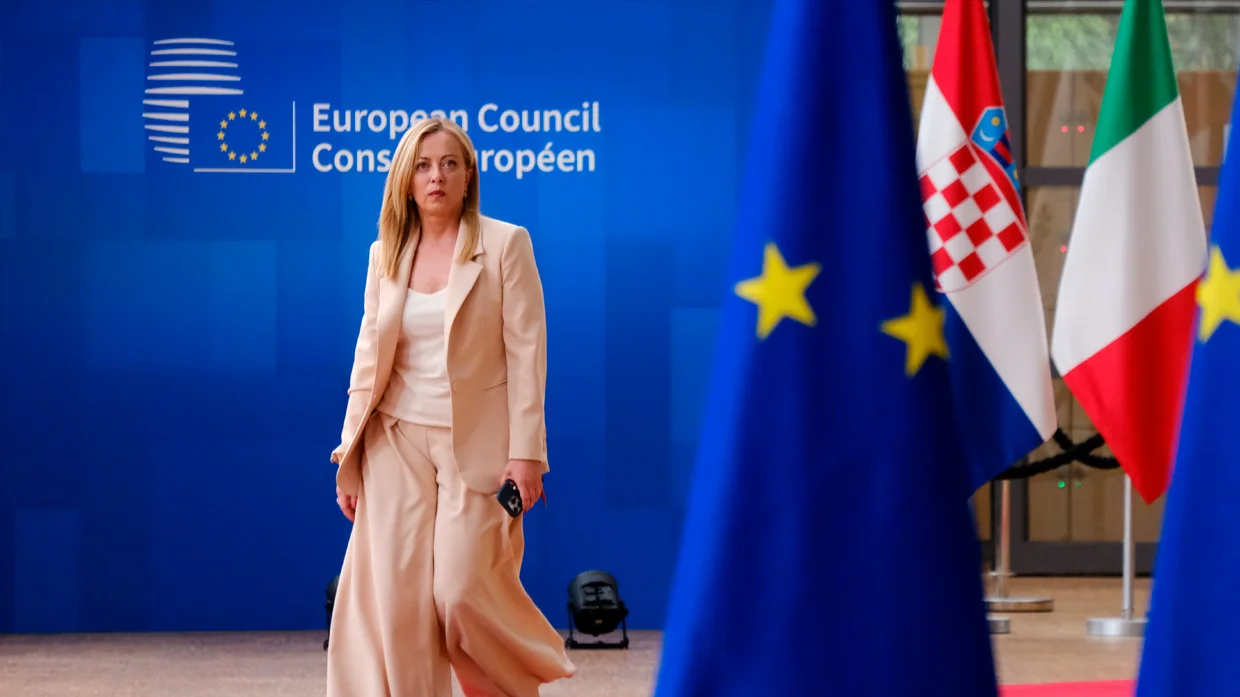
- 01Italian Prime Minister Giorgia Meloni called for 'structural and long-term' EU responses to high energy costs, speaking before Assolombarda entrepreneurs on 12 October 2026.
- 02Meloni announced she will personally raise the issue of fiscal flexibility at the European Council on 15–16 October.
- 03Italy, Germany and Belgium jointly wrote to European Council President Antonio Costa urging a fast track for investments in energy and digitalisation, and a reduction of EU sustainability reporting
- 04The Italian government is also pushing for a suspension of the ETS 2 system, which is set to apply to road transport and buildings from 2028.
The stakes are high for European industry and public finances alike. Energy prices continue to weigh on competitiveness, and Italian Prime Minister Giorgia Meloni is framing the issue not as a national problem but as one that demands a coordinated, swift and unambiguous EU-wide answer — a message she has been building toward in the days before the October 15–16 European Council summit.
What happened
Speaking before the entrepreneurs of Assolombarda on 12 October 2026, Meloni argued that Italy's economy had shown resilience — growing "weakly" but having "withstood the shock" — while pressing Brussels to do more on energy costs.
On the eve of the summit, Meloni, German Chancellor Friedrich Merz and Belgian Prime Minister Bart De Wever sent a joint letter to European Council President Antonio Costa. The letter, as described by Palazzo Chigi, called for three concrete measures:
- A fast track to accelerate investments in priority sectors, starting with energy and digitalisation
- A brake on new bureaucratic burdens at EU level
- A broad reduction in EU sustainability reporting obligations, particularly for small and medium-sized enterprises
Why it matters
The European Commission, however, signalled no intention to change course. EU Climate Commissioner Wopke Hoekstra made clear that the Commission does not foresee modifications to the plan — a response widely read as directed at both Rome and Berlin.
EU Justice Commissioner Michael McGrath, visiting Rome, noted that the Commission had already outlined the margins of flexibility available to member states to address high living costs and the energy crisis, stressing it was working "in close contact" with governments to ensure they had the necessary flexibility "while respecting fiscal sustainability requirements."
European Council President Ursula von der Leyen also sent a letter to all 27 member states proposing a pact against so-called gold-plating — the tendency of individual states to add regulatory layers on top of EU directives — a move that reads as a partial response to the pressure from Rome and Berlin against regulatory multiplication.
What is Meloni asking for on flexibility?
Meloni's flexibility request centres on allowing member states greater room to manage fiscal constraints while facing the energy crisis, a position she planned to restate formally at the European Council on 15 October following her parliamentary communications on the same day.
What to watch next
Several key moments will define whether Meloni's push gains traction at EU level:
- 15 October 2026: Meloni's communications to the Italian Parliament ahead of the summit, where she is expected to formally restate the flexibility request
- 15–16 October 2026: European Council summit in Brussels — energy costs, competitiveness and fiscal flexibility on the agenda
- 2028: Scheduled entry into force of ETS 2 for road transport and buildings — the Italian government is seeking a suspension review before that date
The outcome of the joint letter from Italy, Germany and Belgium to President Costa will also be closely watched as a signal of whether a broader coalition of member states can shift the Commission's position on energy costs and regulatory burdens.
Sources:ansa.it
UCapital Asset Management LLP or group companies may have commercial relationships with the companies mentioned. This content is not financial advice.
Sign up for free to ask the AI about this article.
Elections, tariffs, sanctions and reforms: what changes for markets, countries and supply chains.