
Israel election: Netanyahu's bloc leads with half the vote counted, Trump claims credit
With about half the ballots counted in Israel's 27 October election, Benjamin Netanyahu's bloc leads and he claims a majority. Exit polls had shown both blocs short of the 61 seats needed.

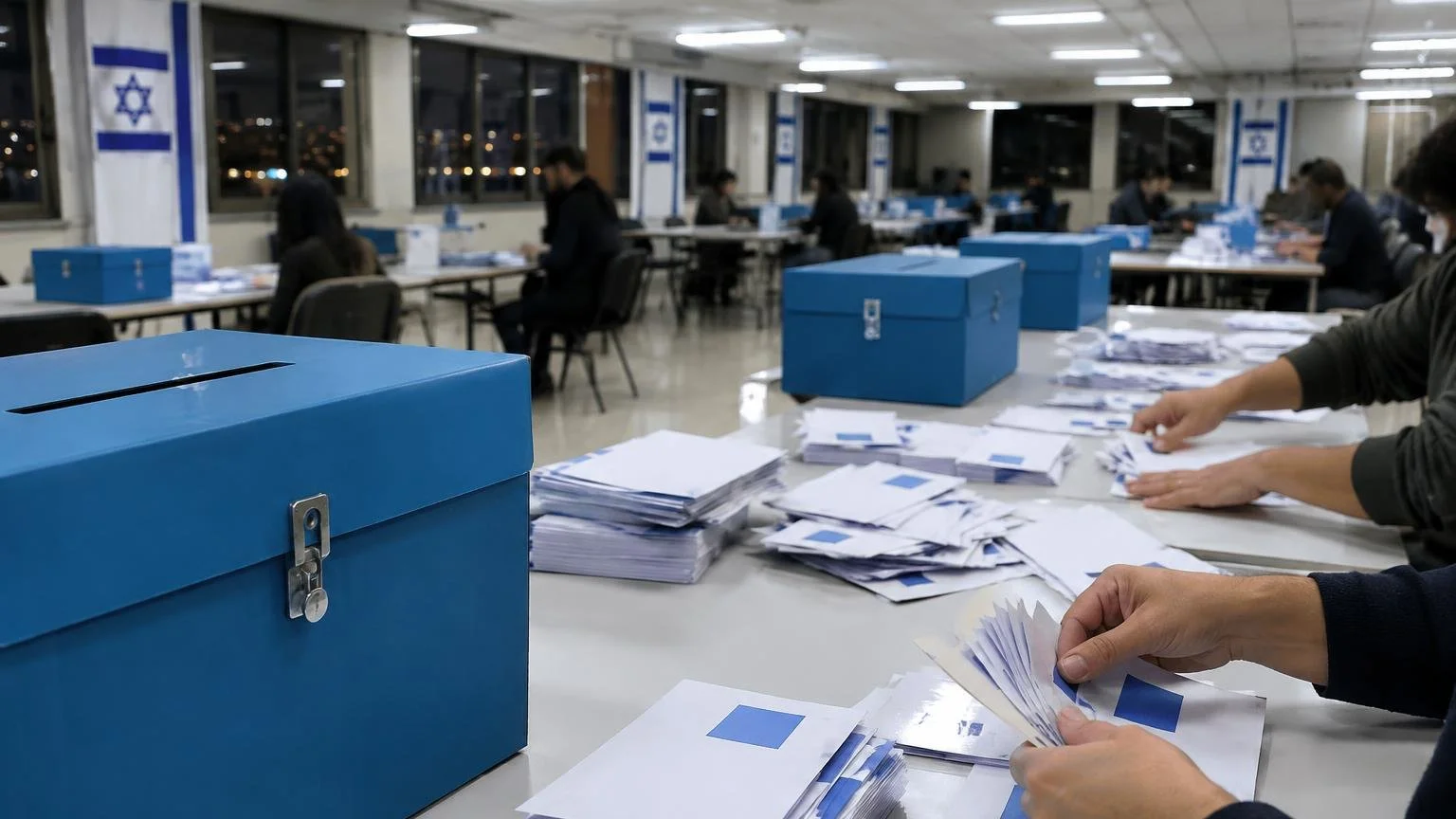
- 01Partial results from the Central Elections Committee showed 55 percent of votes counted by the morning of 28 October.
- 02Two exit polls after the 27 October vote put Netanyahu's bloc and Gadi Eisenkot's bloc level at 51 seats, short of the 61 needed.
- 03Turnout reached a record 66.7% at 18:00 on 27 October, against 44.9% at 14:00 versus 38.9% in 2022.
- 04Arab-led parties could be kingmakers, but Netanyahu and Eisenkot have both ruled out partnering with them.
Prime Minister Benjamin Netanyahu's bloc led the count in Israel's election of 27 October, with about half of the ballots tallied by the morning of 28 October. Netanyahu said his coalition has a majority and called for a broad national right-wing government.
The claim matters for investors and political observers because the exit polls had pointed to deadlock, and a failure to form a government could trigger another election. US President Donald Trump said that with his backing Netanyahu went from a likely defeat to victory.
What happened
Partial results from the Central Elections Committee showed 55 percent of votes counted by Wednesday morning, 28 October, with Netanyahu's bloc ahead. An earlier committee update put the count at 28 percent.
The picture differed from the exit polls published by Israeli media after the vote. Two of them showed the blocs deadlocked on 51 seats each, and another projection had Netanyahu's Likud as the largest party.
- Seats needed for a Knesset majority: 61.
- Exit polls, 27 October: 51 seats for each of the two main blocs.
- Votes counted by the morning of 28 October: 55 percent.
- Turnout at 18:00 on 27 October: 66.7%, a record, according to the committee.
How high was voter turnout?
Turnout at 14:00 on 27 October was 44.9%, against 38.9% in 2022. Likud asked for voting to be extended beyond 22:00 after the 66.7% reading at 18:00.
Why it matters
The result matters because it decides whether Israel gets a stable government while it is tied to the Iran conflict. Netanyahu was fighting for survival against former army chief Gadi Eisenkot, and a deadlock would have meant coalition talks or a new vote.
US stock futures were steady on 27 October, while oil prices rose with the election in focus. The sources give no TA-35 or USD/ILS moves after the count.
Trump's remark adds a US dimension. The war with Iran has cost the US more than $47 billion, about 25% above the Pentagon's July estimate, and has weighed on Trump's approval ratings.
What are the risks and counterpoints?
The partial count is not final, and it conflicts with the exit polls. Those had suggested Arab-led parties could hold the balance, although both Netanyahu and Eisenkot ruled out partnering with them.
If neither side can reach 61 seats, a new election is possible. Reports of tension between Netanyahu and the army chief, Eyal Zamir, over Iran attack plans before the vote added to the uncertainty.
What to watch next
The next step is the Central Elections Committee's remaining count, which will show whether Netanyahu's bloc actually reaches 61 seats. The sources set no dates for the final result or for coalition talks.
- Whether the final tally confirms the claimed majority.
- Coalition negotiations led by Likud.
- Any move by Arab-led parties.
- The reaction of the TA-35 index and the shekel when trading resumes.
Sources:livemint.comlivemint.comaljazeera.comaljazeera.comhaaretz.comwsj.comucapital.combusiness-standard.comeconomictimes.indiatimes.comucapital.com
UCapital Asset Management LLP or group companies may have commercial relationships with the companies mentioned. This content is not financial advice.
Sign up for free to ask the AI about this article.
Elections, tariffs, sanctions and reforms: what changes for markets, countries and supply chains.