
Israel votes on 27 October in a referendum on Netanyahu, the first election since 7 October 2023
Israelis choose a new Knesset on 27 October, the first national vote since Hamas's 2023 attack. Polls point to a close contest between Benjamin Netanyahu's bloc and a broad opposition, with deadlock a possible result.

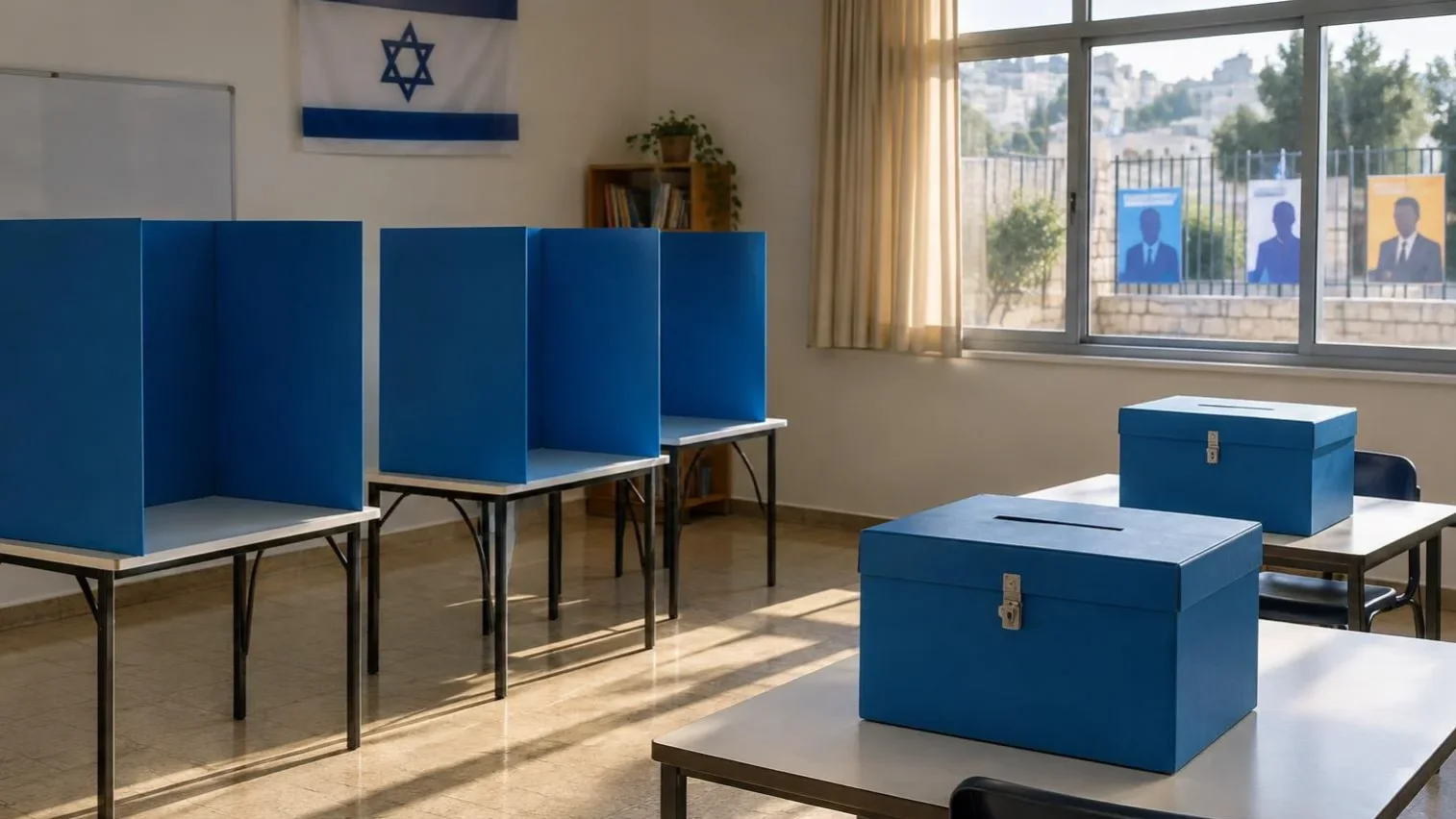
- 01Israel holds a general election on 27 October 2026, the latest date allowed by law, the first national vote since Hamas's attack of 7 October 2023.
- 02Whatever the result, Netanyahu stays on as caretaker prime minister until a new government is sworn in.
- 03JPMorgan estimated that the election result could swing the shekel by up to 3 percent.
Israel holds a general election on 27 October 2026, the first national vote since Hamas's attack from Gaza on 7 October 2023, with Prime Minister Benjamin Netanyahu, the country's longest-serving premier, facing a broad and heterogeneous opposition bloc. The contest is widely described as a referendum on his leadership.
The vote matters for markets and investors because it will shape Israel's security posture after the conflict with Iran, its relations with Western allies and the stability of its institutions. Polls suggest a possible gridlock in the Knesset, which could delay the formation of a government.
What happened
Israel's parliament set the election for 27 October, the latest date permitted by law, in a decision announced on 13 July 2026. The date lets the ruling coalition of right-wing and religious parties complete a full four-year term, and these are the first elections held on schedule in years, according to the reports of that decision.
Netanyahu said he "intends to win", even though polls showed that a majority of Israelis want him out of office. The reasons cited are his multiple corruption trials, controversial judicial reforms and concerns over the ongoing wars in Gaza and Iran.
Over 7 million Israelis are called to vote. The election comes about eight months after the start of the conflict with Iran, and the campaign has centred on several issues:
- failures in the state's security, tied to the 7 October 2023 attack;
- military conscription, a dispute over service obligations;
- judicial reform and the role of the courts;
- the future of the political parties and the coalitions they can form.
On 24-25 October, thousands of Israelis held a final rally against Netanyahu in the days before the vote, as tensions rose across West Asia.
Who are the main players and parties?
The main contest is between Netanyahu's Likud-led bloc and a larger group of opposition parties.
Facing that bloc is a mix of parties that do not share a single ideology but are united in their wish to remove the prime minister. Search coverage of the campaign points to former military chief Gadi Eisenkot as a leading opposition figure, with some outlooks describing his party as ahead of Likud while a Knesset deadlock looms.
The coalition arithmetic matters more than any single party's tally. Under Israel's system, a candidate needs a majority of 61 seats in the 120-seat Knesset, and previous rounds, such as the 2022 final polls, showed that neither side could be certain of reaching it.
How is the Iran war shaping the vote?
The conflict with Iran has become a central theme, because Netanyahu had promised "total victory" over Tehran. A report on a truce agreed by US President Donald Trump with Iran argued that the deal undermines that promise and could leave the prime minister facing electoral defeat.
Local media have also reported a clash between Netanyahu and the chief of the Israel Defense Forces, General Eyal Zamir, over plans for an attack on Iran. According to those reports, Netanyahu has sought political advantage from the situation, which has raised concern among military leaders.
Analysts quoted in the coverage note that the war is unlikely to change Israel's grand strategy or what it wants for the region, whoever wins. The regional stakes explain why neighbours and Western capitals are following the count closely.
How might markets react?
JPMorgan analysts estimated that the election outcome could move the shekel by up to 3 percent. The bank said the result was likely to affect Israel's relations with its Western allies and the perceptions of international investors.
Israeli assets have already shown sensitivity to institutional tensions. In March 2025, Tel Aviv shares and bonds fell as investors worried about a looming constitutional crisis, after attempts to oust the Shin Bet chief and the attorney general. A weaker shekel makes imported goods, including food, more expensive for households and keeps interest rates high.
Policy credibility is also in focus. On 24 October, the Bank of Israel criticised a crypto plan promoted by Netanyahu as a way of evading sanctions, saying it is the political leadership's responsibility to avert sanctions. Netanyahu answered that he does what he thinks is right.
Corporate deals continue regardless. On 26 October, US hardware startup Unconventional AI agreed to acquire Israeli chip company NeuReality, with its founder and 40 employees in Caesarea and Tel Aviv joining the buyer's team.
Why it matters
The election matters because it will decide whether Netanyahu's long period in power continues after the biggest security failure in Israel's recent history. It is also the first test of how voters judge the handling of Gaza and Iran, and of the judicial overhaul and conscription disputes that have divided the coalition and the public.
The result will affect Israel's standing with its Western allies, its approach to Iran and Hamas, and the independence of its courts. The outcome also determines the tone of the next Knesset on conscription, a topic that splits ultra-Orthodox parties from much of the electorate.
What are the risks and counterpoints?
The first risk is an inconclusive result. Polls cited in coverage show projections of possible gridlock, in which neither Netanyahu's bloc nor the opposition reaches a governing majority. That could lead to prolonged coalition talks or a further election.
The second is the opposition's diversity. A bloc that spans very different parties may find it hard to agree on a programme or a prime minister even if it wins enough seats. Netanyahu's camp, by contrast, is more cohesive but depends on far-right and religious partners whose demands have been controversial.
Finally, pre-election polls have been imperfect in earlier rounds, and security events in the region before or after voting could shift the outlook.
What to watch next
Whatever happens on 27 October, Netanyahu stays on as caretaker prime minister until a new government is sworn in. The sequence that follows is set by Israeli law and recent practice.
- 27 October: polls open and exit polls follow at the close of voting;
- in the following days: the final count, including soldiers' and absentee ballots, which took about 60 hours in April 2019;
- afterwards: consultations on who is asked to form a government and the coalition talks in the Knesset;
- market reaction: moves in the shekel, which JPMorgan said could reach up to 3 percent, and in Tel Aviv shares and bonds;
- Iran: any developments in the truce and in the dispute between Netanyahu and General Zamir.
The speed of coalition formation will show whether the result is decisive or whether Israel enters a long period of political deadlock.
Sources:aljazeera.comhaaretz.comcnn.comfrance24.comthetimes.combusiness-standard.comirishtimes.comeconomictimes.indiatimes.comen.globes.co.ilen.globes.co.ilnpr.orghaaretz.comtimesofisrael.com
UCapital Asset Management LLP or group companies may have commercial relationships with the companies mentioned. This content is not financial advice.
Sign up for free to ask the AI about this article.
Elections, tariffs, sanctions and reforms: what changes for markets, countries and supply chains.