
Poland warns NATO to brace for hybrid attacks as Bulgaria summons Russian ambassador over Black Sea strikes
Two more vessels were struck off Bulgaria's coast, with one ship sunk, as Warsaw calls on NATO allies to prepare a firm response to escalating Russian destabilisation operations.

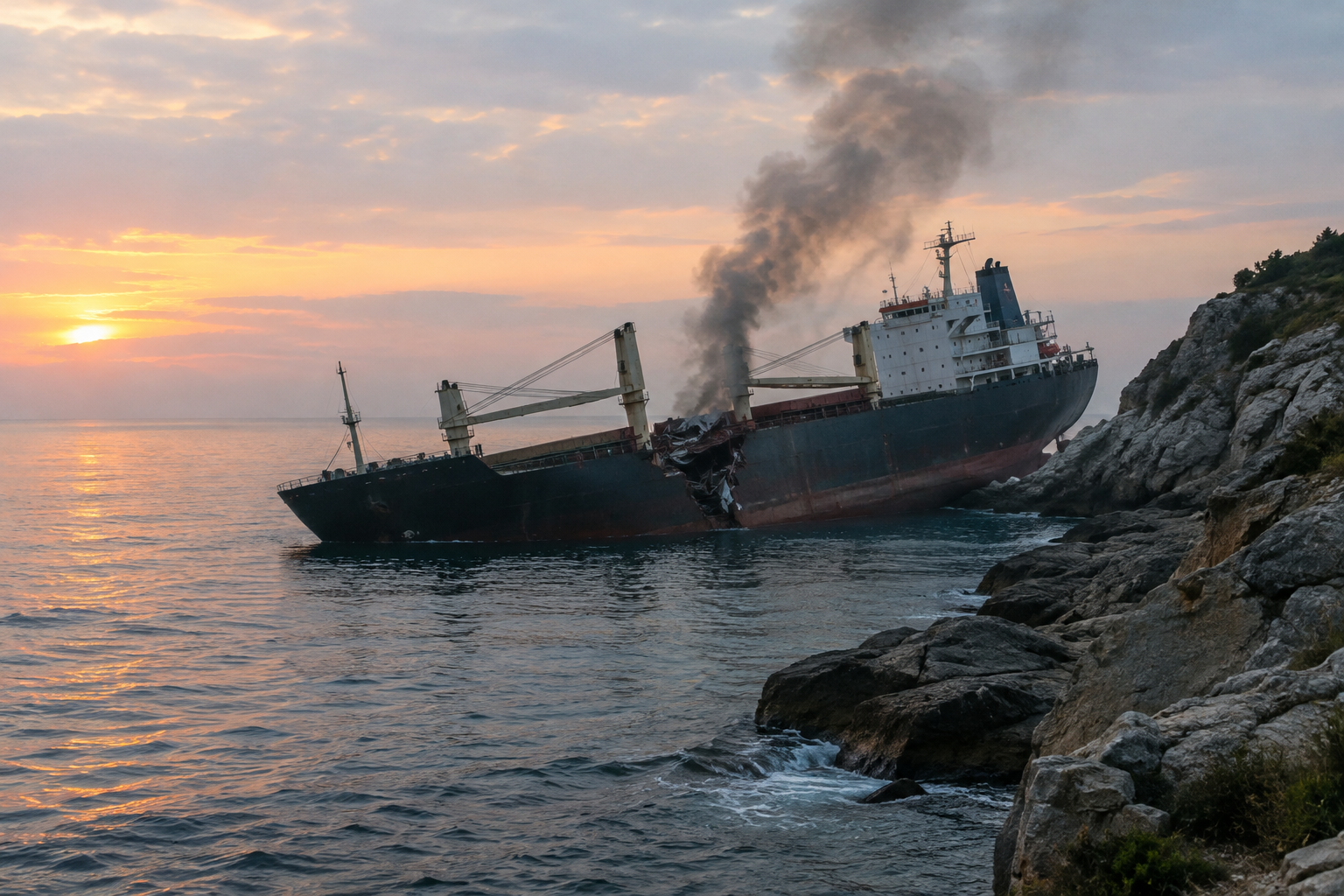
- 01Bulgarian Prime Minister Rumen Radev announced two more ships were struck in the Black Sea near Bulgaria's coast on 13 October 2026, with one vessel sunk.
- 02The first ship hit, the 'Chesea 3' registered in Odessa, was struck by three aerial drones at 01:30 local time; its crew of 15 was evacuated to the port of Varna.
- 03The previous week, two merchant vessels had already been struck by drones in Bulgaria's exclusive economic zone; one sank and its crew of ten remains missing.
- 04Polish Foreign Minister Radosław Sikorski stated that NATO members should prepare a decisive response to a potentially lethal Russian hybrid attack, warning that the probability of fatalities is
Two more commercial vessels were struck off Bulgaria's Black Sea coast in the early hours of 13 October 2026, with one ship sunk, prompting Bulgarian Prime Minister Rumen Radev to inform NATO and announce he would summon the Russian ambassador — as Poland's Foreign Minister Radosław Sikorski warned that NATO allies must prepare a firm response to an increasingly lethal Russian hybrid campaign.
The twin incidents mark a sharp escalation in attacks on civilian shipping in the western Black Sea, a stretch of water that has become a flashpoint in the broader Russia-Ukraine War. Bulgaria, a NATO and European Union member, is now at the centre of a crisis that Warsaw says could soon cross the threshold from property damage to loss of life — forcing the alliance into a far more serious conversation about collective defence.
What happened
The first distress signal was received at 01:30 local time on 13 October 2026, according to Prime Minister Radev, who described the sequence of events in a post on Facebook. The vessel in difficulty was the 'Chesea 3', a ship flying a Maltese flag and registered in the Ukrainian port of Odessa, carrying a crew of seven Ukrainian and eight Azerbaijani nationals.
According to Radev, the ship was struck by three aerial drones; its crew was rescued and transported to the Bulgarian port of Varna, where five members were receiving medical treatment for minor injuries as of the morning of 13 October.
Shortly afterwards, a second vessel was struck and sank. Radev confirmed that one crew member from the second ship was saved. The Bulgarian government placed the first attack at 18 nautical miles east of Byala and the second at 17 nautical miles east of Krapets, both locations on Bulgaria's Black Sea coastline.
A pattern of attacks in Bulgaria's exclusive economic zone
The 13 October incidents are not isolated. The previous week, two merchant vessels had already been struck by drones inside Bulgaria's exclusive economic zone in the Black Sea. One of those ships sank; its crew of nine Syrians and one Egyptian national remains missing. The 18 sailors aboard the second vessel were rescued. The repetition of attacks in the same zone within days has intensified pressure on Sofia to respond.
"Questo nuovo attacco contro navi commerciali nelle immediate vicinanze delle acque territoriali bulgare è assolutamente inaccettabile."
— Rumen Radev, Bulgarian Prime Minister, in a Facebook statement on 13 October 2026.
Poland's warning: hybrid war is turning lethal
Against this backdrop, Polish Foreign Minister Radosław Sikorski issued a stark warning to NATO allies, stating that member states should prepare a decisive response to a possible lethal hybrid attack by Russia. Sikorski said the probability of fatalities is rising as Russian destabilisation operations intensify.
Sikorski framed the challenge as a question of thresholds and definitions. NATO, he argued, will need to "evaluate" how to respond as the nature of hybrid operations evolves.
"La questione è cosa costituisca un attacco, un attacco transfrontaliero, e finché si tratta di proprietà... è un conto, ma se iniziano a morire delle persone, allora dovremo avere un'altra conversazione molto seria alla Nato."
— Radosław Sikorski, Polish Foreign Minister, in a statement on 13 October 2026.
Sikorski's remarks reflect a growing debate within the alliance about where hybrid warfare — sabotage, drone strikes on civilian infrastructure, and attacks on commercial shipping — crosses the line that would trigger a collective response under NATO's mutual defence commitments.
Why it matters
The Black Sea has been a contested theatre throughout the Russia-Ukraine War, but the targeting of vessels inside the exclusive economic zone of a NATO member state represents a qualitative shift. Previous drone and missile incidents in the Black Sea primarily affected Ukrainian or Russian-flagged shipping; attacks this close to Bulgarian territorial waters directly implicate alliance territory and raise questions about Article 5 applicability to hybrid and grey-zone operations.
Bulgaria's position is particularly sensitive. Sofia has historically maintained closer economic and energy ties with Moscow than many NATO partners, yet the government of Prime Minister Radev has now taken the step of notifying the alliance and preparing a diplomatic summons for the Russian ambassador — a significant signal from a country that has often sought to avoid direct confrontation with Russia.
The decision to summon the ambassador, combined with Bulgaria's explicit call for greater NATO support, suggests Sofia is moving toward a firmer alignment with the alliance's harder line on Russian aggression.
- Two vessels struck on 13 October 2026: the 'Chesea 3' (Maltese flag, Ukrainian registry) hit by three drones at 01:30 local time; a second ship struck and sunk shortly after.
- One crew member rescued from the sunken vessel; five crew members of the 'Chesea 3' treated for minor injuries at Varna.
- Previous week: two more merchant ships struck by drones in Bulgaria's exclusive economic zone; one sank, crew of ten still missing.
- Locations: 18 nautical miles east of Byala and 17 nautical miles east of Krapets.
- Poland's warning: Foreign Minister Sikorski says the likelihood of fatalities from Russian hybrid operations is increasing and NATO must prepare a firm collective response.
Diplomatic and alliance response
Prime Minister Radev confirmed on 13 October that he had informed NATO of the attacks and would convene the Russian ambassador to Bulgaria. The move is a formal diplomatic protest, though it falls short of the expulsion of a diplomat or a request for emergency NATO consultations under Article 4, which allows members to call for talks when their territorial integrity or security is threatened. It is not yet clear whether Sofia will escalate to that level.
Poland's call for a NATO-wide posture review on hybrid attacks adds political weight to Bulgaria's bilateral protest. Warsaw has been among the most vocal advocates within the alliance for a harder line on Russian grey-zone operations, and Sikorski's framing — that the alliance must define what constitutes a cross-border attack before people start dying — sets the terms for what could become a defining debate at the next NATO ministerial.
What to watch next
- Summoning of Russia's ambassador to Bulgaria: Prime Minister Radev announced the convocation; the timing and outcome of that meeting will signal how far Sofia is prepared to push the confrontation diplomatically.
- NATO consultations: Whether Bulgaria formally requests Article 4 talks, and how the alliance responds to Poland's call for a collective hybrid-attack doctrine, will be a key indicator of alliance cohesion.
- Search and rescue operations: The crew of ten — nine Syrians and one Egyptian — from the vessel sunk the previous week remains missing in Bulgaria's exclusive economic zone; any recovery or confirmation of casualties would intensify pressure on the alliance.
- Attribution: Bulgarian authorities have stated they lack conclusive evidence to formally attribute the attacks; any intelligence findings shared within NATO could change the diplomatic calculus significantly.
- Further shipping incidents: With four vessels struck in Bulgaria's exclusive economic zone within a single week, the pattern suggests the risk of additional attacks on commercial traffic in the western Black Sea remains elevated.
Sources:ansa.it
UCapital Asset Management LLP or group companies may have commercial relationships with the companies mentioned. This content is not financial advice.
Sign up for free to ask the AI about this article.
Elections, tariffs, sanctions and reforms: what changes for markets, countries and supply chains.