
Milan's Student Housing Boom: Why Purpose-Built Accommodation Is Italy's Hottest Real-Estate Bet
Surging enrolments, a chronic bed shortage and rising institutional appetite are turning Milan's student housing market into one of Italian real estate's fastest-growing asset classes.

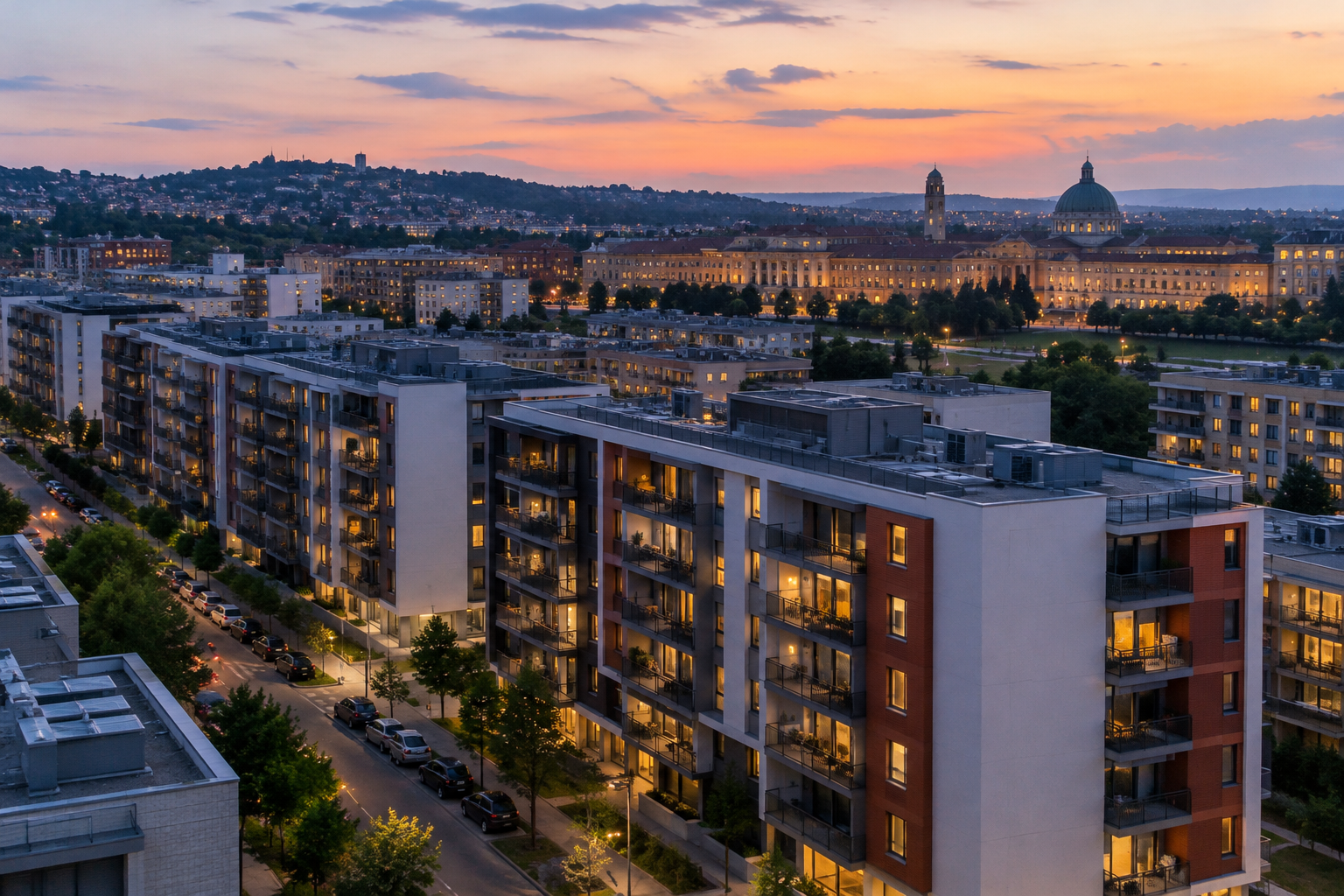
- 01Milan is Italy's most expensive city for student rooms, with an average monthly rent of €730 and prices near Università Bocconi exceeding €1,400.
- 02International student enrolments at Milan's eight universities rose 9.6% in the academic year 2022-23, reaching 17,166, while domestic enrolments fell 1.1%.
- 03Existing student residences cover only 10% of total housing demand across Italian university cities.
- 04The PNRR allocated €1.2 billion to create 60,000 new student beds by 2026, but delivery has been slowed by bureaucratic hurdles.
Milan's purpose-built student accommodation market is expanding at a pace that outstrips supply, with average monthly rents hitting €730 in the academic year just ended — the highest of any Italian university city — and rooms near Università Bocconi commanding more than €1,400 a month, as chronic undersupply collides with record international enrolments and growing institutional real-estate investment.
The structural gap between demand and available beds has made Milan a focal point for institutional capital targeting Italian real estate. With existing student residences covering only 10% of total housing demand across Italian university cities, the asset class offers a long runway of growth that few other property segments can match in the current cycle.
What happened
In the academic year 2022-23, the eight universities of the Milan metropolitan area enrolled 17,166 international students in undergraduate and postgraduate programmes — a 9.6% increase on the prior period, even as domestic enrolments slipped 1.1%, falling from 217,000 to 215,000. International students now account for 7.4% of Milan's total student population, a share that has grown steadily over seven consecutive years.
The largest groups by nationality are Chinese (14.9% of international students), Iranian (10.1%) and Indian (9.3%), with Turkey, Russia, France, the United States, Germany, Albania and Egypt rounding out the top ten — together representing nearly 60% of all international enrolments. STEM subjects attract 47.4% of international students, a markedly higher share than the roughly 30% recorded among Italian students, reflecting the global draw of institutions such as Politecnico di Milano.
On 4 September 2026, the former Olympic Village at Scalo Romana officially opened as Italy's largest purpose-built student accommodation facility. Despite its scale, the complex meets only 6% of Milan's student housing demand, with 80% of its beds already allocated through agreements with universities and businesses before opening day.
The supply-demand gap driving the market
Milan's student housing shortage is structural, not cyclical. Across Italian university cities, purpose-built residences cover just 10% of total demand — a ratio that compares poorly with northern European peers, where dedicated student accommodation is far more prevalent. In Milan, the gap is compounded by the city's position as Italy's premier academic hub, home to internationally ranked institutions that attract students from across Europe and beyond.
Rents reflect the imbalance acutely. At €730 a month for a single room, Milan sits well above Bologna (the second most expensive city, at roughly €100 less per month) and Firenze at €606. Only Amsterdam (€969), The Hague (€850), Rotterdam (€825) and Munich (€820) rank higher among European student cities tracked in recent market surveys. The proximity premium is stark: near Università Bocconi, listed rents for a room with kitchen exceed €1,400 a month.
High costs are beginning to reshape demand patterns. Data show that in Milan, demand for student rooms fell 13% in the most recent survey period even as supply rose 8%, as prospective students seek alternatives — flat-sharing, commuting from the hinterland, or enrolling at less expensive universities such as Pavia, whose room prices are less than half those of Milan. This demand elasticity underscores the risk that pricing itself becomes a ceiling on growth if new, more affordable supply does not materialise.
Why institutional investors are paying attention
Purpose-built student accommodation (PBSA) has emerged as a distinct institutional real-estate asset class across Europe over the past decade, and Milan is now firmly on that map. The combination of long-term demographic tailwinds — international student numbers growing at nearly 10% a year — predictable cash flows and a deep structural undersupply makes the sector attractive to funds seeking alternatives to traditional office and retail assets.
Milan's share of international students, at 7.4%, already exceeds Barcelona's 6.9%, though it remains far below Munich and Berlin (above 20%) and London (close to 40%), suggesting significant headroom for further internationalisation of the student body and, with it, sustained demand for quality accommodation. The city's academic ecosystem — anchored by Politecnico di Milano and Università Bocconi, with strong specialisations in STEM, design and health — gives it a competitive moat that smaller Italian university cities cannot replicate.
- International enrolments at Milan's eight universities: 17,166 in 2022-23, up 9.6% year-on-year
- International students as share of total: 7.4%, versus Barcelona's 6.9% and London's ~40%
- Average monthly rent for a single student room in Milan: €730 (Italy's highest)
- Near Università Bocconi: listed rents above €1,400/month
- Existing residences cover only 10% of Italian student housing demand
- Former Olympic Village (opened 4 September 2026): meets just 6% of Milan's demand
Policy tailwinds and execution risks
Italy's National Recovery and Resilience Plan (PNRR) allocated €1.2 billion to the construction of 60,000 new student beds by 2026, a programme that was designed to catalyse both public and private investment in the sector. The scale of the commitment signals official recognition that the shortage is a structural economic problem, not merely a housing inconvenience.
Execution, however, has lagged ambition. Bureaucratic complexity has slowed project delivery across the country. In Milan, real-estate fund manager Redo withdrew from the development of 1,530 already-approved beds across three facilities, citing procedural obstacles. The former Olympic Village project at Scalo Romana also attracted scrutiny from Milan's public prosecutor's office during its development phase. These episodes illustrate the gap between policy intent and on-the-ground delivery that remains the sector's principal near-term risk.
The return of short-term rental properties to the long-term market has provided some relief on the supply side in Milan — a factor that partly explains the 8% rise in available rooms — but analysts and market participants regard this as a temporary and partial offset rather than a structural solution to a shortage measured in tens of thousands of beds.
Why it matters
For Italian real estate, the student housing sector represents one of the few asset classes with a clearly positive structural demand trajectory at a time when demographic decline is weighing on residential markets more broadly. Italy's falling birth rate has already pushed domestic university enrolments lower, making the continued growth of international student numbers — and the accommodation infrastructure to support them — a strategic priority for both universities and the cities that host them.
Milan's position as Italy's most internationalised academic market, combined with its chronic undersupply of purpose-built beds, means that even a partial closure of the gap between the current 10% coverage ratio and European norms would require the delivery of thousands of new units. That pipeline represents a significant volume of institutional real-estate investment over the coming years, with Politecnico di Milano and Università Bocconi acting as anchor demand generators for any new development in their catchment areas.
What to watch next
- PNRR 60,000-bed deadline (2026): Whether Italy meets its target for new student beds under the National Recovery Plan, and how many of those units are delivered in Milan specifically.
- Redo and stalled Milan projects: Whether the 1,530 beds withdrawn by fund manager Redo are revived by another developer, and the outcome of the public prosecutor's review of the Olympic Village project.
- International enrolment data for 2023-24 and beyond: The Ministry of University and Research's national student registry (ANS) will publish updated figures that will show whether the 9.6% growth rate in international enrolments has been sustained.
- Rent trajectory: Whether Milan's average student room rent holds above €730 or moderates further as supply rises, with the Bocconi corridor remaining the key price-discovery zone.
- Regulatory environment: Any changes to short-term rental regulation in Milan that could redirect more housing stock toward the student market, or further PNRR procedural reforms aimed at accelerating delivery.
Sources:en.ilsole24ore.comcorriere.itilsole24ore.comen.ilsole24ore.com
UCapital Asset Management LLP or group companies may have commercial relationships with the companies mentioned. This content is not financial advice.
Sign up for free to ask the AI about this article.
Multiples, financials, sentiment and risks in 60 seconds, with live data.