
Trump Opens Tax-Free Agricultural Diesel to All U.S. Drivers, Saving Up to $100 per Fill
President Donald Trump signed an executive order on 6 October 2026 allowing tax-free dyed diesel — previously reserved for farms and off-road use — on public roads, reigniting debate in Europe and Italy over fuel-tax reform.

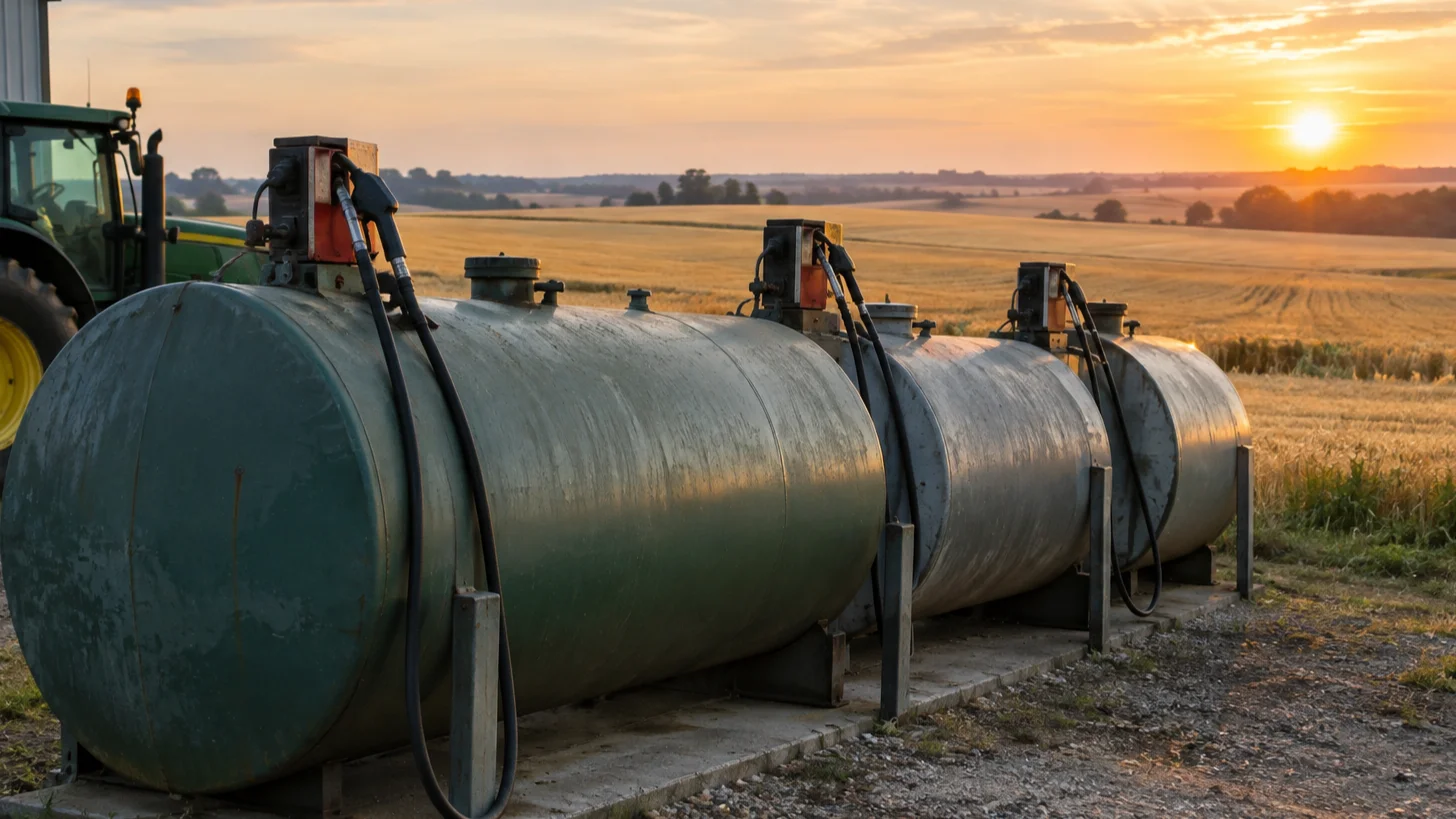
- 01Trump signed an executive order on 6 October 2026 authorising highway use of tax-free dyed diesel and deferring the federal diesel excise tax through year-end.
- 02The White House says the measure could save drivers as much as $100 per fill, with farmers, truckers and working families as the primary beneficiaries.
- 03Red-dyed diesel is chemically near-identical to standard road diesel but carries a dye as a tax-enforcement marker; highway use had previously been illegal.
- 04The European Union's 2035 zero-emission car mandate and existing fuel-tax frameworks make a comparable liberalisation politically and legally complex for EU member states, including Italy.
President Donald Trump signed an executive order on 6 October 2026 in Grand Island, Nebraska, authorising the highway use of tax-free dyed diesel — a fuel previously restricted to agriculture, construction and other off-road purposes — and directing cabinet agencies to defer payment of the federal road diesel excise tax through the end of the year.
The move is the most sweeping change to United States diesel-tax enforcement in decades and has immediately raised questions about whether the European Union and Italy, where agricultural diesel already carries preferential tax treatment, could pursue a similar liberalisation of their own fuel frameworks.
What happened
The executive order signed by President Trump on 6 October 2026 contains two core elements: it waives the off-road restriction on so-called red-dyed diesel, allowing it to be used in vehicles operated on public highways, and it directs the Secretary of Agriculture to ensure farmers' access to dyed diesel in high-demand areas during the harvest season. The order also directs the Director of the White House Office of Intergovernmental Affairs to encourage corresponding action by individual states.
What is red-dyed diesel?
Red-dyed diesel is chemically near-identical to standard on-road diesel fuel. The red dye functions solely as a tax-enforcement marker, indicating that federal highway taxes have not been paid; using it in road vehicles had previously been illegal under United States law. The fuel is widely used in agriculture and construction, where vehicles do not operate on public roads and are therefore not subject to highway fuel taxes.
The Trump administration had previously weighed expanding access to dyed diesel during earlier periods of fuel-price pressure, and the White House had at one point urged the European Union to release emergency diesel stocks to help ease costs — a sign of how tightly the two markets are linked. The current order goes further than any prior proposal by directly authorising highway use rather than merely studying the option.
How did markets react?
WTI Crude Oil markets were already under pressure from separate geopolitical developments in the Middle East on 8 October 2026, with prices rising on supply-disruption concerns. The diesel-liberalisation order adds a demand-side variable: broader access to cheaper dyed diesel could dampen retail diesel prices in the United States, potentially weighing on refining margins for road-grade fuel even as crude benchmarks firm.
The Trump administration separately noted that since the president returned to office, the Department of Transportation had waived hours-of-service rules for truck drivers handling gasoline and diesel shipments, allowing them to drive additional hours and lowering fuel costs. The White House also stated that American truckers' earnings had increased by over 7% in that period, attributing the gain in part to a policy of replacing undocumented truck drivers with American veterans.
Could Europe and Italy follow suit?
The European Union already operates a tiered diesel-tax system in which agricultural diesel — known in Italy as gasolio agricolo agevolato — is taxed at a significantly reduced rate compared with road fuel, a framework that has existed for decades across most member states. However, extending that preferential rate to all road users would require changes to the EU Energy Taxation Directive, which sets minimum excise-duty floors for motor fuels and leaves limited room for member states to act unilaterally.
Italy's position is further complicated by the European Parliament's confirmed target of zero CO₂ emissions from all new cars and vans by 2035, a binding regulation that frames any expansion of fossil-fuel access as moving against the bloc's climate-neutrality goal for 2050. The EU aims to cut emissions from cars by 55% and from vans by 50% by 2030 compared with 2021 levels, making a broad diesel-liberalisation measure politically difficult to advance in Brussels.
- EU Energy Taxation Directive sets minimum excise floors that constrain unilateral member-state action on road-diesel taxes.
- Italy already grants reduced-rate agricultural diesel to qualifying farm operators, but extension to all drivers would require EU-level authorisation.
- The European Parliament's 2035 zero-emission mandate for new cars frames any fossil-fuel expansion as contrary to bloc-wide climate policy.
- The United Kingdom, post-Brexit, moved in the opposite direction from April 2022, restricting rather than expanding entitlement to rebated red diesel for most non-agricultural users.
The United Kingdom's experience is instructive: from 1 April 2022, London narrowed the categories of users entitled to rebated diesel, removing the entitlement from most construction and industrial users while retaining it for agriculture, horticulture and forestry. That trajectory runs directly counter to the Trump model of broadening access.
Why it matters
The United States executive order represents a significant test of whether fuel-tax architecture built around off-road versus on-road distinctions can be dismantled by executive action alone, bypassing the legislative process. If the deferral of federal excise taxes is ultimately forgiven — as the order instructs agencies to explore — the fiscal cost to the federal government could be substantial, since the highway diesel excise tax funds road infrastructure.
For European policymakers and Italian farmers' associations, which have repeatedly protested the cost of agricultural inputs including fuel, the Trump order provides a political reference point. Any serious proposal in Italy or the EU would, however, need to navigate state-aid rules, the Energy Taxation Directive and the bloc's climate commitments — a far more complex legislative path than a presidential executive order.
What to watch next
- End of 2026: The federal diesel excise tax deferral expires; agencies must report on whether deferred taxes will be forgiven or collected, determining the measure's permanent fiscal impact.
- State-level responses: The order directs the White House Office of Intergovernmental Affairs to encourage states to adopt corresponding tax waivers; the pace and breadth of state uptake will determine how widely the relief spreads.
- EU Energy Taxation Directive review: Any European debate on agricultural-diesel liberalisation will hinge on the ongoing revision of the directive, which sets the legal framework for fuel taxation across all 27 member states.
- 2030 EU emissions milestone: Progress toward the 55% car-emissions reduction target by 2030 will shape how much political space exists for fuel-cost measures that increase diesel consumption.
Sources:whitehouse.govnytimes.comwhitehouse.govreuters.comeuroparl.europa.eugov.ukgov.ukreuters.com
UCapital Asset Management LLP or group companies may have commercial relationships with the companies mentioned. This content is not financial advice.
Sign up for free to ask the AI about this article.
Growth, inflation and rates across the major economies, with the impact on your business.