
Italy's Inflation Surges to 4.2% in September, a Three-Year High Driven by Energy Prices
Istat's preliminary data show Italian consumer prices accelerating sharply from 3.3% to 4.2% year-on-year in September 2026, as energy costs soar and the tax burden hits 42.9% of GDP, squeezing households and narrowing the government's fiscal room.

- 01Italian CPI rose to 4.2% year-on-year in September 2026, up from 3.3% in August, the highest reading since September 2023, according to Istat's preliminary estimates published on 30 September 2026.
- 02Energy prices were the primary driver: regulated energy products surged from +18.6% to +25.9% year-on-year, while non-regulated energy products rose from +17.0% to +22.2%.
- 03The September reading beat analyst estimates of around 3.7%, according to market expectations cited ahead of the release.
- 04Italy's acquired average inflation for 2026 reached 3.1% as of September, while core inflation (excluding energy and fresh food) rose more modestly from 1.5% to 1.7%.
Italy's consumer price index jumped to +4.2% year-on-year in September 2026, up sharply from +3.3% in August, according to preliminary estimates published by Istat on 30 September 2026 — the highest annual reading in three years and a figure that exceeded analyst expectations of around 3.7%. On a monthly basis, the national index rose 0.7%.
The acceleration underscores a deepening cost-of-living squeeze for Italian households and businesses, arriving at a moment when the government is already navigating a tax burden at an eleven-year high and a widening budget deviation. The combination of surging energy bills, rising food prices and constrained fiscal space sets up a difficult autumn for economic policy in Rome.
What happened
Istat's provisional data for September 2026 show that Italian inflation reached its highest level since September 2023, when the annual rate stood at 5.3%. The institute noted that the acceleration was driven overwhelmingly by energy costs: the overall energy goods component rose from +17.1% to +22.3% year-on-year, with regulated energy products — which include electricity and gas tariffs on the protected market — jumping from +18.6% to +25.9%, and non-regulated energy products climbing from +17.0% to +22.2%.
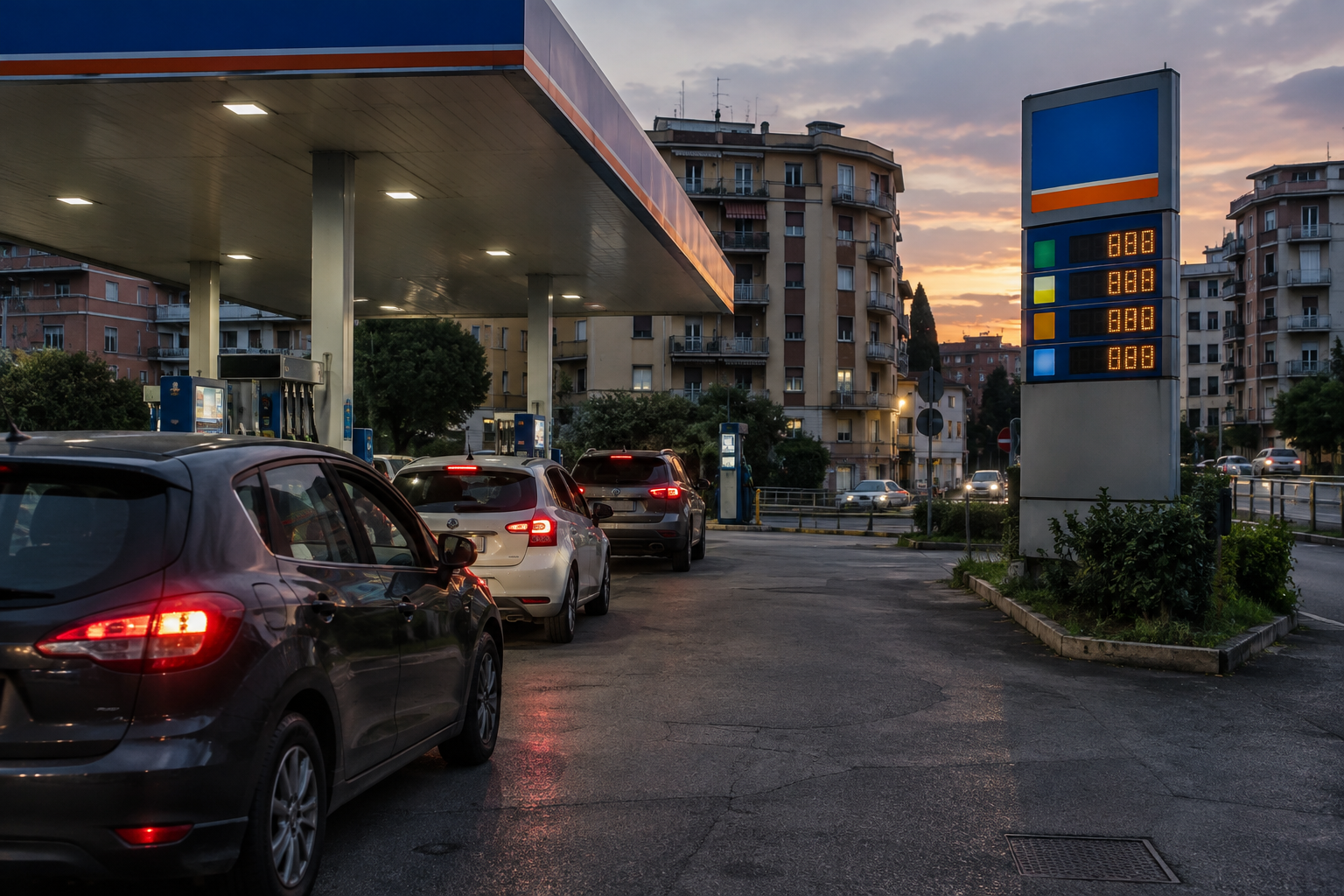
Within non-regulated energy, Istat highlighted accelerating price growth for diesel for transport, heating diesel, petrol, and both free-market gas and electricity. On 30 September 2026, the Ministry of Enterprises and Made in Italy reported that the average self-service fuel price on the national road network stood at 2.111 euros per litre.
- Regulated energy products: +25.9% year-on-year in September (from +18.6% in August)
- Non-regulated energy products: +22.2% year-on-year (from +17.0%)
- Unprocessed food: +5.5% year-on-year (from +3.8%), driven by vegetables and fruit
- Shopping basket (food, household and personal care goods): +1.7% year-on-year (from +0.9% in August)
- Frequently purchased goods index: +5.3% year-on-year (from +4.3%)
- Recreational, cultural and personal care services: +2.9% year-on-year (from +2.6%)
- Transport services: +1.6% year-on-year (from +0.8%)
The harmonised index of consumer prices (HICP), used for cross-country comparisons within the European Union, rose 4.1% year-on-year in September (from +3.2% in August) and 2.0% month-on-month, the latter partly reflecting the end of summer sales not captured by the national index.
How did prices break down?
Goods prices accelerated more sharply than services: the goods component rose from +4.1% to +5.4% year-on-year, while services moved from +2.4% to +2.6%. The differential between the two widened from -1.7 to -2.8 percentage points, meaning goods are now inflating at a markedly faster pace than services — a pattern consistent with energy-cost pass-through into physical products.
Core inflation, calculated by Istat excluding energy and fresh food, rose from 1.5% to 1.7% in September. The measure excluding only energy goods moved from 1.7% to 2.0%. Both readings remain well below the headline figure, confirming that the inflation surge is concentrated in energy rather than broadly embedded in the economy — though the gap between headline and core is itself a source of concern for purchasing power.
The acquired average inflation for 2026 — the annual average that would result if prices remained flat for the rest of the year — rose to 3.1% for the general index as of September, while the acquired core rate held steady at 1.9%.
The broader European context
Italy's September reading is part of a wider European energy-driven inflation wave. Germany's annual inflation rate rose to 3.3% in September 2026 from 2.9% in August, reaching its highest level since late 2023 and exceeding analyst forecasts of 3.2%, according to Germany's federal statistics office. Spain's preliminary estimate placed inflation at 4.9% in September, the highest since February 2023, after 4.6% in August. France's national statistics institute estimated prices rising 3.0% in September, up from 2.4% in August.
Eurostat was scheduled to publish its preliminary euro-area inflation estimate for September on 2 October 2026, with market expectations pointing to a reading of around 3.7% — up from 3.2% in August — driven by the same energy dynamic that has pushed national figures higher across the bloc.
Why it matters
For Italian households, the energy shock translates directly into higher utility bills and fuel costs, compressing real disposable income at a time when the tax burden is already elevated. Italy's tax-to-GDP ratio stood at 42.9% in 2025, an eleven-year high and above the EU average of around 40%, according to available fiscal data. Confcommercio, at its April 2026 forum, estimated that the combined war and energy shock could cost households up to 963 euros less in annual consumption, with growth projections for 2026 standing at just 0.3%.
For the government, the inflation surge arrives at a particularly sensitive moment. Premier Giorgia Meloni's cabinet approved the Public Finance Planning Document (DPFP) on 2 October 2026, incorporating a major budget deviation linked to energy and defence expenditure.
The additional deficit arising from the energy and defence clause, compounded by the cash burden of the Superbonus, is projected to push the deficit to 3.4% of GDP in 2027 and 3.3% in 2028, with public debt set to rise again to 138.5% of GDP in 2027, according to the DPFP. Economy Minister Giancarlo Giorgetti stated that "the context has changed; we need to pay closer attention" to the budget.
Meloni is pressing the European Union for additional fiscal flexibility, with reports indicating the government is seeking approximately €14 billion for 2027 and €14 billion for 2028 — a request that will be tested against EU fiscal rules at a time when energy-driven inflation is complicating budget arithmetic across the bloc.
What to watch next
Several key dates and data releases will shape the outlook for Italian inflation and fiscal policy in the weeks ahead:
- 16 October 2026: Istat publishes final consumer price data for September 2026, which may revise the preliminary 4.2% reading.
- 2 October 2026 (already released): Eurostat's preliminary euro-area inflation estimate for September, expected around 3.7%, will set the context for any European Central Bank response.
- Autumn budget season: The Italian government's full budget law, following the DPFP approved on 2 October, will detail how Rome intends to manage the energy-driven fiscal deviation while keeping the deficit on a path toward EU compliance.
- EU flexibility negotiations: The European Commission's response to Italy's request for approximately €14 billion in additional fiscal room for 2027 will determine how much space the government has to cushion households and businesses from energy costs.
- Energy price trajectory: Any sustained move in wholesale gas and electricity prices will feed directly into regulated tariffs in the fourth quarter of 2026, with implications for both the headline CPI and the government's energy support bill.
Consumer confidence data already point to deteriorating sentiment: Istat reported on 29 September 2026 that the consumer confidence index fell from 94.5 to 91.2 in September, while the business confidence index slipped from 97.0 to 95.9 — early signals that the inflation shock is beginning to weigh on expectations ahead of the critical winter energy season.
Sources:ansa.itistat.itrainews.iten.ilsole24ore.comistat.itistat.itilsole24ore.comansa.itreuters.comen.ilsole24ore.comistat.iten.ilsole24ore.com
UCapital Asset Management LLP or group companies may have commercial relationships with the companies mentioned. This content is not financial advice.
Sign up for free to ask the AI about this article.
Growth, inflation and rates across the major economies, with the impact on your business.