
Farmland data center prices: AI demand reshapes rural land markets
Farmland that can host data centers is being repriced as AI demand turns water, power and permits into the test of a site's value. Local backlash is growing alongside.

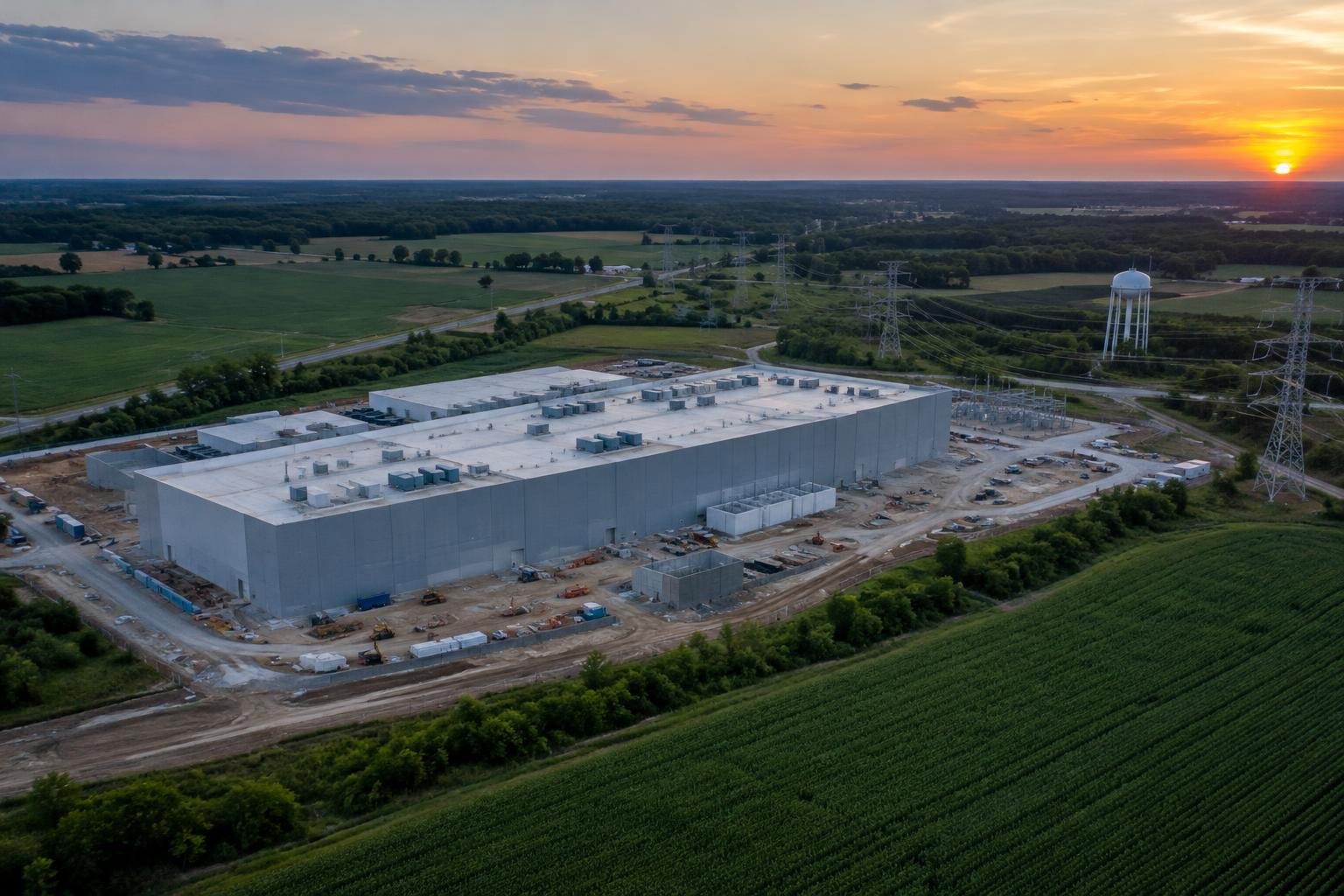
- 01AI data centers are transforming rural land markets and fueling a local backlash, according to a report published in 2026.
- 02Data centers need water that meets the quality parameters of their cooling technologies, according to a Congressional Research Service FAQ dated 31 July 2026.
- 03Federal permit requirements for data center energy infrastructure are a separate gate for any converted site.
- 04Johor's state planning guidelines, published in April 2024, show governments writing site rules for data centres.
Farmland that can be converted into data center sites is being repriced as artificial intelligence reshapes rural land markets, and the farmland data center prices now seen in some areas depend on whether a parcel can meet strict technical conditions. The shift is now visible in the United States and in planning documents abroad.
For investors in commercial real estate, the story is that land is no longer valued mainly for what it grows. Water, power and permits now decide which parcels become data center land and which stay farms, and the sources describe a growing local backlash.
What happened
Data center land has become a distinct segment of the rural land market. A report titled "AI data centers are transforming rural land markets — and fueling a backlash" describes how demand from AI facilities is changing how agricultural parcels are valued and how nearby communities respond.
The available material does not give price figures, so this article does not quote a per-acre value or a percentage increase. What the sources do document is the set of conditions a site has to meet, and those conditions explain why only some farmland attracts developers.
- Water: cooling technologies need water that meets set quality parameters, according to a Congressional Research Service FAQ on data centers and water dated 31 July 2026.
- Energy: data center energy infrastructure is subject to federal permit requirements, according to a Congressional Research Service report on the subject.
- Planning: Johor, in Malaysia, issued state data centre planning guidelines in April 2024, approved by its State Planning Committee and State Executive Council.
What requirements must farmland meet to become a data center site?
A parcel has to clear several gates before it can be treated as a data center site, and water is one of the most explicit. According to the Congressional Research Service, data centers require water that meets the water quality parameters needed for their cooling technologies to operate. Water from public systems is not automatically suitable for every cooling design.
Power is the second gate. The Congressional Research Service has published a report on federal permit requirements for data center energy infrastructure, which signals that connecting a large facility to generation and transmission can involve federal approvals, not only local ones. A parcel next to farmland roads is therefore not enough on its own.
Planning rules are the third gate. The Johor State Data Centre Development Planning Guidelines, dated April 2024, were presented to the State Planning Committee at its meeting No. 3/2023 and to the Johor State Executive Council. They include a section on the importance and requirements of Johor's data centre development, which shows that authorities are setting written criteria for where facilities can go.
Why does zoning matter so much for rural land?
Zoning decides whether farmland can be used for a data center at all. Where agricultural land must be rezoned, the process brings public hearings and political risk. That is one reason a site that already satisfies the technical conditions can be worth more than neighbouring parcels with the same soil.
How are farmland values changing?
The title of the CNBC-sourced report frames the change as a transformation of rural land markets, with a backlash attached. The sources provided do not quantify the move, and no transaction prices are available to cite here.
The direction of pressure is clear from the requirements themselves. Land with access to suitable water, grid capacity and a permissive planning regime is scarce, and scarcity is what lifts value above what the same acreage earns in crops. A parcel that cannot meet those conditions does not share in the uplift.
For commercial real estate, this makes agricultural acreage a new input in data center site selection. Developers evaluating a site must price in permits, water treatment and power connection costs, which the sources identify as requirements but do not cost.
What is the local reaction?
Opposition is part of the same story. The report on rural land markets says the transformation is fueling a backlash, which means communities near proposed projects are contesting them. The sources do not name specific projects or votes.
The water question is one likely focus. The Congressional Research Service FAQ exists because data centers draw on water systems, and the fact that Congress produced a dedicated document dated 31 July 2026 shows the issue has reached the federal policy level.
Farmland owners are also not a single group. A family that wants to keep farming faces a different decision from an owner offered a price far above agricultural returns. One unrelated report in the material, about an Indiana family restoring eroded farmland to protect a rare salamander, shows that land is also being managed for conservation, not only for sale or development.
Why it matters
Farmland conversion matters because it moves a large asset class into a market driven by AI infrastructure. Land that once priced off crop yields is now priced off its ability to meet technical and regulatory criteria for data centers.
- For landowners, value depends on water, power and zoning, not soil alone.
- For developers, permits and utility access shape cost and timing.
- For local authorities, written guidelines such as Johor's April 2024 rules are a way to steer where facilities go.
- For communities, the backlash described in the report makes approval less certain.
What are the risks and counterpoints?
The main uncertainty is how far prices have actually moved and whether the increases last. The sources provided contain no price data, so claims of a surge cannot be tested here against transactions.
Regulatory risk is the second. Federal permit requirements for energy infrastructure and water quality conditions can delay or block a project, and local opposition can stop a rezoning. A parcel priced for data center use carries that risk if approvals fail.
The third is the contrast between uses. Some owners are choosing restoration or continued farming, and conversion to a data center is irreversible in practice once built.
What to watch next
The sources name no dated meetings or votes, so the watch list rests on the issues they raise.
- Further Congressional Research Service work on data centers and water, following the 31 July 2026 FAQ.
- Federal permitting decisions affecting data center energy infrastructure.
- Whether other jurisdictions publish planning rules like the Johor guidelines of April 2024.
- Local hearings and rezoning decisions where the backlash described in the rural land report is playing out.
Sources:congress.govcnbc.comjpbd.johor.gov.mycongress.govlivemint.com
UCapital Asset Management LLP or group companies may have commercial relationships with the companies mentioned. This content is not financial advice.
Sign up for free to ask the AI about this article.
Create a free business page: clients, leads and releases in one place.