
Ukraine appoints Mykhailo Drapatyi as new commander-in-chief in major military shake-up
Zelensky replaces Oleksandr Syrskyi with 43-year-old Major General Mykhailo Drapatyi following days of protests and political tensions, marking the biggest military leadership change since Russia's…
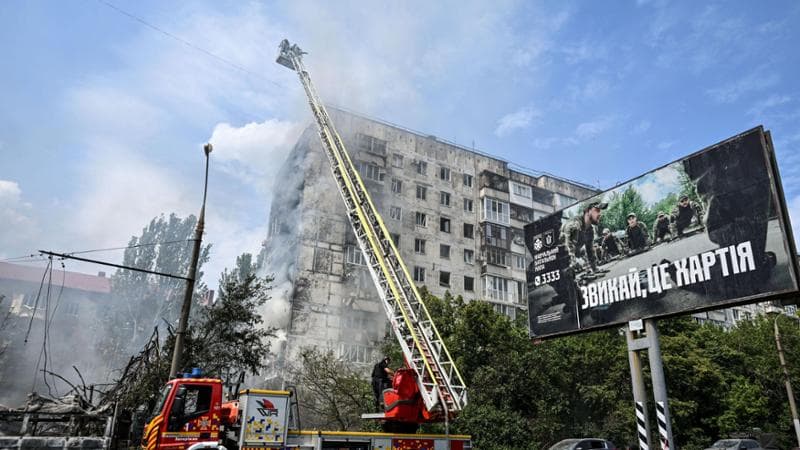
Zelensky reshapes Ukraine's military leadership
Ukrainian President Volodymyr Zelensky has appointed Major General Mykhailo Drapatyi as the new commander-in-chief of the Armed Forces, replacing General Oleksandr Syrskyi.
The decision follows several days of street protests in Kyiv and represents the most significant overhaul of Ukraine's military leadership since Russia launched its full-scale invasion in 2022.
Drapatyi, 43, is regarded as one of the leading commanders of a new generation of Ukrainian officers. He commanded the country's Ground Forces between 2024 and 2025 and has spent more than a decade fighting Russian forces.
His appointment is widely seen as an effort to renew Ukraine's military strategy and restore confidence in the country's leadership.
Public protests accelerated the leadership change
The appointment comes after a turbulent week for Zelensky's government.
A cabinet reshuffle and the dismissal of Defence Minister Mykhailo Fedorov triggered public demonstrations and criticism from political analysts and military observers.
Many protesters demanded Fedorov's return to the Defence Ministry and called for Syrskyi's resignation as commander-in-chief.
Drapatyi's appointment is therefore viewed as a response to growing domestic pressure for change.
A commander representing a new generation
Drapatyi is widely considered one of Ukraine's most innovative military leaders.
His career has been shaped by more than ten years of combat against Russian forces, combining battlefield experience with an emphasis on technological innovation and modern warfare.
Military analysts believe his leadership style reflects Ukraine's increasing focus on technology, intelligence and precision strike capabilities.
Criticism of Syrskyi's leadership
General Oleksandr Syrskyi played a crucial role in the defence of Kyiv during the first months of the Russian invasion and became commander-in-chief in 2024.
However, he later faced criticism from some soldiers and analysts, who argued that his rigid command style contributed to unnecessarily high casualties.
Growing tensions between Syrskyi and former Defence Minister Fedorov further exposed divisions within Ukraine's defence establishment.
Ukraine will continue long-range strikes
Introducing the new commander, Zelensky reaffirmed that Ukraine would continue military operations targeting Russia's energy infrastructure and logistical networks.
He also confirmed that Kyiv would maintain its long-range strike program and continue increasing economic pressure on Moscow through sanctions.
According to the Ukrainian president, sustained military pressure remains essential to forcing Russia toward meaningful peace negotiations.
Fedorov's future remains uncertain
The political future of former Defence Minister Mykhailo Fedorov has yet to be decided.
Zelensky said he had offered Fedorov a senior government position overseeing Ukraine's technological development, but the former minister has repeatedly stated that he only wishes to return as defence minister.
Meanwhile, Yevhenii Khmara has been appointed acting defence minister while the government finalises its new leadership structure.
UCapital Asset Management LLP or group companies may have commercial relationships with the companies mentioned. This content is not financial advice.
Sign up for free to ask the AI about this article.
Elections, tariffs, sanctions and reforms: what changes for markets, countries and supply chains.