
Tajani: “Iran provoked the US and Israel”
In recent days, the surge of violence in the Middle East has confronted Europe and Italy with complex international choices that are difficult to manage through diplomatic channels. Following the joint raids by the United States and Israel against Iran, an escalation that had immediate and dramatic effects in the region, Rome, too, was compelled to take a position.
Giorgia Meloni’s government has oscillated between calls for caution and statements that, while not openly celebrating the military intervention, implicitly reinforce its underlying framework: portraying Iran as the “responsible” actor behind the escalation that triggered the reaction from Washington and Tel Aviv. This narrative partly echoes and follows the political interpretation promoted within Donald Trump’s White House and its closest circles, according to which the intervention arose as a response to alleged Iranian threats.
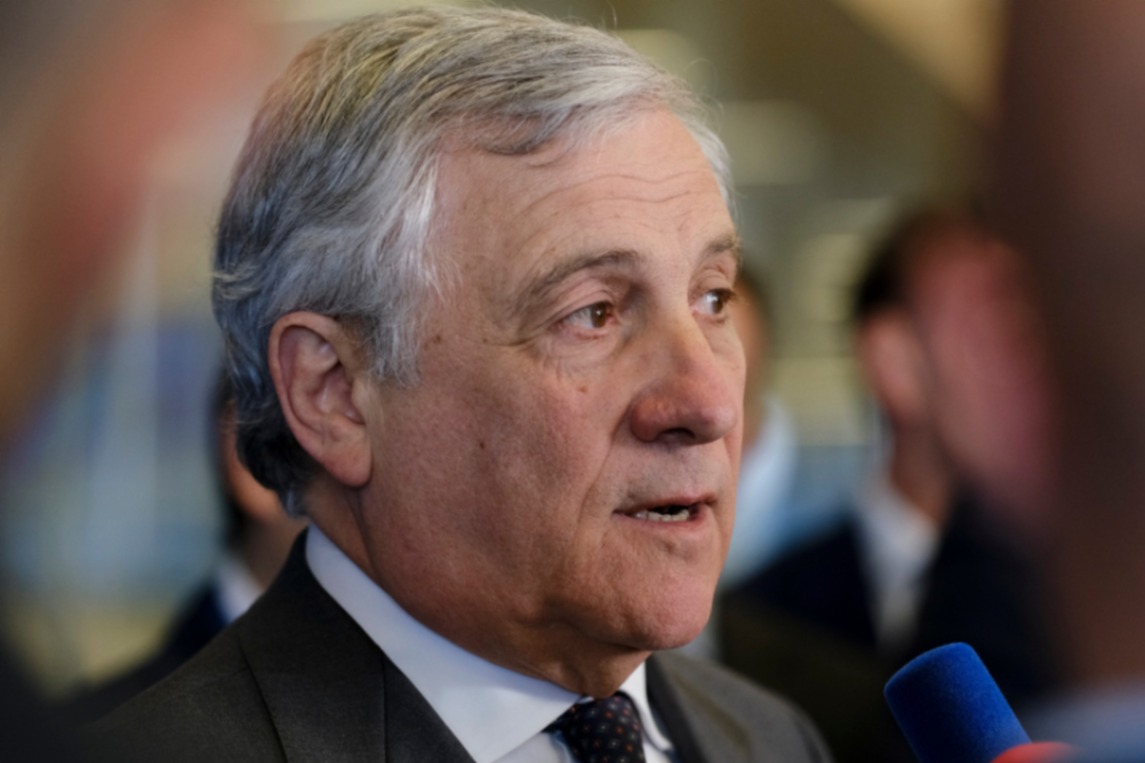
In an initial official comment to the press, Foreign Minister Antonio Tajani suggested that Iran had “provoked” the attack through its conduct, despite the fact that the Foreign Ministry had been informed “when the offensive was already underway,” as Tajani himself stated. This way of framing the events, emphasizing Tehran’s responsibility and the perceived legitimacy of the U.S. and Israeli action, reflects an institutional Italian stance that largely aligns with Washington’s narrative.
However, the government has sought to balance this approach with calls for diplomatic dialogue and the protection of Italian interests. Rome announced the launch of consultations with its G7 and European Union partners, with the aim of “preventing further escalation” and promoting stability in the region, while reiterating concerns about Iran’s nuclear and missile threats.
In Italy, the reaction has not been unanimous. The parliamentary opposition criticized the government for declaring a position seen as too close to Washington and Tel Aviv without adequate parliamentary debate and, according to some critics, for being insufficiently informed about diplomatic developments prior to the military escalation.
In essence, from its very first official comments, the Italian line has followed the broader Western stance dominated by the United States and Israel, advancing a narrative that assigns primary responsibility for the crisis to Tehran and partly justifies the military responses. Although Palazzo Chigi continues to stress the importance of dialogue, this interpretation, albeit expressed with cautious, closely mirrors the political vision that emerged in Washington under Donald Trump during the days of the escalation.
Klevis Gjoka
UCapital Asset Management LLP or group companies may have commercial relationships with the companies mentioned. This content is not financial advice.
Sign up for free to ask the AI about this article.
Elections, tariffs, sanctions and reforms: what changes for markets, countries and supply chains.