
Rubio and Wang Yi meet at ASEAN as US-China dialogue resumes amid regional tensions
The US Secretary of State and China's foreign minister hold high-level talks during the ASEAN summit in Manila, discussing a possible Trump-Xi meeting, the Middle East conflict and growing tensions in the South China…
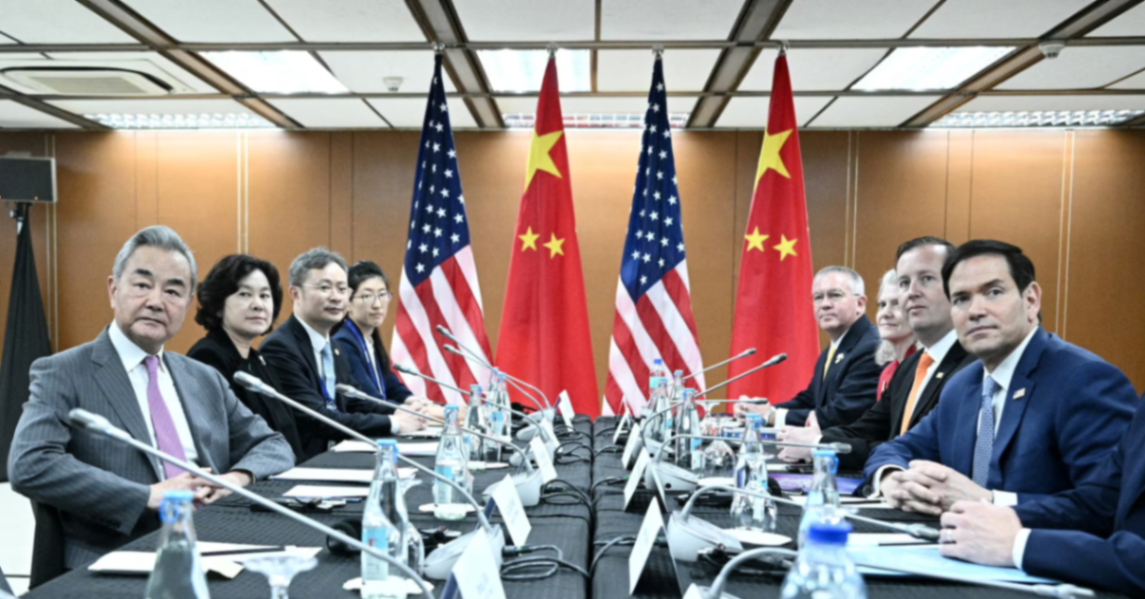
High-level US-China talks at the ASEAN summit
US Secretary of State Marco Rubio met Chinese Foreign Minister Wang Yi on the sidelines of the ASEAN Foreign Ministers' Meeting in Manila at a time of rising geopolitical tensions across both the Middle East and the Indo-Pacific.
The meeting marks one of the highest-level diplomatic exchanges between Washington and Beijing in recent months as both sides seek to preserve communication despite deep strategic disagreements.
A possible summit between President Donald Trump and Chinese President Xi Jinping later this year was also expected to be part of the discussions.
Fragile relations between Washington and Beijing
The talks took place against the backdrop of a fragile trade truce between the world's two largest economies.
Recent accusations by President Trump that China interfered in US elections have further complicated bilateral relations, claims that Beijing strongly denies.
Both governments nevertheless appear eager to maintain diplomatic channels in order to prevent additional escalation.
Rubio: Iran is not serious about negotiations
Speaking during the ASEAN meetings, Rubio argued that Iran is not genuinely committed to diplomatic negotiations.
"If they are serious, we are serious. If they are not, we will do what is necessary to protect our interests and those of our allies," he said.
Rubio also warned that allowing Iran to control or block the Strait of Hormuz would establish a dangerous precedent that could threaten maritime security far beyond the Middle East.
South China Sea tensions dominate regional agenda
The latest confrontation between Chinese coast guard vessels and Philippine naval personnel has once again placed the South China Sea at the center of regional diplomacy.
Rubio accused Beijing of using commerce as a geopolitical weapon and reaffirmed US support for ASEAN countries facing maritime pressure.
According to Washington, freedom of navigation remains essential for regional stability and international trade.
Australia calls for restraint
Australian Foreign Minister Penny Wong expressed concern over what she described as destabilising and risky behaviour in the South China Sea.
China responded by urging countries outside the dispute not to interfere or inflame regional tensions.
The ASEAN meetings are also attended by representatives from the United Kingdom, Canada, the European Union, India, Japan, Russia and South Korea.
Wang Yi calls for regional cooperation
Chinese Foreign Minister Wang Yi said China and ASEAN should strengthen mutual trust, openness and cooperation to promote regional peace and development.
He also accused elements within the Philippine security establishment of deliberately provoking tensions in support of external powers while reiterating Beijing's willingness to work with ASEAN members to reduce instability.
Quad reaffirms support for a free Indo-Pacific
Rubio also participated in a Quad meeting alongside counterparts from India, Japan and Australia.
In a joint statement, the four countries reaffirmed their commitment to a free and open Indo-Pacific and expressed continued support for ASEAN's central role in regional security architecture.
China continues to criticize the Quad as an attempt to contain its growing influence, while member countries describe it as a platform for cooperation and regional stability.
UCapital Asset Management LLP or group companies may have commercial relationships with the companies mentioned. This content is not financial advice.
Sign up for free to ask the AI about this article.
Elections, tariffs, sanctions and reforms: what changes for markets, countries and supply chains.