
Most Germans reject military leadership role in Europe, new poll finds

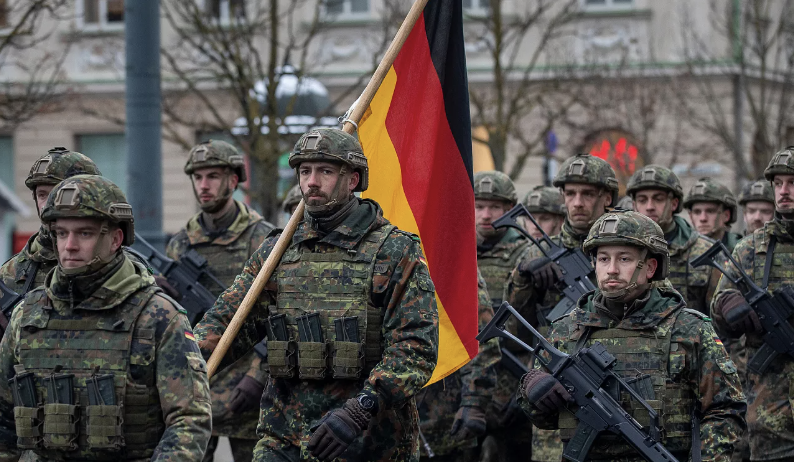
A majority of people in Germany oppose the country taking a military leadership role in Europe, according to a Forsa survey commissioned by the Korber Foundation.
The poll found that 61% of respondents answered "rather no" when asked whether Germany should assume such a role, while 38% were in favour. Rejection was highest in eastern Germany at 75%, compared with 58% in the west.
The survey, conducted between September 15 and 26 among 1,503 eligible voters in Germany, assessed public attitudes on key foreign and security policy issues. Some 76% said they were strongly or very strongly interested in these topics.
People in Germany were split on whether the country should take on greater responsibility in international crises or adopt a more cautious approach. Overall, 48% supported deeper engagement, while 43% favoured restraint. In the west, 51% backed a more active role; in the east, only 35% did.
If Germany were to step up, most respondents preferred diplomacy over military action. In western Germany, 71% favoured a stronger diplomatic presence, rising to 84% in the east. Support for increased military engagement stood at 19% in the west and 7% in the east.
Views of the US have deteriorated markedly since US President Donald Trump took office in January. 73% rated relations as poor. A year earlier, under Joe Biden, roughly the same share had considered ties good.
When asked about Germany's most important foreign policy partner, the US ranked far behind France, with 26% compared to France's 46%.
Despite concerns over military leadership, 72% said it was broadly right for Germany to double defence spending over the next decade. But 82% rejected the idea of Germany acquiring its own nuclear weapons.
UCapital Asset Management LLP or group companies may have commercial relationships with the companies mentioned. This content is not financial advice.
Sign up for free to ask the AI about this article.
Elections, tariffs, sanctions and reforms: what changes for markets, countries and supply chains.