
France and Germany agree Made in Europe auto deal as EU summit also settles ETS compromise
Emmanuel Macron and Friedrich Merz announced a joint statement on cars and the Made in Europe principle, while leaders also reported an ETS compromise, Ukraine progress and a shorter Italy-Spain border check.

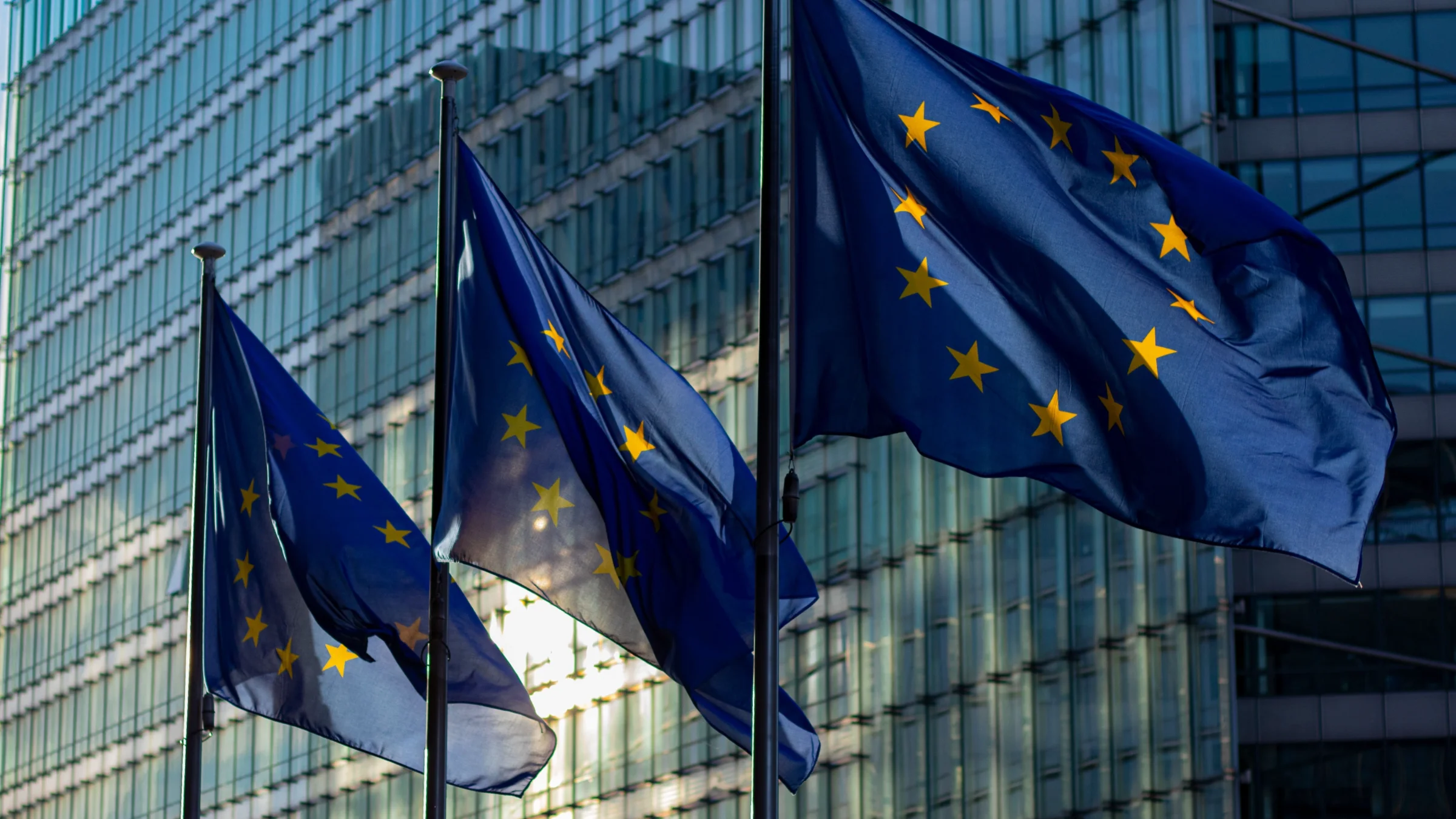
- 01France and Germany reached an understanding on the car sector and the Made in Europe principle, announced in a joint statement by Emmanuel Macron and Friedrich Merz.
- 02Italy and Spain agreed a seven-day extension of Italy's temporary checks on links with Spain, to align the expiry with Madrid's measures.
- 03A compromise on the EU emissions trading system (ETS) was reached overnight, amid concerns about industrial competitiveness.
- 04Ursula von der Leyen aims to complete Ukraine's last two negotiating chapters by the end of the year.
France and Germany have reached an understanding on the automotive sector and the "Made in Europe" principle, announced in a joint statement by French President Emmanuel Macron and German Chancellor Friedrich Merz. The stated aim is to protect European industry and jobs.
The Franco-German accord is the headline of a European Council summit that also produced an overnight compromise on the EU emissions trading system, a border-check deal between Italy and Spain and a new timetable for Ukraine's accession. For investors in European industry, the made in europe auto deal and the ETS outcome bear directly on costs and competitiveness.
What happened
Macron and Merz presented the agreement on cars and Made in Europe in a joint statement at the summit. The brief for this report gives the purpose as defending the European industrial base and employment; it does not set out the detailed terms, such as local content thresholds or changes to emissions rules.
Several other files moved at the same gathering:
- Autos: a Franco-German understanding on the car sector and the Made in Europe principle.
- ETS: a compromise reached overnight on the EU emissions trading system.
- Borders: Italy and Spain agreed a seven-day extension of Italy's temporary checks on connections with Spanish territory.
- Ukraine: von der Leyen announced progress and a goal of closing the last two negotiating chapters by year-end.
- Migration and governance: Giorgia Meloni asked for a review of EU rules on irregular migrants, and Italian President Sergio Mattarella called for faster EU decision-making.
How did the ETS compromise come about?
The overnight ETS compromise responds to worries that carbon costs erode industrial competitiveness. The summit text itself is not detailed in the material available, but the dispute has a recent history.
On 15 June 2026, EU member states approved a controversial update of the carbon efficiency benchmarks that decide how many free permits installations get in 2026-2030. According to people with knowledge of the matter, that deal followed a Commission pledge of a fast-track revision to raise free allowances. The calculation of 54 benchmarks already counted indirect emissions, which would mean about €4 billion more in free allowances for some sectors.
Fuel and heat fallback benchmarks, crucial for many energy-intensive companies, were still set to fall by the maximum 50% against 2013-2020 and by 34.1% against 2021-2025. Under that June deal the Commission was to propose a separate revision of those benchmarks alongside its ETS review, designed to avoid the cross-sectoral correction factor.
Why is the Made in Europe principle contested?
The Made in Europe approach sits within a wider debate on how Europe handles Chinese competition. On 17 July 2026, Macron said alongside Merz in Brühl that Paris and Berlin wanted a joint "roadmap" by September to tackle China's unfair trade practices.
The EU has been grappling with a growing flow of Chinese exports, which critics say are supported by generous state subsidies and an allegedly undervalued currency. The bloc has struggled to agree a clear position, with France long pushing for firmer action. The Franco-German car understanding is therefore also a signal that the two largest economies are aligning on industrial policy.
What did Italy and Spain agree on borders?
Italy and Spain agreed a seven-day extension of Italian temporary checks on links with Spain, so that the expiry matches the measures adopted by Madrid. The dispute began after the Ceuta migration crisis.
According to the Italian Interior Ministry, Italy introduced air and sea border controls on travellers from Spain on 1 August 2026. Spain retaliated with random checks on arrivals from Italy, established on 8 August. On 31 August, Italy extended its controls by 15 days, citing persistent critical issues in Ceuta, and Madrid extended its own by two weeks.
Interior Minister Matteo Piantedosi said then that he trusted the extension could be the last. Between 1 and 31 August, interior ministry sources said, 31 border rejection orders were issued, nearly 500,000 people were checked through passenger lists and six people were arrested. The Italian opposition called the measure a propaganda stunt, a charge the government did not accept.
How far has Ukraine's accession progressed?
Ukraine's accession talks have advanced in stages since June, and von der Leyen now wants the final two chapters opened by the end of this year. The EU and Ukraine opened the "fundamentals" cluster on 15 June 2026, covering rule of law, fundamental rights, public administration reform and economic criteria. That cluster includes chapters 23, 24, 5, 18 and 32.
The process was stuck for about two years while Hungary's Viktor Orban vetoed progress; his April election defeat by Peter Magyar reopened the way. The European Commission and Council have since announced the opening of clusters on the internal market, competitiveness and inclusive growth, and on external relations.
The process has six clusters and 35 chapters. Cluster 1 is the first opened and the last closed, and it sets the overall pace.
Why it matters
The summit outcomes matter because they touch industrial costs, trade defence, border management and enlargement at once. A Franco-German line on cars and Made in Europe carries weight in Brussels given the two countries' role in the sector. The ETS compromise addresses competitiveness concerns that governments and manufacturers have raised.
Mattarella's call to speed up EU decision-making reflects a wider debate. Six countries including Germany and France have urged discussion of limiting voting rights on key issues for new members and tightening rule-of-law safeguards, as a larger EU could become harder to govern.
What are the risks and counterpoints?
Detail remains the main uncertainty on the auto deal, since a joint statement is not yet legislation. Other member states, the Commission and industry must still weigh in, and the available material does not report their reactions.
On Ukraine, a European diplomat said the prospect of enlargement happening soon "never was realistic". Merz said in April that immediate accession is not possible and proposed associate membership without voting rights, which Kyiv views with scepticism. Magyar has pledged a referendum if talks finish within 10 to 15 years.
On borders, thousands of people remained in Ceuta according to Spain's government in late August, and the Italian opposition disputes the justification for the checks.
What to watch next
The following steps are the ones the material identifies or implies:
- The publication of the detailed Franco-German car and Made in Europe terms, and the reaction of other member states.
- The text and follow-up of the ETS compromise, including the Commission's proposal on fallback benchmarks tied to its ETS review.
- The expiry of Italy's seven-day extension, aligned with Madrid's measures.
- The opening of Ukraine's last two negotiating chapters, targeted by the end of 2026.
- Any Commission follow-up to Meloni's request to revise rules on irregular migrants.
Sources:enlargement.ec.europa.eufrance24.comfinancialpost.comstraitstimes.comansa.iten.ilsole24ore.comeuronews.comeeas.europa.euconsilium.europa.euenlargement.ec.europa.eu
UCapital Asset Management LLP or group companies may have commercial relationships with the companies mentioned. This content is not financial advice.
Sign up for free to ask the AI about this article.
Elections, tariffs, sanctions and reforms: what changes for markets, countries and supply chains.