
Trump’s threats paint European markets red
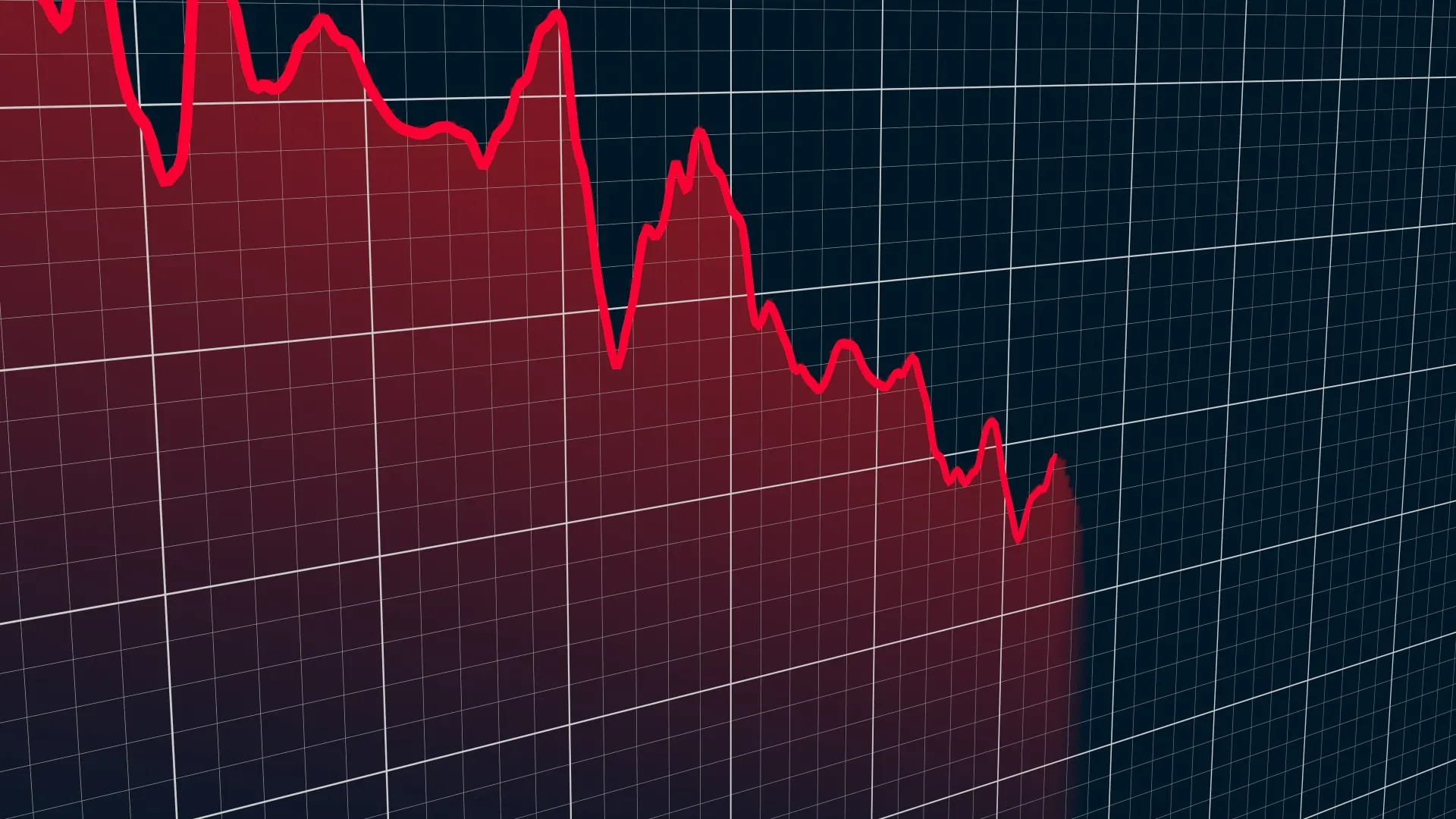
European markets opened sharply lower nearly a month after the start of the Middle East conflict, which remains the main focus for investors. The decline was fueled by yet another threat from Donald Trump, who over the weekend issued an ultimatum to Iran, pushing for a reopening of the Strait of Hormuz within 48 hours. Tehran, however, remains undaunted and emphasized that it does not rule out a possible extension of the closure. Concerns are also growing over a potential ground invasion of Lebanon by Israel.
Major Indices in Decline
The market reaction was immediate and sharp. The STOXX Europe 600 fell 1.6% shortly after 8:00 a.m. in London, highlighting how geopolitical tensions are heavily influencing investor sentiment. All major stock exchanges and sectors fell into negative territory, with widespread selling hitting nearly every segment, from financials to energy and consumer goods.
Specifically, the FTSE 100 in the United Kingdom opened down 1.4%, showing that even the strongest markets are affected by geopolitical concerns. The DAX in Germany lost 1.9%, the CAC 40 in France fell 1.4%, and the FTSE MIB in Italy dropped 1.6%, confirming that most major European indexes are experiencing a negative session. The trend underscores how Middle East tensions and statements from international leaders can have an immediate and significant impact on global financial markets.
The Tycoon’s Words
Donald Trump stated on Saturday that he would be ready to “obliterate” Iran’s power plants if Iran did not fully reopen the Strait within 48 hours. Tehran responded by escalating its rhetoric, threatening to target energy infrastructure and desalination facilities in the Gulf region. Mohammad Bagher Ghalibaf
Ceasefire feels increasingly distant:Investors remain uncertain
The collapse of major European indexes represents a clear signal of a climate of deep uncertainty and growing concern among investors, who are becoming increasingly cautious and tend to reduce their risk exposure. Geopolitical tensions, fueled by reciprocal threats between the United States and Iran, are creating a sense of instability that is immediately reflected in financial markets. Many market participants prefer to adopt defensive strategies, shifting capital toward assets considered safer, such as government bonds or gold, rather than taking risks on equities. In this context, the end of the Middle East conflict seems even more distant and uncertain, further fueling market volatility and investor caution.
UCapital Asset Management LLP or group companies may have commercial relationships with the companies mentioned. This content is not financial advice.
Sign up for free to ask the AI about this article.
Multiples, financials, sentiment and risks in 60 seconds, with live data.