
The Great rotation: "Old Economy" resurgence pushes Dow Past 50,000 Amid Tech Cooling
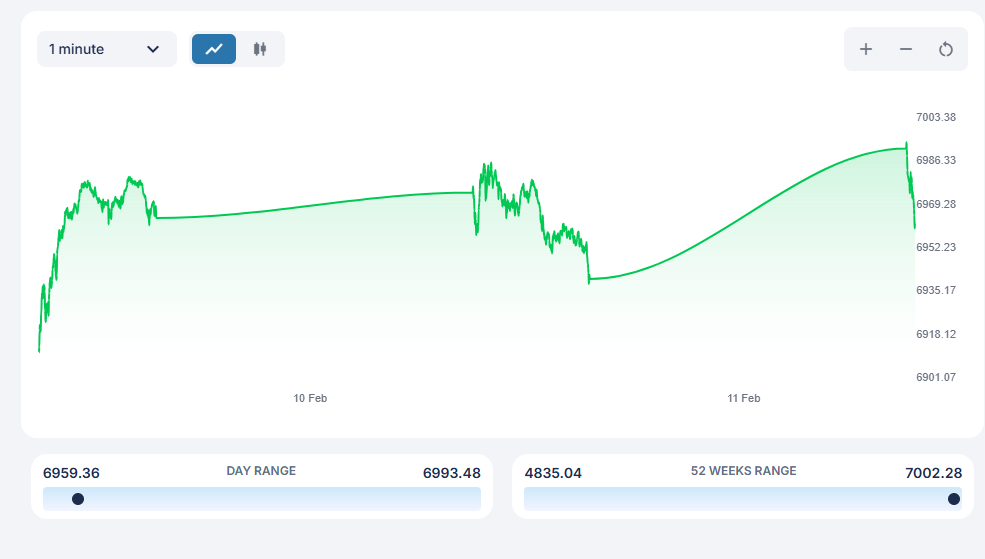
The narrative on Wall Street has undergone a tectonic shift in the opening weeks of 2026. After years of a market dominated by the "Magnificent Seven" and the singular promise of artificial intelligence, a powerful "Great Rotation" is underway, signaling a return to the tangible. On February 9, the Dow Jones Industrial Average marked a historic milestone, closing above the 50,000 mark for the first time, even as the tech-heavy Nasdaq struggled to maintain its footing.
The Tangible Over the Virtual
This "earnings handoff" from Silicon Valley to America’s industrial heartland is driven by a unique cocktail of fiscal policy and a reset in AI expectations. Investors are increasingly migrating toward the "Old Economy"—industrials, energy, and materials—which reached record highs this month. The shift comes as major Software-as-a-Service (SaaS) providers face a valuation contraction, with analysts questioning whether AI agents are beginning to cannibalize traditional seat-based subscription models rather than simply enhancing them.
While the S&P 500 remains in positive territory for the year (up 1.4%), the internal dynamics tell a story of extreme divergence. The Russell 2000 domestic small-cap index surged 5.4% in January alone, marking its longest winning streak against the S&P 500 since 1996.
A "Warsh" Perspective on the Fed
The macro backdrop remains equally complex. The Federal Reserve, currently in a period of leadership transition, held rates steady at 3.50%–3.75% during its January meeting. However, the nomination of Kevin Warsh to succeed Jerome Powell has introduced what traders call the "Warsh Effect"—a front-loading of expectations for a more rules-based, hawkish regime that favors industrial productivity over the "cheap money" era that fueled the previous tech bubble.
Inflation remains the "upset stomach" of the economy. Sticky core PCE at 3% and rising costs from tariff pass-throughs have dampened hopes for a March rate cut, with the market now pricing in a mere 17% probability of a reduction.
The Road Ahead: "High-Altitude Volatility"
As the market approaches the psychologically significant 7,000 level on the S&P 500, analysts warn of "High-Altitude Volatility." Domestic-focused companies are benefiting from the "One Big Beautiful Bill Act" (OBBBA) and fiscal tailwinds for onshoring, but global trade friction remains a wild card.
"The volatility we're seeing isn't necessarily a sign of weakness," says one senior strategist. "It’s the sound of the market broadening out. We are moving away from a 'winners take all' tech market toward a more sustainable, diversified foundation."
UCapital Asset Management LLP or group companies may have commercial relationships with the companies mentioned. This content is not financial advice.
Sign up for free to ask the AI about this article.
Multiples, financials, sentiment and risks in 60 seconds, with live data.