
Nvidia CEO Huang and China: Reinstatement After Shenzhen Summit
Jensen Huang's return as Nvidia CEO is a win for China after the Shenzhen trilateral summit. The summit and the chip export rules are documented; the link between them is not.
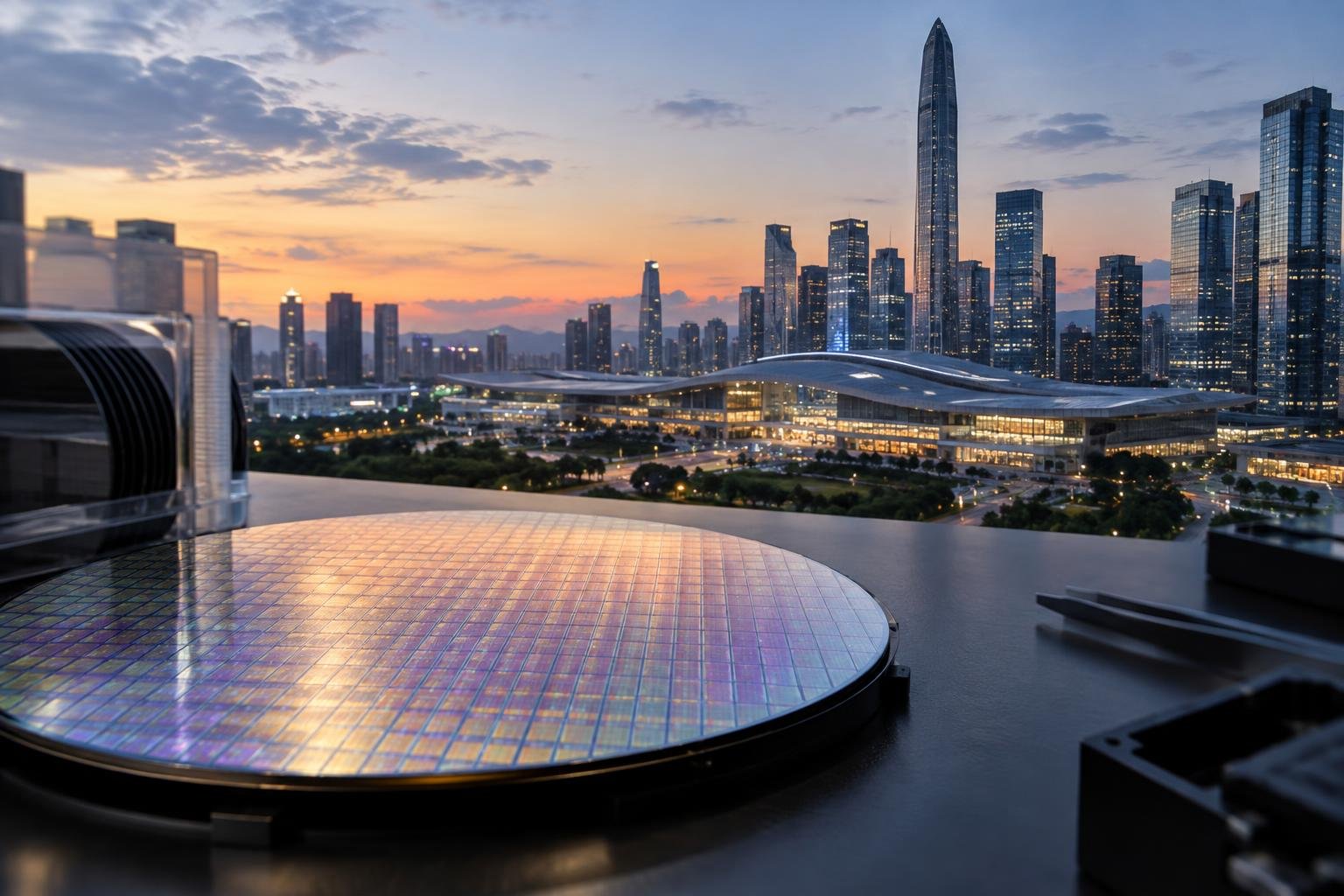
- 01The material reviewed holds no Nvidia (NVDA) or government statement text confirming a reinstatement of Jensen Huang as CEO, nor any link to the Shenzhen summit.
- 02Donald Trump, Xi Jinping and Vladimir Putin held a trilateral meeting in Shenzhen on Thursday 19 November, the first time the three met together in person.
- 03Nvidia's most advanced AI chips remain under US export restrictions to China, while some less capable chips may be shipped.
- 04Nvidia's own filing describes the China export controls as complex, covering parameters such as a chip's total processing performance.
Jensen Huang's reinstatement as chief executive of Nvidia Corp (NVDA) is a victory for China after the Shenzhen trilateral summit. What is documented is that US President Donald Trump, Chinese President Xi Jinping and Russian President Vladimir Putin met in Shenzhen, and that Nvidia's China business is governed by US export controls.
For investors the distinction matters: the summit is a confirmed geopolitical event, while a boardroom change at the world's most closely watched AI chip designer, and its supposed link to Beijing, is a separate assertion that needs an Nvidia statement or a government document to stand. This article separates what is on the record from what is asserted.
What happened
The trilateral summit in Shenzhen is the verifiable part of the story. According to a report dated 21 November, Trump held a trilateral meeting with Xi and Putin on Thursday 19 November, after the three met the previous evening at a welcome banquet for the Asia-Pacific Economic Leaders' Meeting in Shenzhen. It was the first time the three men had met together in person.
The same report notes that this is the second year in a row that Xi has brought Putin together with another major world leader on mainland Chinese soil. In September 2025, Xi, Putin and Indian Prime Minister Narendra Modi were photographed laughing together alongside an annual meeting of the Shanghai Cooperation Organization in Tianjin.
On Nvidia, the material reviewed contains only headlines and no text: items that refer to Huang being reinstated as CEO, one of them mentioning government input. None of them carries a statement from Nvidia, a regulator or a ministry that could be quoted, and none connects the leadership question to the Shenzhen meetings. Without that, a reinstatement cannot be reported here as a settled fact, still less as a Chinese success.
Key facts on the record
Trilateral meeting of Trump, Xi and Putin in Shenzhen on Thursday 19 November, after a banquet the evening before.
It was the first in-person meeting of the three leaders together.
Xi hosted Putin and Modi in Tianjin in September 2025, a first precedent for such gatherings on Chinese soil.
Nvidia's most advanced AI chips are under US export restrictions to China; some less capable chips are allowed.
Is the Shenzhen summit a win for China?
The summit gives China a stage. The report on the Shenzhen gathering frames it as part of a pattern in which Beijing uses summits to expand its global influence, hosting leaders who rarely appear together elsewhere.
That is an assessment of diplomacy, not of corporate governance. Nothing in it says that the leaders discussed Nvidia, its chief executive or semiconductor sales. The step from a photo-op and a trilateral meeting to a personnel decision at a US-listed company is not supported by the sources.
The framing of a "new world power" order after the summit is likewise a characterisation. The documented facts are narrower: three leaders met, and Beijing was the host for a second consecutive year of such high-profile meetings.
What do export controls say about Nvidia and China?
Nvidia's China exposure is shaped by Washington's export rules, whoever sits in the chief executive's office. In its quarterly filing for fiscal 2025, the company wrote that the export controls applicable to China are complex and address a variety of parameters, including the total processing performance of a chip.
A Congressional Research Service analysis of the controls adds the policy background. It describes how the US government negotiated terms with Japan and the Netherlands to align controls on semiconductor manufacturing equipment with respect to China, and notes that in 2022 the Bureau of Industry and Security added controls on certain advanced products.
A separate report states that Nvidia's most advanced AI chips are under export restrictions to China, though some less capable semiconductors are allowed to be shipped to the country. It adds that the US has been trying to close a crucial loophole in the ban. Those restrictions are set by the US government and would not change simply because of a leadership announcement at the company.
Why it matters
The question of who leads Nvidia and how it deals with China matters because the company sits at the centre of the US-China tech rivalry. Its chips are the object of export controls, and any suggestion that its leadership is tied to either government draws attention from investors, regulators and policymakers.
Sources:congress.govcnbc.comsec.govcnbc.com
UCapital24 S.p.A. or group companies may have commercial relationships with the companies mentioned. This content is not financial advice.
Sign up for free to ask the AI about this article.
Multiples, financials, sentiment and risks in 60 seconds, with live data.