
Munich airport resumes flights after drones trigger closure

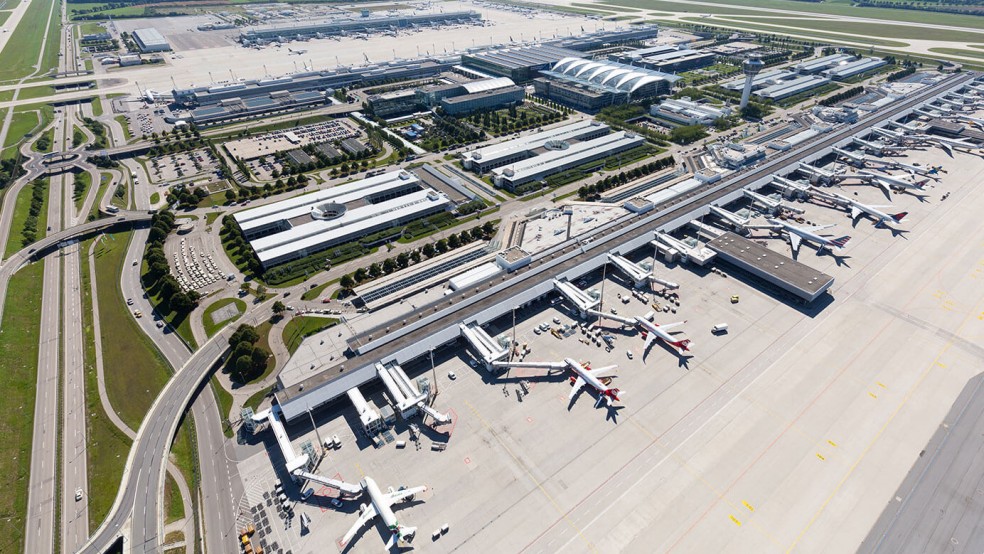
Germany's Munich airport restarted flights on Friday after several drone sightings forced its closure overnight, the latest in a string of similar aviation disruptions across Europe.
Airports in Denmark, Norway and Poland have recently suspended flights due to unidentified drones, while Romania and Estonia have pointed the finger at Russia, which has brushed off the allegations.
Munich became the latest to close its airspace on Thursday night after several drone sightings, causing more than 30 flights to be cancelled or diverted and leaving nearly 3,000 passengers stranded.
Flights had restarted by early Friday, with flight tracking websites showing planes departing the airport at around 5:50 am, or 03:50 GMT.
A spokesperson for German flag carrier Deutsche Lufthansa AG said "flight operations have since resumed according to schedule".
"Nineteen Lufthansa flights were affected – either cancelled or re-routed – because of the the airport suspension," the spokesperson said.
A police spokesperson earlier told AFP that several people spotted drones around the airport at about 19:30 GMT on Thursday, and again an hour later, leading to the closure of both runways for an hour.
The airport said it had laid on camp beds, blankets, drinks and snacks to affected passengers.
German authorities have launched a search to identify the origin of the drones.
Police helicopters were deployed but "no information is available on the type and number of drones," the spokesperson said.
The incident came ahead of German Unity Day – a national holiday – and the final weekend of Oktoberfest, which draws hundreds of thousands of people to Munich every day.
The annual beer gala and funfair had already closed for half a day on Wednesday after a bomb scare.
The drone sightings in Denmark and high-profile aerial incursions by Moscow in Estonia and Poland have heightened fears that Russia's assault on Ukraine could spill over Europe's borders.
Ukraine's President Volodymyr Zelensky warned Europe on Thursday that the recent drone incursions showed Moscow was looking to "escalate" its aggression.
Germany is on high alert, saying a swarm of them had flown over the country last week, including over military and industrial sites.
Interior Minister Alexander Dobrindt said Berlin needed to "find new responses to this hybrid threat" – including potentially shooting down the drones.
Denmark also raised the alarm, with Prime Minister Mette Frederiksen reiterating last week that only one country "poses a threat to Europe's security – and that's Russia".
Moscow said it "firmly rejects" any suggestion of involvement, with Russian President Vladimir Putin accusing Europe of stoking "hysteria" to justify rising military spending.
EU heads of state met in Copenhagen this week to discuss bolstering the bloc's defences with the establishment of a "drone wall".
Denmark accepted a Swedish offer of Stockholm's anti-drone technology to ensure the meeting could proceed without disruption.
Meanwhile, the US is sending anti-drone defences to Denmark, Copenhagen's defence ministry said.
Nato has said it has "enhanced vigilance" in the Baltic following the airspace intrusions.
UCapital Asset Management LLP or group companies may have commercial relationships with the companies mentioned. This content is not financial advice.
Sign up for free to ask the AI about this article.
Multiples, financials, sentiment and risks in 60 seconds, with live data.