
Gold Holds in Focus as Dollar Softens, Inflation Data and Geopolitical Risks Drive Safe-Haven Demand
Gold prices are in the spotlight on Monday as a softer US dollar, looming US inflation data, and persistent geopolitical tensions keep safe-haven demand elevated heading into a pivotal week for macro signals.

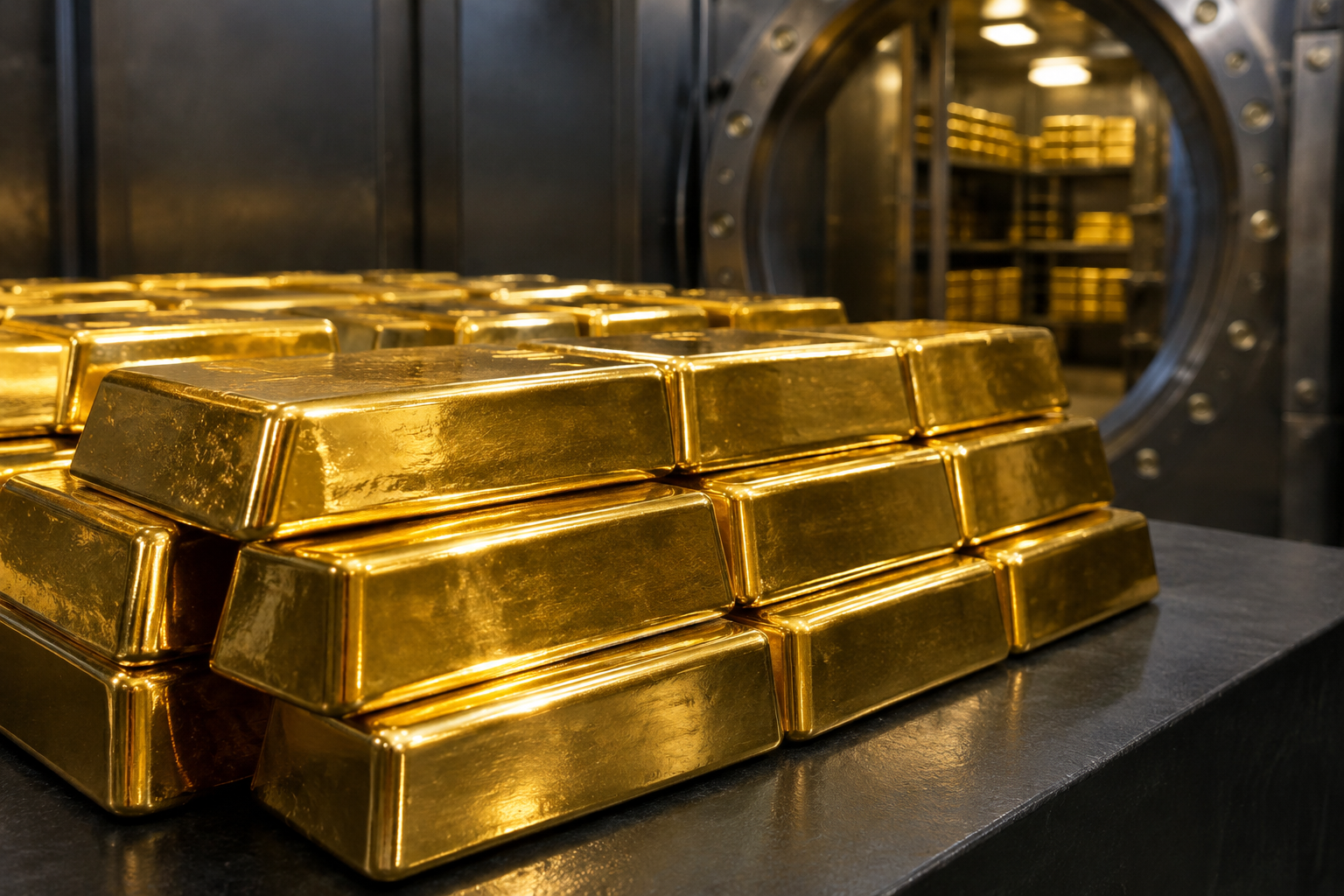
- 01Gold nudged higher in early trade on 12 October as the US dollar softened and oil prices pulled back.
- 02US inflation data due this week are seen as the key catalyst for the Federal Reserve's next policy move, with rate-hike odds at 17% for October.
- 03A Bank for International Settlements paper published on 6 October 2026 found that geopolitical risks boost gold returns most strongly during periods of loose financial conditions.
- 04Indian MCX gold prices fell Rs 1,450 per 10 grams on 12 October despite the weaker dollar, as investors awaited the US inflation print.
Gold prices held in focus on Monday, 12 October 2026, as a softer US Dollar Index and a pullback in oil prices lifted the metal in early Asian trade, even as Indian MCX prices slipped Rs 1,450 per 10 grams — with silver down Rs 1,400 per kilogram — ahead of a US inflation release that traders expect to shape the Federal Reserve's next move.
The divergence between international spot prices and domestic Indian prices underscores how currency dynamics and local market positioning can cut across the same macro backdrop. For global investors, the week's central question is whether incoming US price data will harden or soften expectations for Federal Reserve policy — and, by extension, whether the conditions that have powered gold's safe-haven rally through 2024–26 remain intact.
What happened
Gold edged higher in early Asian trade on 12 October as markets weighed a pullback in oil prices alongside a softer US dollar, according to market data. The US Dollar Index's retreat reduced the relative cost of holding the non-yielding metal for holders of other currencies, providing a modest tailwind to spot prices.
On India's Multi Commodity Exchange, however, gold opened lower by Rs 1,450 per 10 grams and silver fell Rs 1,400 per kilogram on the same session, even as the dollar weakened. Analysts attributed the domestic decline to investors choosing to wait on the sidelines ahead of the US inflation print rather than adding exposure at current levels.
- Gold nudged higher in international spot trade on 12 October on softer oil and a weaker dollar.
- MCX gold fell Rs 1,450/10g and silver dropped Rs 1,400/kg on 12 October despite the dollar's softness.
- US Federal Reserve rate-hike odds for October stood at 17% as of the session.
- Investors were positioned cautiously ahead of the US inflation data release due this week.
What is driving gold's safe-haven role in 2024–26?
A paper published by the Bank for International Settlements on 6 October 2026 offers a systematic account of the forces behind gold's recent performance. Analysing monthly data from 1990 to 2026, the BIS found that increases in geopolitical risks — covering both geopolitical threats and realised events — raise gold returns, with the strongest effects observed during periods of loose financial conditions.
The findings provide stronger support for the first explanation, suggesting that investors' capacity to rebalance is the key factor, while evidence for the second channel is described as less conclusive.
Critically, the BIS paper notes that between 2024 and 2026 the historical relationship between geopolitical shocks and tighter financial conditions weakened — a decoupling that, combined with geopolitical escalation, produced the largest observed impact on gold prices in the dataset. The paper states that "the largest impact occurs when periods of loose financial conditions coincide with periods of geopolitical escalations, as observed during 2024–26."
How has demand evolved in 2026?
The World Gold Council has stated that momentum from 2025's strong gold demand was likely to persist into 2026, citing continued economic and geopolitical instability. The council noted that "the continued rally in spot gold prices so far this year underscores the surging safe-haven demand amid geopolitical tensions and trade risks."
China has emerged as a particularly significant driver of demand in 2026. Central-bank diversification, combined with weakness in China's property and equity markets, has pushed both institutional and retail Chinese investors toward gold, with the country importing a record volume of the metal. This structural shift in demand adds a layer of support to prices that is distinct from the short-term macro signals traders are watching this week.
Earlier in 2026, gold moved closer to record peaks in January as geopolitical risks lifted safe-haven demand, and rose again in March as a widening Middle East conflict drew further flows into the metal. Those episodes illustrate the pattern the BIS paper documents: geopolitical escalation, when it coincides with accommodative financial conditions, amplifies gold's response.
Why it matters
The Federal Reserve's policy path is the immediate variable markets are pricing. A US inflation print that comes in above expectations could shift those odds and weigh on gold; a softer reading would reinforce the case for an extended pause and could provide further support to the metal.
Beyond the near-term data, the BIS analysis highlights a structural consideration: gold's safe-haven properties are not constant but depend on the macro-financial environment. The 2024–26 period has been characterised by the unusual combination of elevated geopolitical risk and relatively loose financial conditions — a configuration the BIS identifies as the most potent for gold returns. Whether that configuration persists depends on both the trajectory of central bank policy globally and the evolution of geopolitical tensions.
For markets more broadly, gold's behaviour this week will be read as a signal about risk appetite and the credibility of the Fed's inflation-fighting stance. A metal that holds firm even as rate-hike odds remain non-trivial suggests that safe-haven and diversification demand — from central banks, Chinese investors, and global funds — is providing a floor that is less sensitive to short-term rate expectations than in previous cycles.
What to watch next
The following catalysts and data points are the key items to monitor in the sessions ahead:
- US inflation data (week of 12 October 2026): The print is the primary near-term driver of Federal Reserve rate expectations and, by extension, of gold's short-term direction.
- Federal Reserve policy meeting (October 2026): Rate-hike odds stand at 17% for October; the outcome will determine whether the loose financial conditions that have amplified gold's safe-haven role remain in place.
- US Dollar Index trajectory: Further dollar softness would reduce the cost of holding gold for non-dollar investors; a reversal would apply pressure to spot prices.
- Geopolitical developments: The BIS paper identifies geopolitical escalation as a key trigger for safe-haven flows, particularly when financial conditions are loose — any escalation in existing conflict zones warrants close attention.
- China gold import data: Record Chinese imports in 2026 have been a structural demand driver; any shift in that trend would carry implications for the global price.
Sources:economictimes.indiatimes.comthehindubusinessline.combis.orgscmp.comcnbc.comcnbc.comwsj.com
UCapital Asset Management LLP or group companies may have commercial relationships with the companies mentioned. This content is not financial advice.
Sign up for free to ask the AI about this article.
Multiples, financials, sentiment and risks in 60 seconds, with live data.