
Brent at $112 and WTI near $100 revive inflation fears as Iran war and Ukraine strikes squeeze supply
Brent near $112 and WTI back at $100 a barrel put inflation, central bank policy and energy-importing economies under fresh pressure. Energy producers gain while fuel-intensive sectors and importers face higher costs.

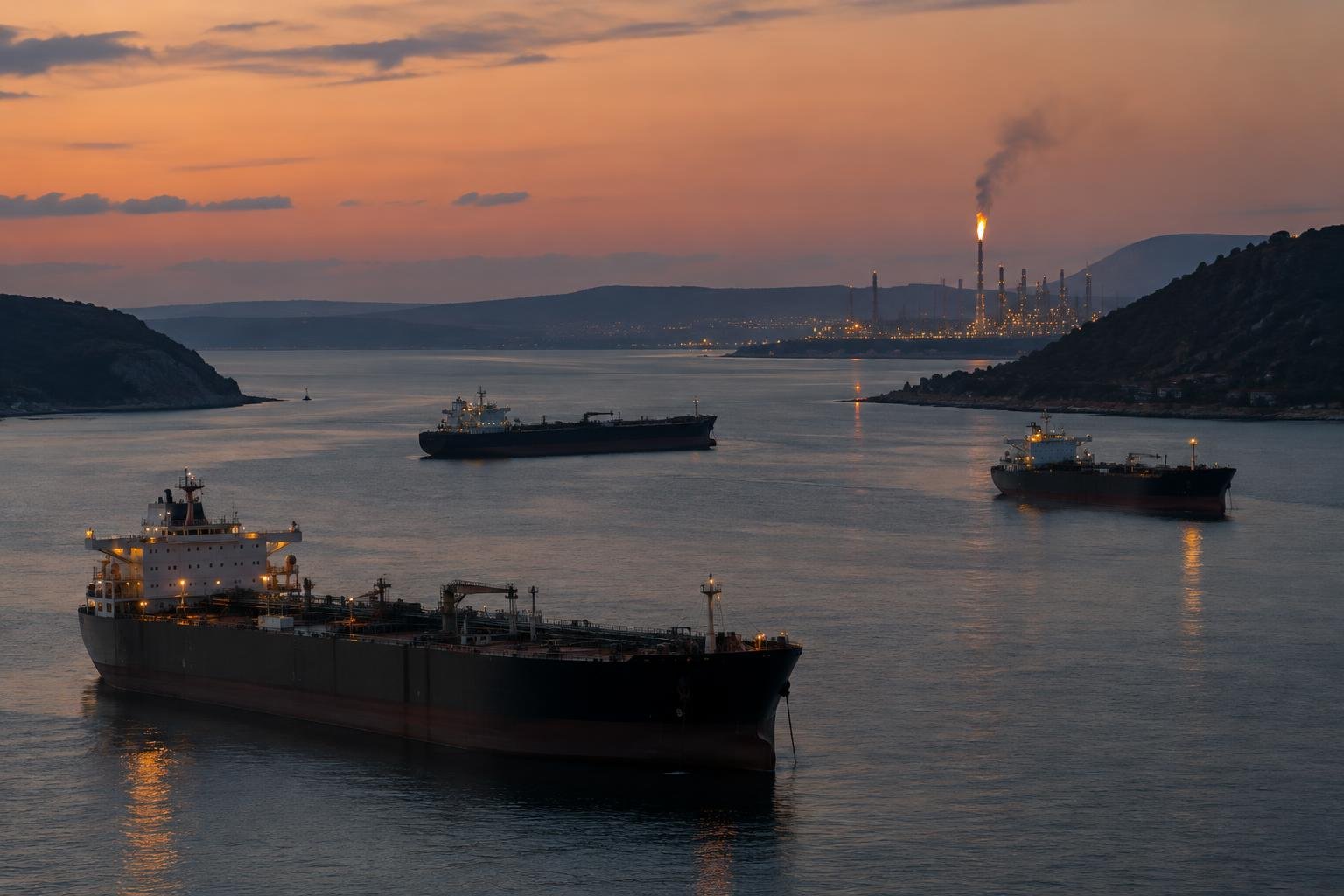
- 01Brent crude traded above $114 on 23 October, its highest level since May, as attacks on Saudi Arabia intensified and the war with Iran continued.
- 02WTI crude was back at $100 a barrel on 23 October; US crude first settled above $100 since July 2022 on 30 March.
- 03European corporate earnings growth is forecast at 21.9% in the third quarter, driven by energy profits, though inflation and borrowing costs weigh.
- 04The IEA cut its 2026 global oil supply forecast by 600,000 bpd, to a 4.3 million bpd decline.
Brent crude rose above $114 a barrel on 23 October, its highest level since May, while WTI crude returned to $100 a barrel, as traders weighed renewed US-Iran hostilities and attacks on Saudi energy infrastructure. The move puts the Brent $112 oil inflation question back at the centre of market debate.
The surge matters because oil feeds directly into fuel, transport and goods prices just as central banks try to judge how far energy costs will spill into broader inflation. It also divides markets: energy producers are reporting surging profits, while importers and fuel-intensive industries absorb the cost.
What happened
Brent climbed above $114 in the session of 23 October, according to market reports, as traders weighed the risk of renewed US-Iran hostilities and further attacks on Saudi energy infrastructure against recovering supply. Brent was trading at the highest level since May as attacks on Saudi Arabia intensified and the war with Iran remained unresolved. WTI was back at $100 a barrel the same day.
The $100 mark is not new for US crude. WTI settled above $100 for the first time since July 2022 on 30 March 2026, after US President Donald Trump said he wanted to "take the oil" in Iran and the Houthis joined the war.
- Brent: above $114 on 23 October, highest since May.
- WTI: back at $100 a barrel on 23 October.
- Hormuz traffic: about 90% below prewar levels in late August, per maritime tracking data.
- IEA 2026 supply forecast: cut by 600,000 bpd to a 4.3 million bpd decline.
What is driving the price of oil?
The main driver is the Iran war. The United States and Israel launched strikes on Iran on 28 February 2026, and Iran effectively shut the Strait of Hormuz on 1 March. Before the war roughly one-fifth of the world's oil and liquefied natural gas shipments passed through the strait.
Average commodity transits fell from about 95 a day in February to about 10 a day after the closure, rose to about 36 after a US-Iran agreement in June, and fell back to roughly 15 a day through 22 August after fighting resumed in July. Iran also threatened dozens of tankers with fines, detention or cargo confiscation.
Infrastructure has been hit as well. Israeli strikes on Iran's South Pars gas field and the Asaluyeh hub on 18 March triggered retaliatory attacks on refineries, gas plants and export terminals in Saudi Arabia, Kuwait, Qatar, the United Arab Emirates and Bahrain. An attack on Saudi Arabia's pipeline to the Red Sea cut throughput by 700,000 barrels per day, and attacks on the Manifa and Khurais facilities cut the kingdom's output by 600,000 bpd, according to reports in April.
How does the Russia-Ukraine war fit in?
Ukraine's drone strikes on Russia have, according to Tatiana Mitrova, an energy expert, achieved a scale, range and effectiveness that crippled Russia's diesel exports, hitting the world's second-largest diesel supplier. Russian oil export volumes had stayed stable in 2023 at 7.5 million barrels per day, according to the International Energy Agency, so the disruption to refined products adds a second supply strain alongside the Gulf.
The IEA cut its 2026 global oil supply forecast by 600,000 bpd to a 4.3 million bpd decline, the lowest supply outlook of the year, with supply now expected to average 102 million bpd. OPEC expects global oil demand to grow by 580,000 bpd.
What does $112 oil mean for inflation and central banks?
Higher oil prices raise headline inflation quickly, and the policy response is contested. ECB President Christine Lagarde noted on 25 March that euro area inflation stood at 1.9% in February and that her speech would have been very different a few weeks earlier, before the energy shock.
A strategist quoted in market commentary warned that central banks risk a recession by raising rates to tackle the Iran oil shock. Howard said the traditional response to rising energy costs, ramping up borrowing costs, is an error given the supply-side nature of the energy shock.
Research from the Reserve Bank of Australia's economists Christiane Baumeister, Gert Peersman and Ine Van Robays finds the reason behind an oil price move is crucial for the appropriate monetary response. For oil-specific supply shocks, they found, economies experience a temporary decline in real GDP.
That is the view of Howard, the strategist, as reported in commentary on the Iran oil shock; the wording above is paraphrased from the source and should be read as indirect speech.
Who wins and who loses across sectors?
Energy companies are the clearest winners. European corporate earnings growth is forecast to reach 21.9% in the third quarter, driven by soaring energy profits amid volatility linked to the US-Iran war. The same forecast notes that inflation risks, elevated oil prices and rising borrowing costs threaten investor confidence and market stability.
Losers are energy-importing economies and fuel-intensive users. The World Bank has noted in earlier work that oil importers, especially in the Caribbean, face threats to current account sustainability from higher energy prices, and that subsidies to shield consumers carry large fiscal costs. In the United States, gasoline prices rose above $3 a gallon in early March as Hormuz closed.
- Winners: oil and gas producers, with European energy profits lifting third-quarter earnings growth to a forecast 21.9%.
- Losers: importing countries, whose import bills and subsidy costs rise.
- Pressured: transport and consumer-facing businesses facing higher fuel and borrowing costs.
Why it matters
Oil at these levels tests the central banks' framework because it is a supply shock that lifts prices while weakening growth. Policymakers must weigh inflation expectations against recession risk, and the outcome will shape borrowing costs for households and companies.
It also matters for market dispersion. Strong energy earnings are supporting European profit forecasts even as higher borrowing costs and inflation risks cloud the wider outlook.
What are the risks and counterpoints?
Supply is not simply cut off. Some oil is still moving through Hormuz: about two-thirds of recorded transits have become "dark" or unidentified since the July ceasefire collapse, against less than 1% before the war, according to maritime tracking data. Reports describe US-protected tankers keeping millions of barrels flowing, which has eased prices.
Uncertainty cuts both ways. A renewed US-Iran deal, as in June, temporarily lifted traffic, while new attacks on Saudi facilities or tanker seizures could tighten supply again. About 6,000 seafarers remain stranded in the region, according to the International Maritime Organization, which has suspended its evacuation plan.
What to watch next
The Sources do not give specific dates for the next central bank meetings, but several indicators will guide the debate.
- Developments in US-Iran hostilities and any renewed attacks on Saudi energy infrastructure.
- Monthly Hormuz transit counts against the roughly 15 a day average seen through 22 August.
- Third-quarter earnings from European energy companies against the 21.9% growth forecast.
- The IEA's next supply forecast after its 600,000 bpd cut.
- Inflation readings and central bank statements on whether energy costs are feeding into wider prices.
Sources:gulfnews.comcnbc.comfinancialpost.comreuters.comcnbc.comcnbc.comcnn.comthenationalnews.comeconomictimes.indiatimes.comopenknowledge.worldbank.orgwsj.combis.orgcnbc.comrba.gov.auiea.orgreuters.com
UCapital Asset Management LLP or group companies may have commercial relationships with the companies mentioned. This content is not financial advice.
Sign up for free to ask the AI about this article.
Multiples, financials, sentiment and risks in 60 seconds, with live data.