
Asian stocks end lower, South Korea slides over 5% on China factory data concerns
Major Asian indices are displaying a divergent performance, reflecting sector-specific volatility and broader sentiment shifts.
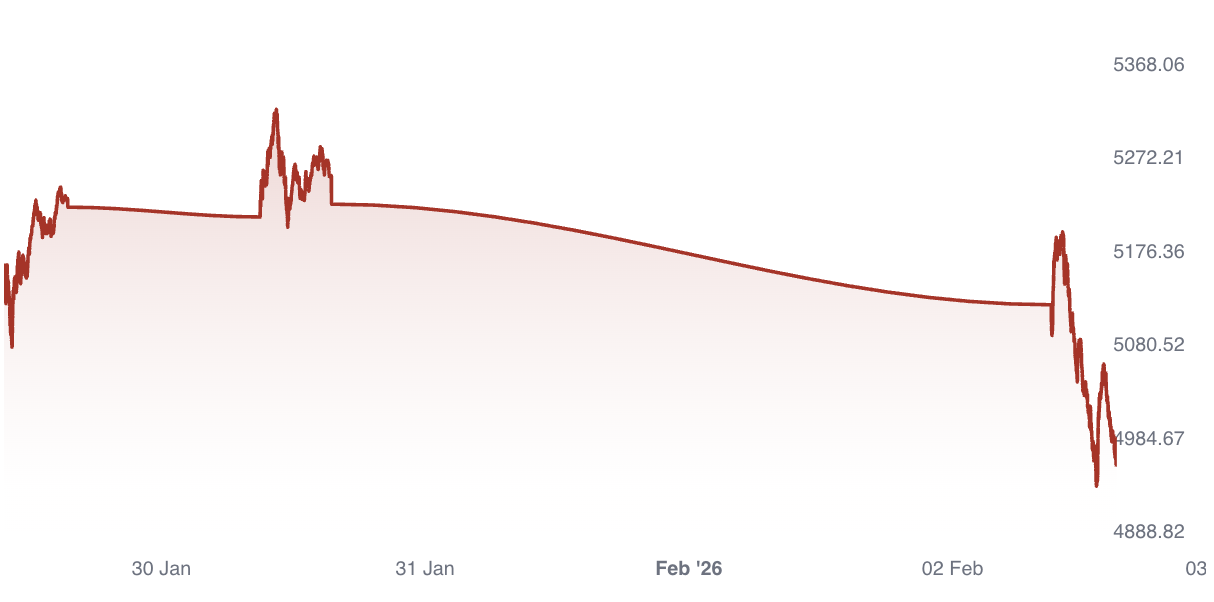
Indices
The Kospi (South Korea) has faced a sharp downturn, slumping over 5, primarily due to significant losses in heavyweight chipmakers. This abrupt fall signals heightened risk aversion in South Korea's tech sector, suggesting a near-term bearish trend.
The Nikkei 225 (Japan), in contrast, has shown resilience. Despite global volatility, its recent stability indicates a neutral to slightly bullish outlook, with the index weathering sector-specific headwinds more effectively than its peers.
Hong Kong’s Hang Seng Index declined by 2.5, led by a more than 3. This movement suggests persistent bearish sentiment, especially within technology-related shares.
The Shanghai Composite (China) has bucked the regional downtrend, ending a nine-session winning streak at 3.97K. This upward movement points to sustained bullishness, likely supported by domestic policy and sector-specific strength.
Stocks
Technology stocks remain at the center of market focus. In South Korea, Samsung Electronics and SK Hynix dropped between 4.8 and 6.5, respectively, driving the Kospi’s sharp decline. These moves reflect concerns about overextended valuations in the AI and semiconductor sectors. In Japan, major Nvidia suppliers like Advantest Corp. experienced losses of around 10, underscoring sector-wide vulnerability.
Given these declines, investors may look to rotate into less volatile sectors or await further stabilization before re-entering technology names. The Hang Seng’s technology sub-index underperformance highlights similar risks in Hong Kong’s market, reinforcing a cautious approach.
Economic News
Recent sharp declines in Asian tech stocks were triggered by a sector-wide selloff, with the MSCI Asia technology gauge dropping 4.2. This correction appears to be a response to inflated valuations and profit-taking after a period of robust gains.
On a positive note, recent easing of US-China trade tensions has provided a tailwind for Asian equities. In October 2025, consensus on key disputes between the US and China lifted the Nikkei 225 above 50K and boosted the Hang Seng past 26.4K, reflecting optimism for regional growth.
Economic Events
For February 2, 2026, Japan will see third-quarter earnings releases from Mizuho Financial Group, Murata Manufacturing, and TDK Corp. These results may influence financial and technology sector sentiment, particularly if outcomes diverge from expectations.
Looking ahead, the US JOLTS Job Openings report is scheduled for February 3, 2026. While not an Asian event, its outcome may affect global risk appetite, impacting Asian indices due to interconnected market dynamics.
Market Sentiment
Market sentiment in Asia is currently mixed, with a bearish tone dominating technology-heavy indices like the Kospi and Hang Seng due to recent selloffs. The Shanghai Composite’s steady climb suggests localized optimism, possibly buoyed by supportive policy measures. The Nikkei 225’s resilience in the face of sectoral declines highlights a more balanced, cautiously optimistic investor stance in Japan. Overall, risk aversion is rising in the technology sector, while selective bullishness persists in markets with strong domestic support or diversified sector exposure.
Please note that the analysis is for informational purposes only and does not constitute financial advice. Users should conduct their own research.
UCapital Asset Management LLP or group companies may have commercial relationships with the companies mentioned. This content is not financial advice.
Sign up for free to ask the AI about this article.
Multiples, financials, sentiment and risks in 60 seconds, with live data.