
Asian markets: closing amid U.S./China trade tensions

Indices
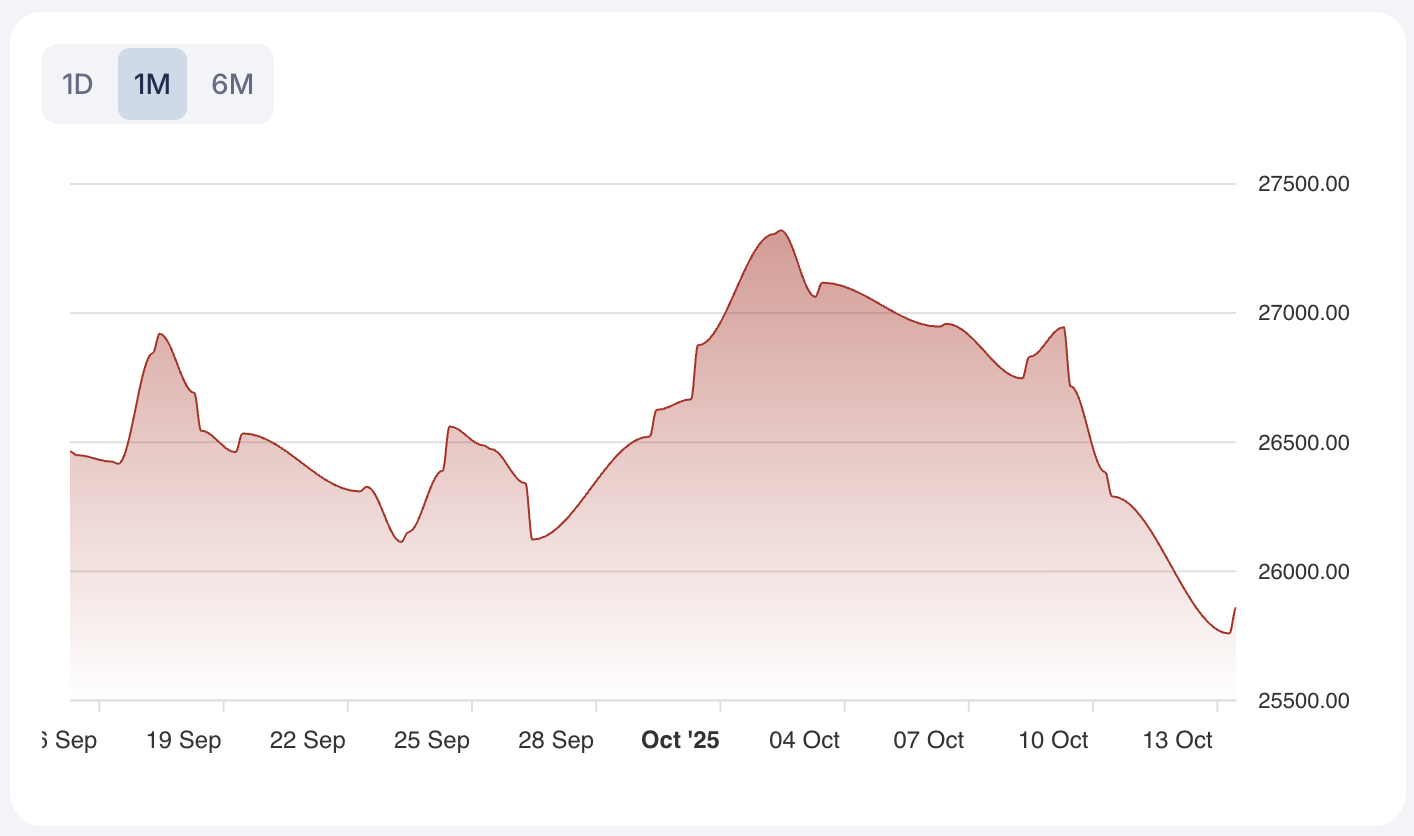
Asian equity markets are experiencing heightened volatility as the latest developments in U.S.-China trade relations weigh heavily on investor sentiment. The Nikkei 225 48088.8 has declined by -1.01201, closing at 48088.8, a drop of -491.64. This pullback reflects growing concerns over Japan's export outlook and a sharp loss of confidence in the auto sector. Meanwhile, the Shanghai SSE Composite Index 3889.5022 has eased by -0.19312, ending at 3889.5022, while the Hang Seng Index 25866 dropped by -1.61402 to close at 25866. Micro-trend analysis for all three indices signals a FLAT trend, indicating a lack of clear directional conviction in the near term. The overall movement suggests that trade and policy headwinds are keeping buyers cautious.
Stocks
Market breadth has turned negative as high-profile stocks and sectors react sharply to the evolving geopolitical landscape. Top gainers include Top KingWin Ltd (WAI) 38.88889 and LEIFRAS Co., Ltd. (LFS) 35.04823, reflecting strong interest in outperforming equities. On the other hand, Dreamland Limited (TDIC) experienced a dramatic fall of -80.98361, highlighting sectoral volatility. NIO Inc. (NIO) also recorded high trading volume with a drop of -10.05362, signaling risk-off sentiment among investors. The movement in rare earth and semiconductor stocks is bucking the broader downtrend due to their strategic importance in the ongoing U.S.-China dispute, making them potential buy candidates, while export-oriented sectors face continued selling pressure.
Economic News
Recent economic data from China has injected both optimism and caution into the markets. Imports for September surged by 7.4% year-on-year, far exceeding the previous 1.3, while exports rose by 8.3%, reflecting resilience despite headwinds. However, the trade balance narrowed to 90.45 billion, a decline of -11.609%, highlighting the impact of global trade friction. The World Bank’s upward revision of China’s 2025 GDP growth forecast to 4.8% suggests a solid short-term outlook, but warnings of a 2026 slowdown due to weakening exports and structural shifts remain a concern. The announcement of 100% U.S. tariffs on Chinese imports has further rattled the region, reinforcing bearish sentiment.
Economic Events
Key events shaping the current landscape include the ongoing study of China’s 15th Five-Year Plan, which aims to double the economy’s size between 2020 and 2035—a signal of long-term strategic ambition. In Japan, business confidence, particularly in the auto sector, has sharply declined, marking the first fall in manufacturers' sentiment in four months. These developments, alongside the 38th Tokyo International Film Festival scheduled in late October, serve as reminders of both economic and cultural milestones.
Market Sentiment
Market sentiment across Asia is decidedly bearish. In China, investors are reacting to escalating trade tensions, with widespread selling in export-driven and cyclical sectors. Japan’s mood is similarly negative, weighed down by deteriorating auto sector confidence and export fears. Flat micro-trends on major indices reinforce this caution, as traders await further clarity on policy responses and trade negotiations. The defensive posture in equities, coupled with selective buying in strategic industries such as semiconductors and rare earths, suggests a market bracing for continued volatility.
Please note that the analysis is for informational purposes only and does not constitute financial advice. Users should conduct their own research.
UCapital Asset Management LLP or group companies may have commercial relationships with the companies mentioned. This content is not financial advice.
Sign up for free to ask the AI about this article.
Multiples, financials, sentiment and risks in 60 seconds, with live data.