
Asia-Pacific markets post a mixed close amid lackluster cues from Wall Street

Indices
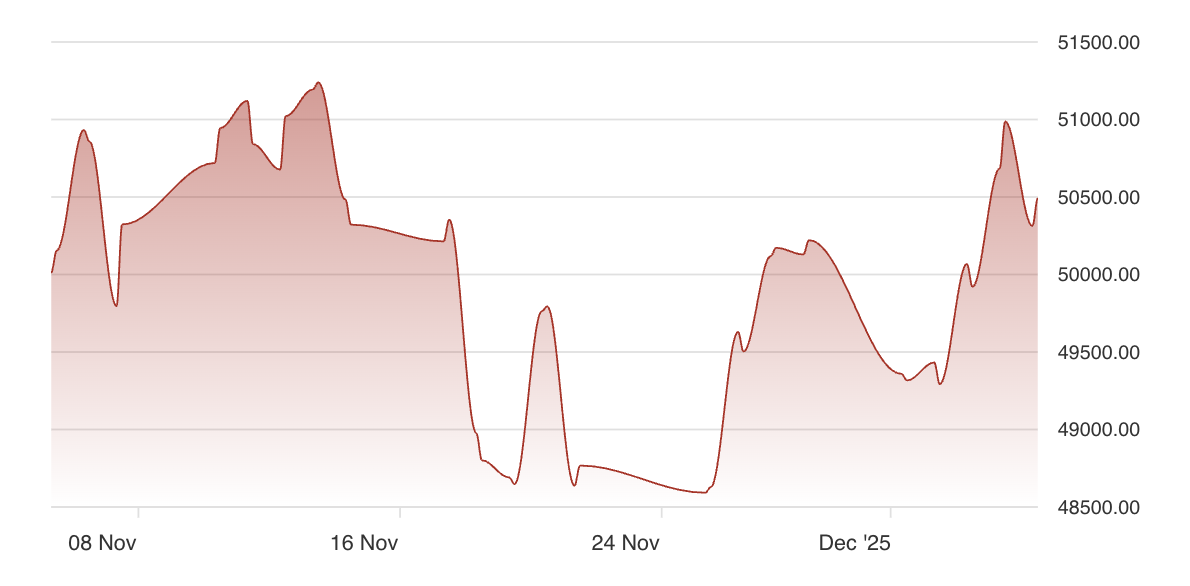
The main Asian indices are presenting a mixed landscape, shaped by regional economic data, policy speculation, and global risk factors. The Nikkei 225 closed at 50491.87, down -1.05147, reflecting its largest single-day drop since January. This movement signals heightened investor anxiety over potential Bank of Japan rate hikes and weaker household spending data. The Hang Seng Index ended at 26085.09, up 0.57519, buoyed by sector-specific buying, particularly in large-cap China names and technology. The Shanghai Composite Index saw a modest gain to 3902.8076, up Asia-Pacific markets post a mixed close amid lackluster cues from Wall Street0.697, as investors weighed mixed domestic economic data and continued manufacturing sector weakness. The Nikkei currently shows a FLAT micro-trend, indicating an absence of clear directional momentum, which may reflect indecision amid policy speculation.
Stocks
In Japan, industrials and robotics stocks have taken the lead, with notable surges in Fanuc and strong performances from Yaskawa and Renesas, underscoring a rotation into cyclicals and exporters amidst lower yields and robust JGB demand. In Hong Kong, large-cap China names such as Alibaba and ETFs tied to the HSCEI drove turnover, though sector breadth remains narrow with mixed results in financials and property. Mainland China saw no clear sector leadership, but technology and domestic discretionary stocks remain sensitive to PMI and policy signals. This divergent stock leadership highlights nuanced positioning as investors seek exposure to policy beneficiaries and cyclicals, while remaining wary of macro headwinds.
Economic News
Recent economic releases have been pivotal in shaping market action. In Japan, disappointing household spending figures have heightened concerns about inflation and the likelihood of Bank of Japan rate hikes, pushing the yen higher and putting pressure on exporter stocks. The Hang Seng's performance reflects ongoing caution, as global trade tensions and inflation fears weigh on sentiment. In mainland China, the manufacturing PMI contracted for the eighth consecutive month in November, with an actual reading of 49.2, underscoring persistent economic headwinds despite some policy stimulus hopes. The property market slump and weak consumer confidence continue to drag on Chinese equity sentiment. Meanwhile, resilient investment flows from Japan into Hong Kong—up 55.5 year-on-year—signal underlying economic ties even amid broader uncertainty.
Economic Events
Markets are closely watching upcoming central bank meetings and data releases for cues. The Bank of Japan policy meeting on December 18–19, 2025, is highly anticipated, with markets pricing in a meaningful chance of a rate hike. Any policy shift could directly impact the Nikkei and the broader risk environment in Asia. In China, official PMI prints, manufacturing data, and potential policy announcements are in focus, as fresh stimulus or targeted support could trigger a reflation trade in mainland and Hong Kong equities. U.S. Federal Reserve decisions and data releases next week are also critical, as they will shape global rate differentials, FX trends, and equity flows into Asia.
Market Sentiment
The prevailing sentiment across Asia is cautiously bullish, but with significant pockets of risk aversion. Japan is the clear outperformer in technical terms, with positive breakout behavior in the Nikkei during recent sessions, although today’s drop signals renewed caution. Hong Kong benefits from selective large-cap buying, while Shanghai remains neutral-to-cautious due to weak activity indicators. Positioning reveals profit-taking in some Korean and Taiwan tech shares, offset by rotation into Japanese cyclicals and large Hong Kong China exposures. Volatility is asymmetric, with positive policy or data surprises fueling rallies, but macro disappointments leading to sharp pullbacks. Key cross-market risk remains the divergence in central bank policy: a BOJ hike alongside a U.S. Fed cut could strengthen the yen and support Japanese equities, but create headwinds for export-sensitive Asian currencies.
Please note that the analysis is for informational purposes only and does not constitute financial advice. Users should conduct their own research.
UCapital Asset Management LLP or group companies may have commercial relationships with the companies mentioned. This content is not financial advice.
Sign up for free to ask the AI about this article.
Multiples, financials, sentiment and risks in 60 seconds, with live data.