
Asia-Pacific markets close broadly lower as Wall Street slump and AI sell-off weigh on sentiment

Indices
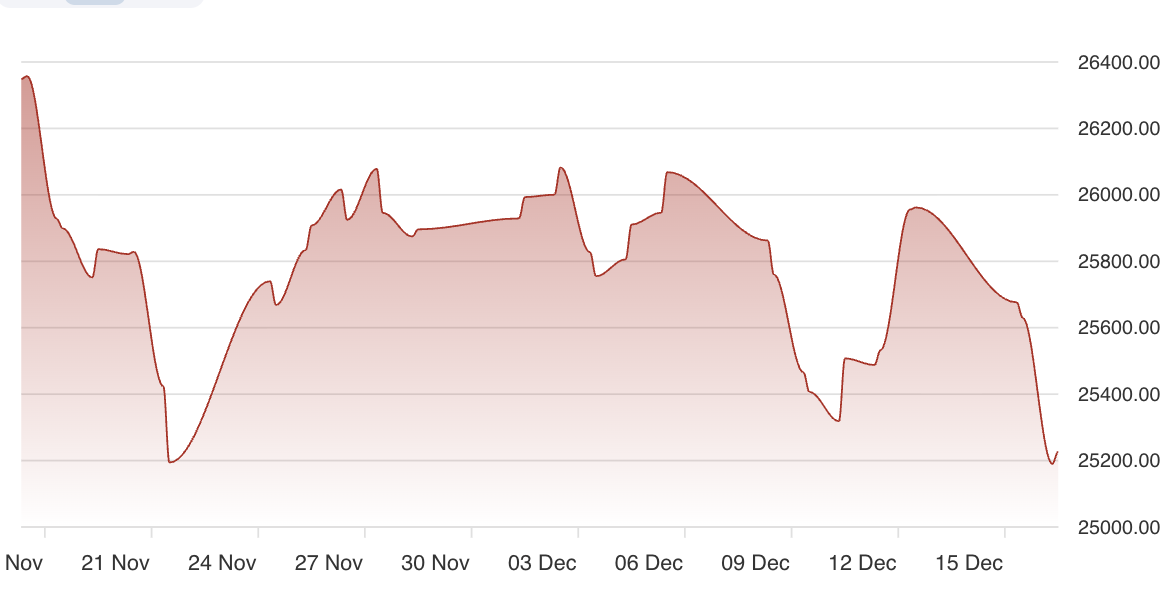
The main Asian equity indices are displaying a distinctly cautious and volatile tone as the region reacts to a blend of disappointing economic data, central bank policy speculation, and sector-specific pressures. The Nikkei 225 49.38K is currently trading at a level that reflects a decline of -1.56, indicating a pullback as investors digest weak manufacturing data and speculation of a Bank of Japan rate hike. The Hang Seng Index 25.24K has dropped -1.54, pressured by persistent worries over China’s property sector, soft macro data, and global risk-off sentiment. The SSE Composite Index 3.82K is also under pressure, reflecting a loss of -1.11, as ongoing weakness in Chinese factory activity clouds the outlook.
Short-term technical trend signals for all three benchmarks are currently assessed as FLAT, suggesting a market in consolidation and lacking clear directional conviction. This setup typically points to increased volatility and a wait-and-see posture among institutional investors.
Stocks
Sector rotation and individual stock moves are dominating the landscape, with technology and industrial names in Japan such as Fanuc Corporation (6954.T) previously outperforming but now facing profit-taking amid macro headwinds. Japanese tech stocks are particularly sensitive to both global tech sector weakness and domestic monetary policy shifts. In Hong Kong, large-cap technology stocks such as Alibaba Group Holding Limited (9988.HK) and Tencent Holdings Limited (0700.HK) have shown resilience, supported by hopes of further Chinese stimulus, while underperformers like Meituan (3690.HK) saw marked declines following disappointing earnings.
Shanghai’s market activity is more subdued, with no clear sector leadership and sentiment weighed down by persistent manufacturing contraction. Stocks with high trading volumes, such as Nio Inc. (NIO), show that traders are favoring short-term momentum plays in active names, particularly in logistics, electric vehicles, and rare earths. Overall, the equity landscape remains fragmented and highly sensitive to macroeconomic and policy developments.
Economic News
Recent macroeconomic data releases have been pivotal in driving market direction. In Japan, November manufacturing PMI contracted to 48.7, underscoring fragility in the industrial sector and contributing to the Nikkei’s volatility. The Bank of Japan governor’s hints at a potential rate hike have further strengthened the yen and lifted bond yields to multi-year highs. In Hong Kong, retail sales have climbed by 5.3, signaling resilient consumer demand despite broader economic uncertainties. Meanwhile, in China, factory activity has contracted for the eighth consecutive month, reinforcing investor caution and dampening enthusiasm for risk assets.
Economic Events
A series of high-impact global economic events are on the horizon and are likely to shape regional sentiment. The upcoming Bank of Japan policy meeting (December 18–19, 2025) is a focal point, with markets pricing in a meaningful chance of a rate hike. Any decision from the BOJ could have immediate repercussions for both currency and equity markets across Asia. In China, traders are closely watching for upcoming PMI prints and further policy announcements, as additional stimulus could trigger renewed buying in both mainland and Hong Kong equities. U.S. Federal Reserve policy moves and inflation data are also key, as they continue to influence global risk appetite and capital flows into Asian markets.
Market Sentiment
Market sentiment across the main Asian indices remains cautiously optimistic but highly selective. The Nikkei 225 demonstrates underlying resilience, buoyed by sector rotation into technology and industrial names, but is constrained by policy uncertainty and global tech volatility. The Hang Seng Index is supported by selective large-cap buying, particularly in technology, yet remains exposed to property sector weakness and global macro risks. The Shanghai Composite exhibits a neutral-to-cautious tone, with persistent manufacturing contraction and lackluster activity data limiting investor enthusiasm. Investors are prioritizing defensive positioning and short-term tactical trades, while closely monitoring for policy-driven inflection points, especially the divergence between BOJ and Fed policies, which could shift currency dynamics and asset flows in the region.
Please note that the analysis is for informational purposes only and does not constitute financial advice. Users should conduct their own research.
UCapital Asset Management LLP or group companies may have commercial relationships with the companies mentioned. This content is not financial advice.
Sign up for free to ask the AI about this article.
Multiples, financials, sentiment and risks in 60 seconds, with live data.