
U.S.–Argentina trade Agreement: all of Made in Italy put at risk
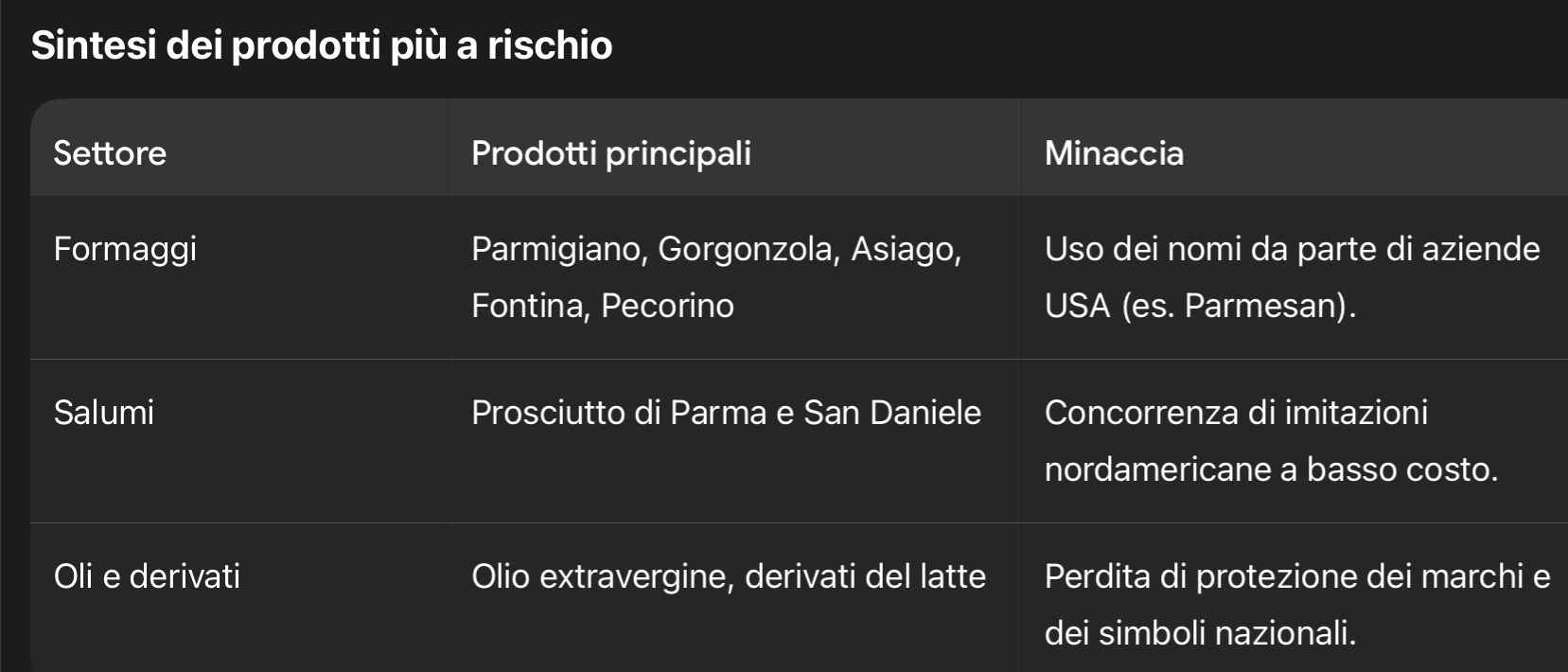
The new trade treaty between Washington and Buenos Aires legalizes Italian Sounding. Goodbye to protection for historic names such as Asiago, Gorgonzola and Prosciutto: for the Argentine market they will now be considered “generic terms.” A deep wound to the food sovereignty so strongly defended by the Meloni government.
On February 5, 2026, Donald Trump and Javier Milei signed the ARTI (Agreement on Reciprocal Trade and Investment), a treaty that, behind promises of growth and investment, hides a potentially lethal threat to the Italian agri-food sector.
At the heart of the dispute is Article 2.5. The text establishes a revolutionary and dangerous principle: product names are no longer protected based on geographical origin unless extremely difficult proof is provided of their specific reputation linked to the territory. In practice, Argentina commits not to restrict access to U.S. products using names such as Asiago, Gorgonzola, Fontina, Provolone and Burrata.
The situation is no better for cured meats: Mortadella, Prosciutto, Pancetta and Capocollo are included in the list of terms considered “generic.” In simple terms, a cheese produced in Wisconsin will be legally sold in Buenos Aires as “Parmesan” or “Gorgonzola,” benefiting from preferential tariffs and outcompeting original Italian products, which face far higher production costs and quality standards.
The ARTI agreement represents a diplomatic paradox for Palazzo Chigi. On the one hand, Prime Minister Giorgia Meloni has consistently expressed political closeness to the visions of Trump and Milei; on the other, it is precisely her ideological allies who are delivering what Coldiretti calls a “frontal attack” on Made in Italy.
The U.S.-Argentina deal effectively neutralizes the safeguard clauses painstakingly inserted into the EU-Mercosur agreement, which was meant to protect 58 Italian geographical indications. If Argentina, a pillar of Mercosur, now recognizes those names as generic to please Washington, European protection becomes worthless. For Italian producers, the blow is twofold: while American imitations flood South America, the Trump administration continues to maintain high tariffs on authentic products arriving from Europe. The food war has just begun, and this time “friendly fire” may hurt more than attacks from traditional competitors.
Benedetta Zimone
UCapital Asset Management LLP or group companies may have commercial relationships with the companies mentioned. This content is not financial advice.
Sign up for free to ask the AI about this article.
Growth, inflation and rates across the major economies, with the impact on your business.