
New Trade Routes to Bypass the Strait of Hormuz
The search for strategic alternatives amid energy security and global…
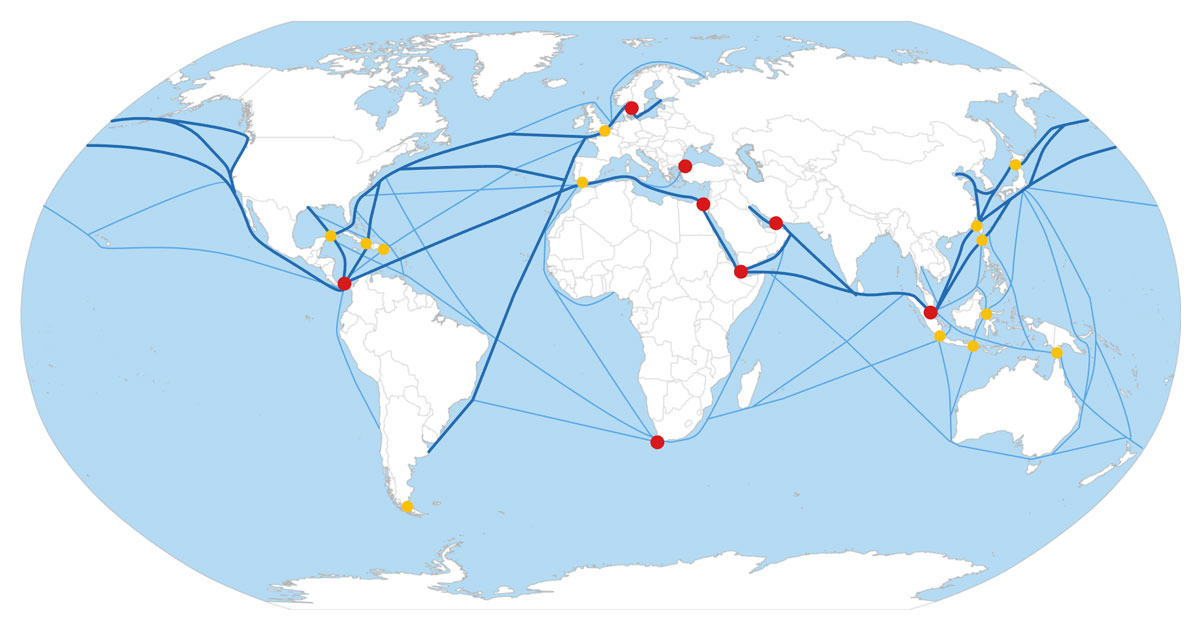
The Strait of Hormuz as a critical chokepoint in global trade
The Strait of Hormuz is one of the most strategically important maritime passages in the world: around one-third of seaborne oil and a significant share of liquefied natural gas passes through it.
Its importance also makes it highly vulnerable. Geopolitical tensions between Iran, the United States, and Gulf countries have repeatedly raised fears of blockades or disruptions to maritime traffico, pushing governments and companies to seek alternative routes.
The growing role of the Red Sea and Suez Canal routes
One of the main alternatives to the Strait of Hormuz runs through the Red Sea and the Suez Canal. This route allows ships to avoid the Persian Gulf, directly connecting Asia, the Middle East, and Europe.
However, this path is also not without risks. Instability in the Red Sea and the nearby Bab el-Mandeb Strait has increased concerns, pushing shipping companies to consider further detours.
Land pipelines and alternative Gulf infrastructure
To reduce dependence on the strait, several countries are expanding pipelines and land-based infrastructure. Saudi Arabia, for example, uses the East-West Pipeline system to transport oil to the Red Sea, bypassing Hormuz.
The United Arab Emirates has also developed alternative export infrastructure, such as the Fujairah terminal on the Indian Ocean, allowing direct access to global shipping routes without crossing the Persian Gulf.
The Cape of Good Hope route: longer but safer
In cases of severe regional instability, some shipping companies opt for the alternative route around the Cape of Good Hope. Although much longer and more expensive, it completely avoids Middle Eastern conflict zones.
In recent years, this option has been used particularly during periods of heightened tension in the Red Sea, highlighting how geopolitical security directly impacts global trade costs.
New economic corridors between Asia and Europe
In addition to traditional maritime routes, new land and rail corridors are emerging. The India–Middle East–Europe Economic Corridor (IMEC) aims to connect South Asia with Europe through integrated infrastructure, reducing reliance on vulnerable maritime chokepoints.
Cooperation between Middle Eastern countries and Turkey is also aiming to build alternative logistics routes that bypass the Persian Gulf, reshaping the global trade map.
A new balance between security and global trade
The search for alternative routes to the Strait of Hormuz reflects a broader transformation in international trade. Energy security has become a strategic priority, and countries are diversifying infrastructure and routes to reduce risks.
In this scenario, the geography of global trade is no longer fixed: it adapts to geopolitical tensions, regional conflicts, and the evolving energy strategies of major powers.
UCapital Asset Management LLP or group companies may have commercial relationships with the companies mentioned. This content is not financial advice.
Sign up for free to ask the AI about this article.
Growth, inflation and rates across the major economies, with the impact on your business.