
Italy's Inflation: From a Four-Decade High in 2022 to Near-Target in 2026
Italian consumer prices surged to levels unseen since the 1980s on energy and food shocks, then cooled steadily as ECB rate hikes and fading commodity pressures took hold.

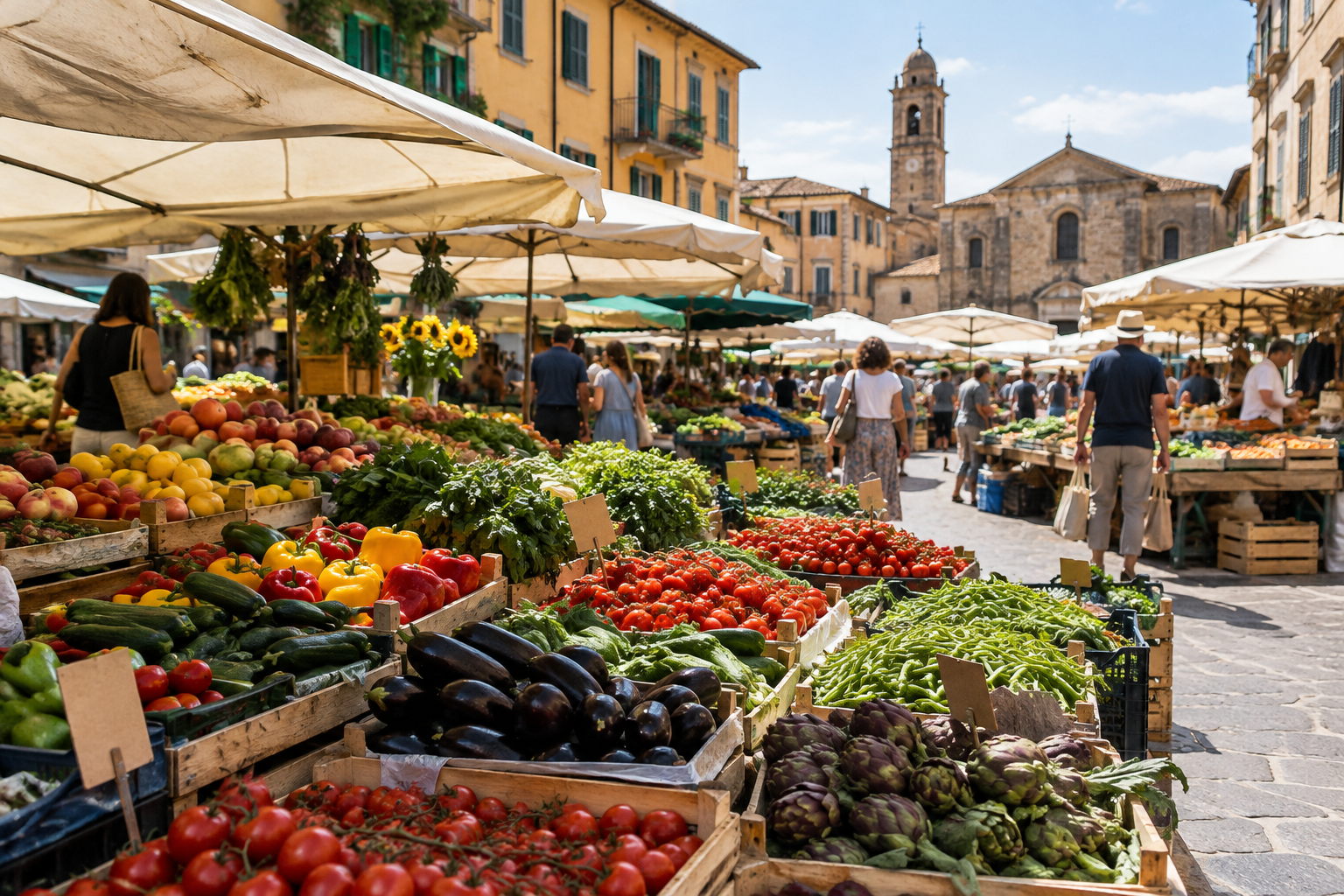
- 01Italian CPI peaked at a four-decade high in 2022, driven by energy and food price shocks.
- 02The ECB responded with an aggressive rate-hiking cycle that helped cool eurozone inflation.
- 03Energy prices were the primary driver of the surge and subsequently the main factor in the disinflation.
- 04By 2025–2026, Italian inflation moved back toward the ECB's 2% target as commodity pressures faded.
Italian consumer prices surged to their highest level in roughly four decades in 2022, propelled by a violent spike in energy costs and cascading food-price pressures that swept across the eurozone, before a sustained disinflation brought price growth back toward the European Central Bank's 2% target by 2025–2026.
The arc of Italian inflation over those four years — from historic shock to gradual normalisation — encapsulates the broadest test of ECB monetary policy since the euro's creation, and its resolution carries lasting implications for households, businesses and the single currency.
What happened
Italy's inflation cycle between 2022 and 2026 unfolded in three distinct phases: a sharp acceleration, a prolonged plateau and a multi-year descent. The initial surge was almost entirely supply-driven, rooted in the global energy dislocation that followed Russia's invasion of Ukraine and the lingering bottlenecks of the post-pandemic reopening.
- 2022 peak: Italian CPI, as measured by Istat, climbed to a four-decade high, with energy components recording double-digit annual gains that fed through to transport, manufacturing and food production costs.
- Energy prices: Electricity and natural gas prices were the dominant driver of headline inflation, amplifying the shock across the entire supply chain.
- Food inflation: Agricultural input costs — fertilisers, fuel for machinery, logistics — pushed food prices sharply higher, squeezing household budgets already strained by energy bills.
- 2023–2024 cooling: As energy commodity prices retreated from their wartime peaks and ECB rate hikes filtered through credit conditions, Italian CPI began a sustained deceleration.
- 2025–2026 normalisation: Fading commodity pressures and anchored wage expectations brought Italian price growth back toward the ECB's 2% medium-term target.
What drove the surge?
Energy prices were the single most powerful accelerant of Italian inflation in 2022. Italy's dependence on imported natural gas — much of it historically sourced from Russia — left the country acutely exposed to the supply disruption that followed the outbreak of war in Ukraine. Electricity prices, which in Italy are closely linked to gas-fired generation, rose in tandem, raising costs for industry and households alike.
Food prices compounded the shock. Higher energy input costs raised the price of fertilisers and agricultural logistics, while drought conditions in parts of southern Europe reduced domestic harvests. The result was a broad-based cost-of-living squeeze that fell disproportionately on lower-income households, for whom energy and food represent a larger share of spending.
Core inflation — stripping out energy and unprocessed food — also rose, though more gradually, as businesses passed higher input costs onto consumers and services prices firmed with the post-pandemic demand recovery. The breadth of the price acceleration made it harder for the ECB to dismiss the episode as purely transitory.
How did the ECB respond?
The European Central Bank launched its most aggressive rate-hiking cycle in the institution's history starting in mid-2022, raising its key policy rates from negative territory to restrictive levels over the course of roughly two years. The tightening was designed to anchor inflation expectations and cool demand across the eurozone, including in Italy.
ECB Chief Economist Philip Lane has noted that high eurozone energy costs have yet to generate strong second-round inflation effects, and that the strength of any such pass-through remains uncertain — a signal that the central bank continued to monitor wage and price dynamics closely even as headline figures fell. Lane has also stated that wages are not rising at a rate that would trigger inflation alarms, a development the ECB views as essential to a durable return of inflation to target.
Wages aren't rising at a rate that would trigger inflation alarms.
Philip Lane, ECB Chief Economist, speaking on 8 October 2026.
The absence of a pronounced wage-price spiral in Italy and across the eurozone was a key factor enabling the disinflation to proceed without a severe recession. Italian labour market dynamics — including the role of national wage bargaining and the gradual renewal of collective contracts — meant that real wage losses were absorbed over time rather than immediately renegotiated upward.
How did markets react?
The EUR/USD exchange rate reflected the shifting inflation and monetary policy landscape throughout the cycle. In 2022, as the Federal Reserve moved faster and more aggressively than the ECB to raise rates, the euro weakened sharply against the dollar, briefly falling below parity — a development that itself added an imported-inflation dimension to eurozone price pressures, since commodities priced in dollars became more expensive in euro terms.
As the ECB accelerated its own tightening and the inflation differential between the United States and the eurozone began to narrow, EUR/USD stabilised and partially recovered. By 2025–2026, with both central banks navigating the transition from restrictive to more neutral policy stances, the currency pair traded in a range more consistent with underlying economic fundamentals.
Italian government bond spreads over German Bunds — a barometer of country-specific risk within the eurozone — widened during the most acute phase of monetary tightening, reflecting concerns about Italy's high public debt load in a higher-rate environment, before compressing again as the disinflation path became clearer and the ECB deployed its Transmission Protection Instrument to guard against unwarranted fragmentation.
Why it matters
Italy's inflation experience between 2022 and 2026 matters for several reasons that extend beyond the country's borders. As the eurozone's third-largest economy, Italy's price dynamics carry significant weight in the aggregate inflation figures that guide ECB policy for all nineteen — now twenty — member states. A persistent divergence between Italian and German or French inflation would complicate the calibration of a single monetary policy.
For Italian households, the four-year cycle represented a substantial erosion of purchasing power, particularly in 2022 and 2023, before real wages began to recover as nominal pay adjustments caught up with past price increases and energy bills fell. The distributional impact — heavier on lower-income and fixed-income households — has informed ongoing political debates about energy subsidies, rent controls and the adequacy of social transfers.
For the ECB, Italy's relatively smooth disinflation — achieved without a deep recession or a financial crisis — offered partial validation of its strategy. The absence of entrenched second-round effects, as Lane observed, suggested that the central bank's credibility in anchoring long-term inflation expectations remained intact even after the largest inflation shock in a generation.
What to watch next
Several catalysts and data releases will determine whether Italy's return to near-target inflation proves durable or whether new shocks reignite price pressures.
- Istat monthly CPI releases: Each monthly reading from Istat will be scrutinised for signs of re-acceleration in services or food prices, the two components most likely to sustain inflation above target even as energy normalises.
- ECB policy meetings: The Governing Council's rate decisions in the coming quarters will reflect the balance between residual inflation risks and the need to avoid over-tightening in an economy where growth remains fragile.
- Energy price trajectory: Global oil and gas markets remain the single largest wildcard; any renewed geopolitical disruption to supply could quickly reverse the disinflation gains of 2024–2026.
- Wage negotiations: The renewal of major Italian collective labour agreements in 2026 and 2027 will test whether wage growth remains consistent with the ECB's 2% target or begins to generate the second-round effects that Lane has so far described as absent.
- EUR/USD dynamics: A significant weakening of the euro against the dollar would reintroduce imported inflation through energy and commodity prices, complicating the ECB's path toward policy normalisation.
Sources:wsj.comreuters.com
UCapital Asset Management LLP or group companies may have commercial relationships with the companies mentioned. This content is not financial advice.
Sign up for free to ask the AI about this article.
Growth, inflation and rates across the major economies, with the impact on your business.