
Housing affordability crisis: governments turn to public funds, partnerships and institutional capital
Housing shortages are pushing governments to back affordable housing with public money and private partners. The evidence on results is mixed, and the role of institutional investors is still debated.

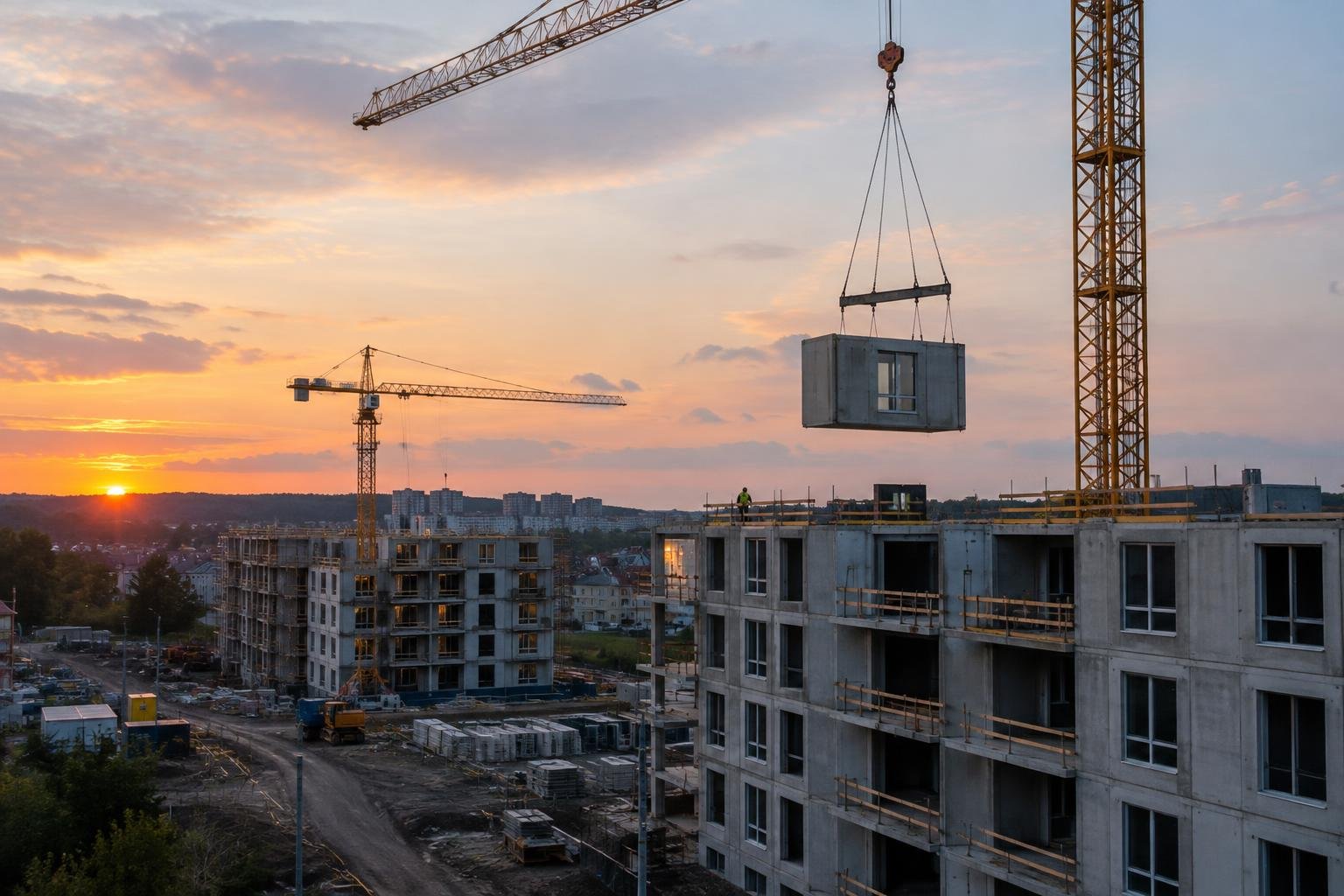
- 01The EU faces a shortfall of up to 10 million housing units, about 3.5% of total stock, and construction is meeting only about half the required pace, according to a report published on 26 March 2026.
- 02Germany needs 400,000 new homes a year but is far from that target, while France has 2.8 million households on social housing waiting lists.
- 03Australia's A$10 billion Housing Australia Future Fund had committed to 18,650 homes by 30 September 2025, against a target of 40,000 by 2029.
- 04The US GAO found institutional investors owned 1-3% of all single-family homes in six metro areas by 2024.
The European Union faces a shortfall of up to 10 million homes, roughly 3.5% of its housing stock, as construction runs at only about half the required pace, according to a report published on 26 March 2026. Governments in the United States, United Kingdom, Germany and France are responding with public investment, tax incentives and public-private partnerships.
The housing affordability crisis and the government response matter for markets because affordable housing policy increasingly relies on private capital. Banks, institutional investors and funds are being asked to finance residential real estate investment at scale, while evidence on the results remains uneven.
What happened
Governments in the United States, the United Kingdom, Germany and France are widening public funding and partnerships as housing shortages deepen, and the European data show how large the gap has become. The European Union faces a shortfall of up to 10 million housing units, roughly 3.5% of its total stock, according to a report published on 26 March 2026. Across the bloc, actual construction is meeting only about half the required pace.
The pressure is uneven between countries, and the national figures in that report point to the scale of the task ahead for policy makers and for the lenders and investors asked to fund delivery.
What do the national figures show?
- EU-wide: a shortfall of up to 10 million units, about 3.5% of stock.
- Germany: needs 400,000 new homes a year, but is nowhere near hitting that target.
- France: 2.8 million households are on social housing waiting lists.
- The Netherlands: must build around 1 million homes by 2031.
The figures suggest that a shortage is not confined to one market. Germany's gap is a flow problem, with annual output short of the yearly requirement, while France's waiting lists measure unmet demand in the social segment.
Why have quick fixes run out?
The same report says governments have exhausted most quick solutions and that the construction industry is struggling to modernise. Chronic labour shortages in Europe's construction sector add to the constraint, which is why factory-based building is gaining political and industrial traction.
For that reason, public money is increasingly paired with private partners. Public-sector support alone has not closed the distance between construction and demographic need, and the sections that follow examine how far loans, grants, tax incentives and institutional capital have changed that picture.
The data also leave open how quickly output can rise. Construction at about half the required pace implies that, without a step change in delivery, the shortfall would keep growing rather than shrink.
Why it matters
The housing shortage matters for markets because affordable housing delivery now depends on public money working alongside private capital, so the pace of construction bears directly on residential real estate investment. A California Senate housing committee background paper states that developing housing affordable to very low- and low-income families requires some amount of public investment.
That requirement shapes who funds projects. Governments supply grants, loans and block funding, while banks, institutional investors and funds are asked to finance the rest. Where public programmes fall short of the need, the gap lands on private balance sheets and on the rental market.
What does the scale of the gap mean for investors?
The size of the shortfall defines the pool of demand that residential strategies target. According to a European report published on 26 March 2026, the EU faces a shortfall of up to 10 million housing units, and actual construction is meeting only about half the required pace. The same report says Germany needs 400,000 new homes a year but is nowhere near that target.
- EU shortfall: up to 10 million units, roughly 3.5% of total stock.
- Germany: a need for 400,000 new homes a year, not being met.
- France: 2.8 million households on social housing waiting lists.
- EU construction: running at about half the required pace.
Is the evidence on private capital settled?
It is not. The US Government Accountability Office (GAO) found that institutional investors, defined in one study as owners of 5,000 or more single-family homes, held 1-3% of all single-family homes in six metropolitan areas by 2024.
That uncertainty is a risk for policy design. Governments that lean on private finance to raise supply must do so without complete data on how such capital affects prices, rents and tenants, and the outcome will influence how banks and funds weigh large residential projects.
How big is the shortage in Europe?
The shortage in Europe is large and uneven: the European Union faces a shortfall of up to 10 million housing units, roughly 3.5 percent of its total stock, and actual construction is meeting only about half the required pace. The EU's Joint Research Centre, in a policy brief dated December 2025, says the housing stock grew from 218 million in 2010 to about 248 million in 2024.
That expansion has not kept up everywhere. According to the same brief, in one third of all NUTS 3 regions construction did not manage to keep pace with demographic trends. Population trends, including rising urbanisation, a growing number of households and diverse migration flows, are shaping demand and exposing gaps in the existing stock.
Where are the gaps sharpest?
Needs are concentrated in urban and high-demand regions with strong economies or tourism. In those areas, the brief estimates that demographic change since 2010 would have required 4.6 million homes in addition to those actually built.
National figures reported in March 2026 show how the pressure varies by country:
- Germany needs 400,000 new homes a year but is nowhere near hitting that target.
- France has 2.8 million households on social housing waiting lists.
- The Netherlands must build around 1 million homes by 2031.
- Poland faces a shortage of 1.5 million housing units.
Why does construction lag?
The construction industry is struggling to modernise and faces chronic labour shortages, according to the March 2026 analysis, which also says governments have exhausted most quick solutions. The industry's difficulty in raising output matters because the gap is measured against demographic need, not against past building rates.
The data also carry a caveat. The JRC figures describe regional averages over 2010-2024, so a national total can mask local scarcity: a country may add units overall while its most expensive cities fall further behind. The EU-wide shortfall of up to 10 million units is likewise stated as a range, not a single point estimate.
What are the US federal and local tools?
The main US federal tool for affordable housing is the HOME Investment Partnerships Program, a federal block grant that funds states and eligible localities to be used exclusively for affordable housing activities. Cities and states then decide how to deploy the money, so the programme works as a funding channel rather than a single national building scheme.
In Massachusetts, the state describes HOME as federally funded support for affordable rental housing production, acquisition, rehabilitation and preservation. Eligible applicants include for-profit developers, non-profit developers, Community Housing Development Organizations and municipalities working with any of them. The structure means private builders can draw on public money, which ties federal funding to developers' own project economics.
How do local governments add their own funds?
Local governments layer their own money on top of federal programmes. The City of Detroit Housing and Revitalization Department released a Notice of Funding Availability in January 2026, making up to $13,000,000 available for the preservation, rehabilitation and development of affordable housing units in the city. A pre-submission public meeting was held on 23 January 2026.
Georgia's Department of Community Affairs runs a similar scheme, the 2026 Community Home Investment Program. Its notice of funds covers single-family owner-occupied rehabilitation and single-family new construction, which shows how state programmes can target different segments from the rental-focused HOME rules in Massachusetts.
Why is public money needed at all?
A background paper from the California Senate, updated in October 2021, states that developing housing affordable to very low- and low-income families requires some amount of public investment. Developers make a related point about costs: according to a report published on 29 July 2025, they cite rising costs for land, materials and labor, as well as more restrictive zoning and growing opposition to new projects, as reasons low-income apartments are hard to build.
Jonathan Rose, founder and CEO of the Jonathan Rose Companies, said at the time that there is support for affordable housing and that relief may be on the way. The sources provide no figures on how much of the shortfall these US programmes have closed, so their effect on supply remains unquantified.
Do public-private funds deliver? The Australian example
Australia's Housing Australia Future Fund (HAFF) offers an early test of whether public-private funds deliver: by 30 September 2025 it had committed funding to 18,650 homes, roughly 47% of its 40,000-home target. The fund is a dedicated A$10 billion investment established by the Australian Government in November 2023 under the Housing Australia Future Fund Act. It provides loans and grants to projects that add social and affordable housing, working with governments, community housing providers and the development and finance sectors.
What has the fund committed so far?
Under the first two funding rounds, 279 projects had been committed as at 30 September 2025, according to Housing Australia. The split is nearly even:
- 9,284 social housing dwellings
- 9,366 affordable housing dwellings
- at least 1,200 dwellings in each of the five largest states: New South Wales, Victoria, Queensland, Western Australia and South Australia
The program aims to deliver 20,000 new social homes and 20,000 new affordable homes over five years from 2024. Commitments are not completions, however: the figures describe funding agreed, not keys handed over.
What does Round 3 change?
Housing Australia opened the call for submissions for Round 3 on 30 January 2026, a non-competitive, open process in which applicants can submit proposals while funding remains available. It is the largest round so far and is meant to unlock investment for the remaining 21,350 homes needed to reach the national target of 40,000 by 2029. Housing Australia says it prioritises delivery certainty, seeking rolling completions from 2027 and all dwellings finished by June 2029.
The round also ringfences $600 million for First Nations-led organisations and requires 10% of social housing across relevant streams to go to First Nations households. It encourages collaboration across investors, developers, builders and delivery partners. Housing Australia reported a high volume of expressions of interest in two streams, Housing Diversity and Partnerships at Scale.
How are private investors involved?
Queensland shows how states plug into the federal fund. Its Community Housing Investment Pipeline supports 53,500 new social and community homes by 2044, funding community housing providers that partner with developers, builders, local governments, institutional investors and superannuation funds. The model depends on private capital sitting alongside public loans, so the gap between commitments and completed homes remains the key measure of success.
What role do institutional investors play?
Institutional investors, meaning companies that own large numbers of single-family rental homes, have become a visible but still limited part of the US housing market, according to the US Government Accountability Office (GAO). They emerged after the 2007-2009 financial crisis, when millions of homeowners defaulted on mortgages and these firms bought foreclosed homes in bulk and converted them into rentals.
How did they grow?
GAO says these investors had a funding advantage over smaller buyers because they had access to capital at a time when mortgage lenders were generally reducing lending. Technology also made it easier to acquire and manage large portfolios. Studies reviewed by GAO found that no investor owned 1,000 or more single-family rental homes as of late 2011, but by 2015 institutional investors collectively owned an estimated 170,000-300,000 homes.
Over time they moved from bulk purchases to smaller-scale buying, mergers with other investors and building homes for rent.
How large is their footprint today?
In a second report covering 2018-2024 in six metropolitan areas, GAO found that investor-owned rental homes increased in all of them, while the overall share stayed low. The figures for 2024 show a wide range:
- Institutional investors owned 1-3% of all single-family homes in Cincinnati, Dallas, Jacksonville, Nashville, Phoenix and Seattle.
- They held from 4% (Seattle) to 22% (Jacksonville) of single-family rental homes.
- The largest year-to-year increases generally came in 2021-2023 and slowed in 2024.
- In Nashville, 35% of their homes were bought from owner-occupants and 15% were newly built.
For this analysis, GAO defined institutional investors as owners of 5,000 or more single-family homes nationwide with homes in at least five metro areas. Sales out of their portfolios, including to owner-occupants, never exceeded 8% of holdings in any year in any of the six areas.
What remains uncertain?
The evidence on effects is mixed. Studies GAO reviewed found that institutional investors may have contributed to higher home prices and rents after the crisis, while also helping to stabilize neighborhoods. Their impact on homeownership and on tenants, including eviction rates, remains unclear because data are limited and there is no consistent definition of an institutional investor.
GAO noted that low housing supply and elevated prices and rents have in recent years raised questions about the role of these investors, which is why Congress asked it to study the issue in the Consolidated Appropriations Act, 2023.
Can modular construction and policy limits close the gap?
Modular construction can speed up delivery and cut waste, but it cannot close Europe's housing gap on its own, because fragmented national rules and limited design flexibility hold back its scale. The EU faces a shortfall of up to 10 million homes, and actual construction is meeting only about half the required pace.
How much can factory-built homes add?
Homes built in factories and assembled on-site can be completed 50 to 90 percent faster, as factory work and site preparation run at the same time. Waste falls to 10 to 15 kilograms per square metre, against 25 to 30 for conventional builds, and embodied carbon can be cut by up to 45 percent. The European modular market was valued at about €31 billion in 2025 and is projected to exceed €40 billion by 2030.
Adoption is uneven. Sweden builds about 45 percent of new housing with offsite or modular methods. In Germany, the second largest market, 26 percent of new single and two-family homes were prefabricated in 2024, supported by federal subsidies for climate-efficient housing.
What stands in the way?
The regulatory landscape is fragmented, and that fragmentation is itself a barrier to scale. Modules certified in one EU country cannot automatically be used in another, so cross-border trade needs separate national certifications. France's RE 2020 regulation imposes detailed energy and carbon checks that slow approvals compared with the Nordic model.
The updated Construction Products Regulation (EU 2024/3110) introduces Digital Product Passports, machine-readable records of materials, carbon footprint, CE markings and energy performance. They are designed to cut approval times and allow automated checks across borders. Design flexibility remains restricted, and changes after factory production significantly raise costs.
Have supply policies worked so far?
The evidence on wider policy is sobering. An analysis published on 29 September 2024 found that prices rose 54% in the United States, 32% in China and nearly 15% in the European Union between 2015 and 2024. It said policies to increase supply and regulate rentals had limited impact and that the problem was getting worse.
The gap between target and output is visible in Germany, which needs 400,000 new homes a year but is nowhere near that target, according to the March 2026 report. Industrialised building is one lever among several, and its contribution depends on whether certification and approval barriers are eased.
What to watch next
The next dated checkpoints for the housing push sit in Australia and the European Union, where delivery deadlines and new compliance rules will show whether public funding and private capital are translating into homes. Housing Australia's third round of the Housing Australia Future Fund (HAFF) is the most concrete test.
What is next for the Housing Australia Future Fund?
Housing Australia opened its call for submissions for HAFF Round 3 on 30 January 2026. According to the agency, it is the largest round to date and is meant to unlock investment for the remaining 21,350 social and affordable homes needed to reach the national target of 40,000 homes by 2029. Rounds 1 and 2 had committed funding to 18,650 homes across 279 projects as of 30 September 2025.
The agency said it received a high volume of expressions of interest in the housing diversity and partnerships-at-scale streams. Tranche A applicants were due to be notified of outcomes between 16 March and 30 March 2026, and successful applicants are then invited to submit detailed applications.
- 16 March 2026: final funding documents due on the Housing Australia Portal.
- 16-30 March 2026: notification window for Tranche A applicants.
- 2027: rolling completions sought under Round 3.
- June 2029: all dwellings to be complete.
Will European rules speed up approvals?
In the European Union, the updated Construction Products Regulation (EU 2024/3110) introduces Digital Product Passports for building components. These machine-readable records cover materials, carbon footprint, CE markings and energy performance, and are designed to cut approval times and allow automated compliance checks across borders.
The change targets a structural barrier: modules certified in one EU country cannot automatically be used in another, so cross-border trade needs separate national certifications. Whether passports ease that fragmentation will matter for modular construction, a European market valued at about €31 billion in 2025 and projected to exceed €40 billion by 2030.
What are the risks to delivery?
The benchmark for both efforts is pace. Across the EU, construction is meeting only about half the required rate, and Germany, which needs 400,000 new homes a year, is nowhere near that target. The Australian timetable leaves little slack, with rolling completions only from 2027 and a hard deadline in June 2029.
Sources:gao.govgao.govshou.senate.ca.govcongress.govpublications.jrc.ec.europa.eueuronews.comhousingaustralia.gov.auhousing.qld.gov.auenglish.elpais.comdetroitmi.govmass.govdca.georgia.govcnbc.comchde.qld.gov.au
UCapital Asset Management LLP or group companies may have commercial relationships with the companies mentioned. This content is not financial advice.
Sign up for free to ask the AI about this article.
Create a free business page: clients, leads and releases in one place.