
China Tightens Rare Earth Export Controls, Flags Dual-Use Concerns in EU Supply Chain Standoff
Beijing's China Ministry of Commerce expanded rare earth export restrictions on 9 October 2025, adding five new elements and tightening dual-use scrutiny, forcing some European companies to suspend production and prompting the EU to seek a coordinated G7 response.

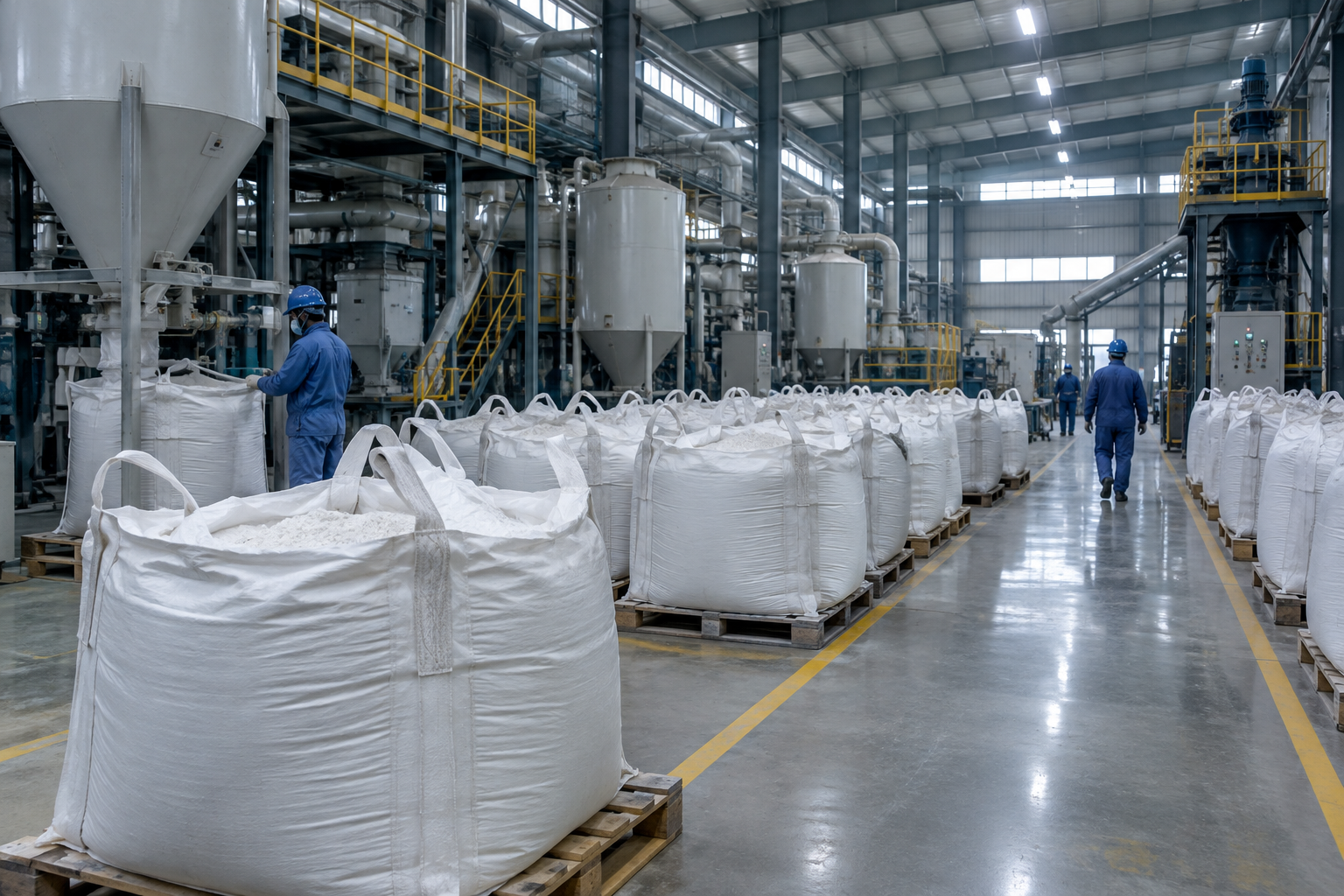
- 01China's Ministry of Commerce announced on 9 October 2025 a major expansion of rare earth export controls, adding five new elements and extending scrutiny to semiconductor and defence users.
- 02EU trade chief Maroš Šefčovič called China's restrictions a 'critical concern' on 14 October 2025, saying some European companies had already been forced to suspend production.
- 03The EU announced it would seek a coordinated G7 response to Beijing's export curbs on critical minerals.
- 04China's new dual-use rules require foreign producers using Chinese rare earth technology or materials to obtain a dual-use export licence from the Ministry of Commerce before re-exporting finished
China's Ministry of Commerce on 9 October 2025 dramatically expanded its rare earth export controls, adding five new elements and imposing heightened scrutiny on foreign semiconductor and defence users — a move that has already forced some European companies to halt production and triggered calls in Brussels for a firm, coordinated response with G7 partners.
The announcement marks the most significant tightening of China's grip on critical minerals supply chains in years, raising the stakes in an already fraught relationship between Beijing and the European Union over trade, technology and security. For European industry — heavily reliant on Chinese rare earths for green energy, defence and digital applications — the new rules introduce a layer of dual-use compliance that could reshape procurement strategies across the continent.
What happened
China's Ministry of Commerce published Announcement No. 61 of 2025 on 9 October 2025, invoking the country's Export Control Law and its Dual-Use Items Export Control Regulations, with approval from the State Council.
The rules expand the list of controlled rare earth items and extend obligations to foreign producers: any entity outside China that manufactures goods incorporating Chinese-origin rare earth materials — where those materials account for 0.1% or more of the product's value — must obtain a dual-use export licence from the Chinese Ministry of Commerce before re-exporting those goods to third countries.
The controls also apply to products made abroad using Chinese rare earth mining, smelting, separation, metal smelting, magnet manufacturing or secondary recycling technology. Export applications destined for military end-users, or for importers and end-users on China's export control watch lists, will in principle not be approved. Applications for goods that could be used in the design, development or production of weapons are similarly subject to denial.
The dual-use dimension
The dual-use framing is central to Beijing's new approach. By classifying rare earth-derived products under dual-use export control regulations — rather than purely commercial trade rules — China is asserting the right to scrutinise the ultimate military or civilian end-use of materials long after they leave Chinese territory. This extraterritorial reach means that a European magnet manufacturer using Chinese neodymium, for instance, could require Beijing's authorisation before shipping finished components to a defence contractor in another country.
The October expansion, however, has substantially hardened the practical reality for European buyers.
How did markets and industry react?
The immediate industrial impact was significant.
Danish Foreign Minister Lars Løkke Rasmussen, whose country holds the EU's rotating presidency, called for a strong response: "We should have a tough response," he said on 14 October 2025. European Commission President Ursula von der Leyen, speaking on 25 October 2025, said the EU was developing a new plan to curb its reliance on Chinese critical raw materials, criticising Beijing for its expanded restrictions.
- Some European companies suspended production following the 9 October 2025 controls, according to EU trade chief Šefčovič.
- The EU described the restrictions as "unjustified" and a "critical concern" for European industry.
- The European Commission announced it would discuss a "coordinated response" with G7 partners.
- European Commission President von der Leyen said on 25 October 2025 that a new plan to reduce reliance on Chinese critical raw materials was in development.
Why it matters
China's near-monopoly over the rare earth supply chain — spanning mining, smelting, separation and magnet manufacturing — gives Beijing immense geopolitical leverage over Western countries' green, defence and digital ambitions. The European Union Institute for Security Studies noted in October 2025 that Beijing has invested strategically in controlling the entire rare earth supply chain, making short-term European diversification extremely difficult.
The OECD's 2026 inventory of export restrictions on critical raw materials found that such restrictions have increased fivefold since 2009, with growth tapering to a 0.6% annual rate in 2024 but remaining at historically high levels following a sharp rise in 2022–2023. The International Energy Agency's Global Critical Minerals Outlook 2026 noted that critical mineral prices rebounded in 2025 and early 2026 after declining in recent years, driven by tight supply conditions, and that governments are placing greater attention on resilience, diversification and security of supply.
The sector body representing European rare earth producers has argued that Europe must break China's grip on rare earth pricing to spur domestic investment — a structural challenge that the October 2025 controls have made more urgent. Analysts cited in reporting from October 2025 said the wider restrictions were intended to give Beijing greater leverage ahead of diplomatic negotiations, including a planned Trump–Xi meeting.
Context: an escalating pattern
The October 2025 announcement did not emerge in isolation. China had already imposed earlier rounds of rare earth export restrictions in 2025, and the new rules represent what analysts described as a "major upgrade" to those curbs. The expansion targets not only raw materials but also the technologies and processes used to produce rare earth products — a significant broadening of scope.
The European rare earth sector body warned in May 2026 that Europe must break China's grip on rare earth pricing to attract the investment needed to build alternative supply chains. By June 2026, China had added US rare earth companies MP Materials and USA Rare Earth, along with eight other US entities linked to the US military, to its export control list — a signal that the controls are being used as a geopolitical instrument beyond the EU context.
What to watch next
Several near-term catalysts will determine how the China–EU rare earth standoff evolves:
- G7 coordination talks: The EU announced on 14 October 2025 that it would discuss a coordinated response with G7 partners; the outcome and timeline of those discussions will shape the collective Western reply to Beijing's controls.
- EU diversification plan: European Commission President von der Leyen said on 25 October 2025 that a new plan to reduce reliance on Chinese critical raw materials was being developed; its publication and scope are a key watch point.
- Dual-use licence applications: How China's Ministry of Commerce processes — or denies — licence applications from European producers will set the practical precedent for the extraterritorial reach of the new rules.
- Diplomatic channel: Wang Yi's July 2025 statement that rare earths "need not become an issue" between China and the EU leaves open a diplomatic off-ramp; whether Beijing and Brussels pursue that channel or allow tensions to escalate further remains to be seen.
- Critical mineral prices: The IEA's 2026 outlook flagged tight supply conditions as a driver of price rebounds; further supply disruptions from Chinese controls could amplify that trend across rare earth and permanent magnet markets.
Sources:mofcom.gov.cnwsj.compolitico.eufrance24.comreuters.comscmp.comfmprc.gov.cnmfa.gov.cnreuters.compolitico.euiss.europa.euoecd.orgiea.orgbloomberg.com
UCapital Asset Management LLP or group companies may have commercial relationships with the companies mentioned. This content is not financial advice.
Sign up for free to ask the AI about this article.
Elections, tariffs, sanctions and reforms: what changes for markets, countries and supply chains.