
OpenAI pares funding round to up to $20 billion at $1.25 trillion valuation, with UAE investors leading
OpenAI has scaled back its latest raise to up to $20 billion at a $1.25 trillion valuation, with about $11 billion committed. UAE investors including MGX and Coatue Management lead as an IPO nears.
- 01OpenAI is now seeking up to $20 billion, pared from an initial $30 billion goal, at a $1.25 trillion valuation.
- 02About $11 billion has been committed so far, led by UAE investors including MGX alongside Coatue Management.
- 03The valuation is below earlier expectations of $1.4 trillion; OpenAI's previous round closed on 31 March 2026 at $852 billion post-money.
- 04OpenAI confidentially filed for a US IPO on 8 June 2026.
OpenAI is scaling back its latest funding round to up to $20 billion at a $1.25 trillion valuation, with roughly $11 billion committed so far, according to the brief on the deal. The round is led by a consortium of investors from the United Arab Emirates, including MGX, alongside Coatue Management.
The reduced target and lower valuation matter because OpenAI is preparing a public listing, and the pricing of this private round sets a reference point for what could be one of the largest IPOs on record. The company is working to fill the remainder through family offices and high-net-worth individuals.
What happened
OpenAI has cut its fundraising goal to up to $20 billion from an initial $30 billion, while setting the valuation at $1.25 trillion, down from earlier expectations of $1.4 trillion. About $11 billion has been secured to date.
The round is led by a UAE consortium that includes Abu Dhabi's MGX, together with Coatue Management. It pairs equity with strategic options to access compute capacity, power and data center infrastructure in the Gulf region.
- Valuation: $1.25 trillion, versus earlier expectations of $1.4 trillion.
- Target: up to $20 billion, pared from $30 billion.
- Committed: roughly $11 billion.
- Leads: UAE investors including MGX, and Coatue Management.
- Structure: equity plus options on Gulf compute, power and data center capacity.
How does this compare with OpenAI's earlier rounds?
The new round follows a record raise that OpenAI announced as closed on 31 March 2026. That round totaled $122 billion of committed capital at a post-money valuation of $852 billion, up from the $110 billion figure the company had previously announced. OpenAI said it extended participation to investors through bank channels for the first time and raised $3 billion from individual investors.
On 24 March 2026, OpenAI Chief Financial Officer Sarah Friar said the company was tapping investors for an additional $10 billion, bringing the round to about $120 billion. Investors named at that stage included Andreessen Horowitz, Abu Dhabi's MGX and D.E. Shaw Ventures.
Before that, on 31 March 2025, OpenAI closed a $40 billion round at a $300 billion valuation, with $30 billion from SoftBank Group and $10 billion from a syndicate. That was the largest private tech funding round on record at the time.
Why is the UAE central to the round?
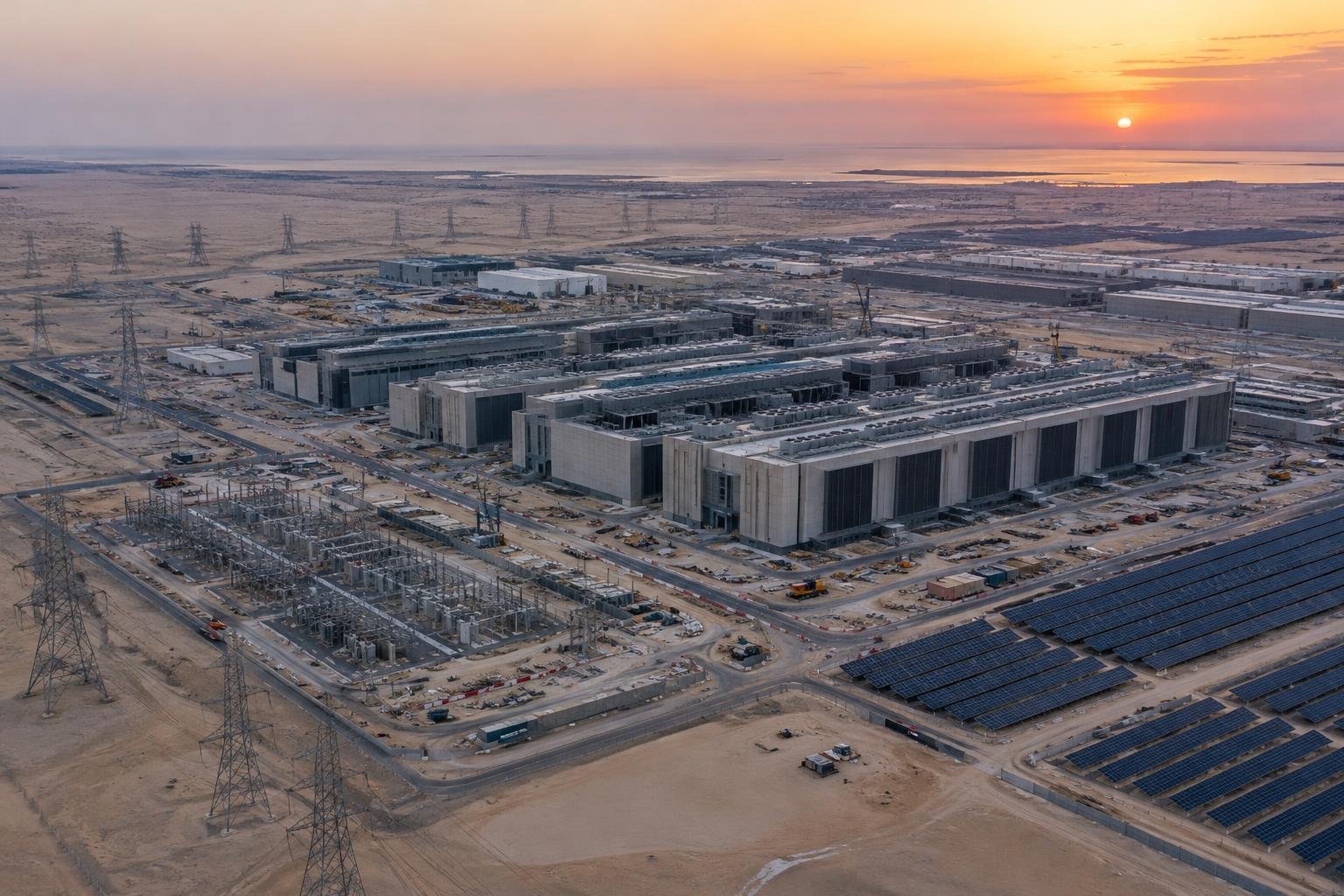
The United Arab Emirates is both a financier and an infrastructure partner for OpenAI. The Gulf-linked options in the new round build on the Stargate UAE project, a 1-gigawatt compute cluster to be built by G42 and operated by OpenAI and Oracle, according to a statement from the Abu Dhabi Media Office.
That cluster sits within a planned 5-gigawatt UAE–US AI campus in Abu Dhabi. The first 200-megawatt cluster was expected to go live in 2026, according to the same statement.
MGX has become one of the key players funding the artificial intelligence boom. It belongs to an investor consortium that agreed to purchase Aligned Data Centers for $40 billion, and it joined a group of US investors to acquire TikTok's US business.
Separately, OpenAI signed agreements spanning energy, government and investments with Abu Dhabi-based entities, including a deal for ADNOC, G42 and OpenAI to deploy OpenAI technology across ADNOC's operations.
What does it mean for the OpenAI IPO?
The round comes as OpenAI moves toward a listing. OpenAI confidentially filed for an IPO with the Securities and Exchange Commission on 8 June 2026, days before Elon Musk's SpaceX was set to start trading and a week after Anthropic filed confidentially. The three companies could end up leading the three largest IPOs on record.
In October 2025, three people familiar with the matter said OpenAI was laying the groundwork for an IPO that could value it at up to $1 trillion, with a filing considered as soon as the second half of 2026. The company is working with banks including Goldman Sachs and Morgan Stanley.
The effort to reach family offices and wealthy individuals in the private round fits that broader push toward wider ownership.
Why it matters
The scaled-back round shows that even the largest private AI raise has limits. A $1.25 trillion valuation is nearly 47% above the $852 billion set on 31 March 2026, yet it falls short of the $1.4 trillion that had been expected, and the cash target is a third lower than the initial $30 billion goal.
For markets, the figure is the latest marker for AI startup valuations in 2026 and a gauge of appetite ahead of the three expected mega-listings. For the UAE, it deepens a position in which Gulf capital, power and data center capacity are tied directly to a leading AI developer.
Friar said on 24 March 2026 that investors were eager: "It didn't matter where you went, people really believed in this AI revolution and they wanted to put their money to work behind it."
What are the risks and open questions?
Only about $11 billion of a up-to-$20 billion round is committed, so roughly $9 billion at the top end still depends on family offices and high-net-worth individuals. The lower valuation and smaller target suggest demand was not unlimited at the earlier ask, though the sources do not explain the reasons.
Competition is also intensifying. Anthropic filed confidentially with the SEC about a week before OpenAI, and the listing calendar is crowded with other blockbuster deals. Concentration of funding from a single region could also draw attention, given the strategic compute and power options attached to the equity.
The terms remain fluid, and the figures in the brief describe a round still being assembled rather than one that has closed.
What to watch next
The next steps for OpenAI are filling the remaining part of the round and moving toward its public listing. The sources do not give fixed dates for either.
- Whether OpenAI reaches the up-to-$20 billion target through family offices and high-net-worth individuals, beyond the roughly $11 billion committed.
- Whether the $1.25 trillion valuation holds when the round closes.
- Progress on OpenAI's IPO after its confidential filing of 8 June 2026, including any public prospectus.
- Delivery of Stargate UAE, whose first 200-megawatt cluster was expected in 2026.
- The timing of the Anthropic and SpaceX listings, which will shape the IPO market OpenAI enters.
Sources:cnbc.comcnbc.combloomberg.comgulfnews.comcnbc.comcnbc.comcnbc.comreuters.comcnbc.comcnbc.comreuters.comcnbc.com
UCapital24 S.p.A. or group companies may have commercial relationships with the companies mentioned. This content is not financial advice.
Sign up for free to ask the AI about this article.
Discover UCapital Capital Markets: Deal Flow, data room, target investors.