
African Startup Funding Holds at $1.4 Billion in H1 2026, but Deal Count Collapses
Total venture capital raised by African startups remained stable in the first half of 2026, but the number of deals fell sharply as capital flowed to larger, later-stage companies in e-mobility, clean energy, and financial infrastructure.

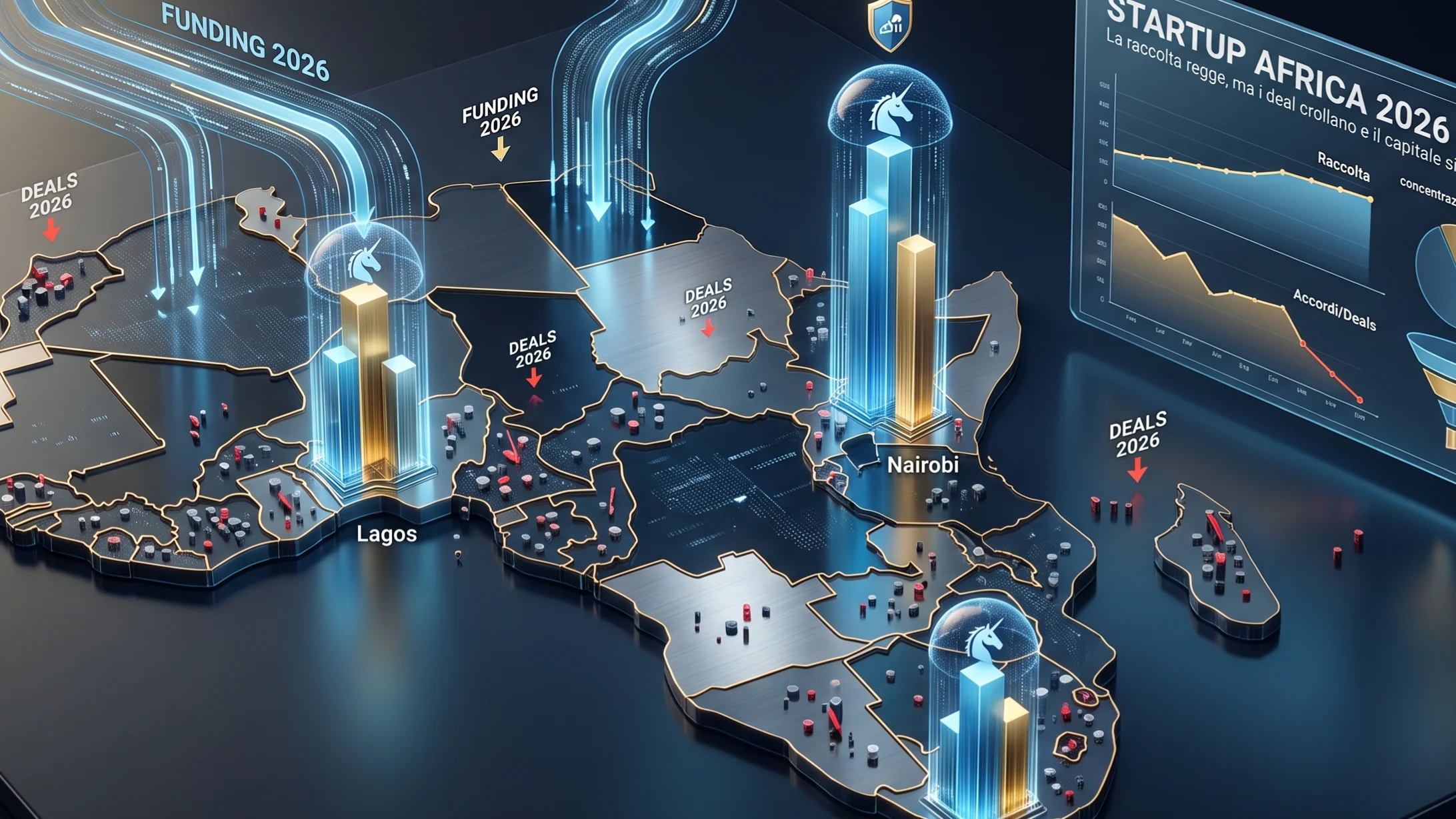
- 01African startups raised between $1.3 billion and $1.4 billion in H1 2026, broadly in line with the same period in 2025.
- 02Deal count collapsed even as total funding held steady, signalling a sharp concentration of capital in fewer, larger rounds.
- 03E-mobility, clean energy, and financial infrastructure attracted the bulk of venture investment in the period.
- 04Electric mobility is gaining traction as a structural response to Africa's oil import costs, foreign-exchange pressure, and fuel subsidy burdens.
African startups raised between $1.3 billion and $1.4 billion in the first half of 2026, holding roughly level with the equivalent period of 2025 — but the number of individual deals fell sharply, as venture capital concentrated in a smaller cohort of larger, more established companies across e-mobility, clean energy, and financial infrastructure.
The divergence between stable aggregate funding and a collapsing deal count marks a structural shift in how venture capital is being deployed across the African startup ecosystem. Investors are writing bigger cheques into later-stage companies rather than seeding early-stage ventures, a pattern with significant implications for the pipeline of new businesses and for the breadth of innovation across the continent.
What happened
Total venture capital raised by African startups in the first half of 2026 came in between $1.3 billion and $1.4 billion, a figure that on the surface suggests resilience in a global environment where emerging-market fundraising has faced sustained headwinds. The aggregate, however, masks a pronounced contraction in deal volume: the number of transactions closed during the period fell markedly compared with H1 2025, even as the dollar total remained stable.
The gap between those two metrics — flat capital, fewer deals — points to a clear concentration effect. A handful of larger rounds in mature companies accounted for a disproportionate share of the total, leaving less capital available for the early-stage and seed-stage companies that have historically driven the ecosystem's breadth.
- Total H1 2026 funding: $1.3 billion–$1.4 billion, in line with H1 2025
- Deal count: fell sharply year-on-year despite stable aggregate capital
- Capital concentration: skewed toward larger, later-stage rounds
- Leading sectors: e-mobility, clean energy, financial infrastructure
Where the capital went
The three sectors that attracted the bulk of venture investment in H1 2026 — electric mobility, clean energy, and financial infrastructure — share a common thread: each addresses a structural constraint on African economic development, and each has demonstrated the kind of revenue visibility that later-stage investors require before committing large cheques.
E-mobility and clean energy
Electric mobility has moved from a niche theme to a central pillar of African venture activity, driven in part by the continent's acute vulnerability to oil price shocks. Africa's dependence on fuel imports raises costs across the economy — pushing up subsidies, straining foreign-exchange reserves, and feeding through into food prices — and electric transport is increasingly viewed as a practical structural response.
World Bank analysis highlights how electric mobility can reduce fuel import dependence, ease fiscal pressure on subsidy budgets, and strengthen transport resilience, with Ethiopia, Rwanda, and Kenya cited as markets where the transition is already under way.
The Mission 300 initiative, which aims to link energy access with transport electrification across the continent, adds a policy dimension to the commercial case: startups operating at the intersection of energy access and e-mobility can align their business models with government programmes, reducing regulatory risk and improving the visibility of long-term revenue streams.
Financial infrastructure
Financial infrastructure — the rails that underpin payments, lending, insurance, and identity verification across African markets — continued to attract significant capital in H1 2026. Companies in this segment tend to operate at scale, serve large and growing user bases, and generate the recurring revenue profiles that appeal to growth-stage and late-stage investors. The sector's resilience in the current funding environment reflects both its commercial maturity and the structural demand created by large unbanked and underbanked populations across the continent.
How did markets react?
The concentration of capital in later-stage companies has produced a two-speed ecosystem. Established players in the three leading sectors have continued to attract funding on terms that reflect their scale and track record, while early-stage startups — particularly those outside the dominant verticals — have found the fundraising environment considerably more difficult than in prior years.
The collapse in deal count is the clearest signal of this bifurcation. When aggregate funding holds steady but the number of transactions falls, the distribution of capital narrows: more money flows to fewer companies, and the median round size rises. For the broader ecosystem, this means a thinner pipeline of new ventures reaching the growth stage in the years ahead, unless seed and early-stage activity recovers.
The pattern also reflects a global recalibration in venture capital, where investors across markets have moved toward capital efficiency, profitability timelines, and defensible business models — criteria that favour later-stage African companies with proven unit economics over earlier-stage ventures still establishing product-market fit.
Why it matters
The African startup ecosystem's ability to sustain aggregate funding levels through a period of global venture contraction is a signal of the continent's growing weight in emerging-market investment flows. At the same time, the sharp drop in deal count raises questions about the long-term health of the pipeline: a venture ecosystem that concentrates capital in a small number of large companies at the expense of early-stage activity risks narrowing the base from which the next generation of scaled businesses will emerge.
For the sectors attracting capital, the implications are more immediate. E-mobility and clean energy startups that secure large rounds in the current environment gain the runway to build out infrastructure, expand into new markets, and demonstrate the operational scale that will be necessary to attract the next tier of institutional capital — including development finance institutions and infrastructure funds that have historically entered African markets at later stages of company development.
Financial infrastructure companies face a different dynamic: the sector is mature enough that consolidation is a plausible near-term outcome, and the concentration of venture capital into a smaller number of larger players may accelerate that process.
- A narrowing deal pipeline risks reducing the breadth of innovation across the ecosystem over a multi-year horizon
- Later-stage concentration may accelerate consolidation in financial infrastructure
- E-mobility and clean energy companies with large rounds gain runway to scale ahead of the next funding cycle
- Development finance institutions and infrastructure funds represent a potential next tier of capital for companies reaching operational scale
What to watch next
The second half of 2026 will be the first test of whether the deal-count contraction seen in H1 represents a cyclical trough or a more durable structural shift in how venture capital is allocated across the African startup ecosystem.
- H2 2026 deal data: whether deal volume recovers or continues to contract will determine whether the H1 pattern is a temporary adjustment or a lasting change in investor behaviour.
- Seed and early-stage activity: a recovery in early-stage deal count would signal renewed risk appetite and a healthier long-term pipeline; continued weakness would deepen concerns about ecosystem breadth.
- Mission 300 progress: the pace at which the energy-access and transport-electrification initiative advances will shape the commercial environment for e-mobility startups across the continent.
- Development finance institution deployment: the extent to which multilateral and bilateral development lenders step in to fill the early-stage gap left by retreating venture capital will be a key variable for ecosystem health through the end of 2026 and into 2027.
- Sector diversification: whether capital begins to flow back into sectors beyond the three dominant verticals — or whether concentration deepens further — will define the character of African venture activity in the next funding cycle.
Sources:worldbank.org
UCapital Asset Management LLP or group companies may have commercial relationships with the companies mentioned. This content is not financial advice.
Sign up for free to ask the AI about this article.
Discover UCapital Capital Markets: Deal Flow, data room, target investors.