
Abby Care raises $82M Series C led by Transformation Capital to pay family caregivers
The four-year-old San Francisco startup trains and pays relatives to deliver Medicaid-covered care at home. Its $82 million round follows a $35 million raise reported in August 2025.

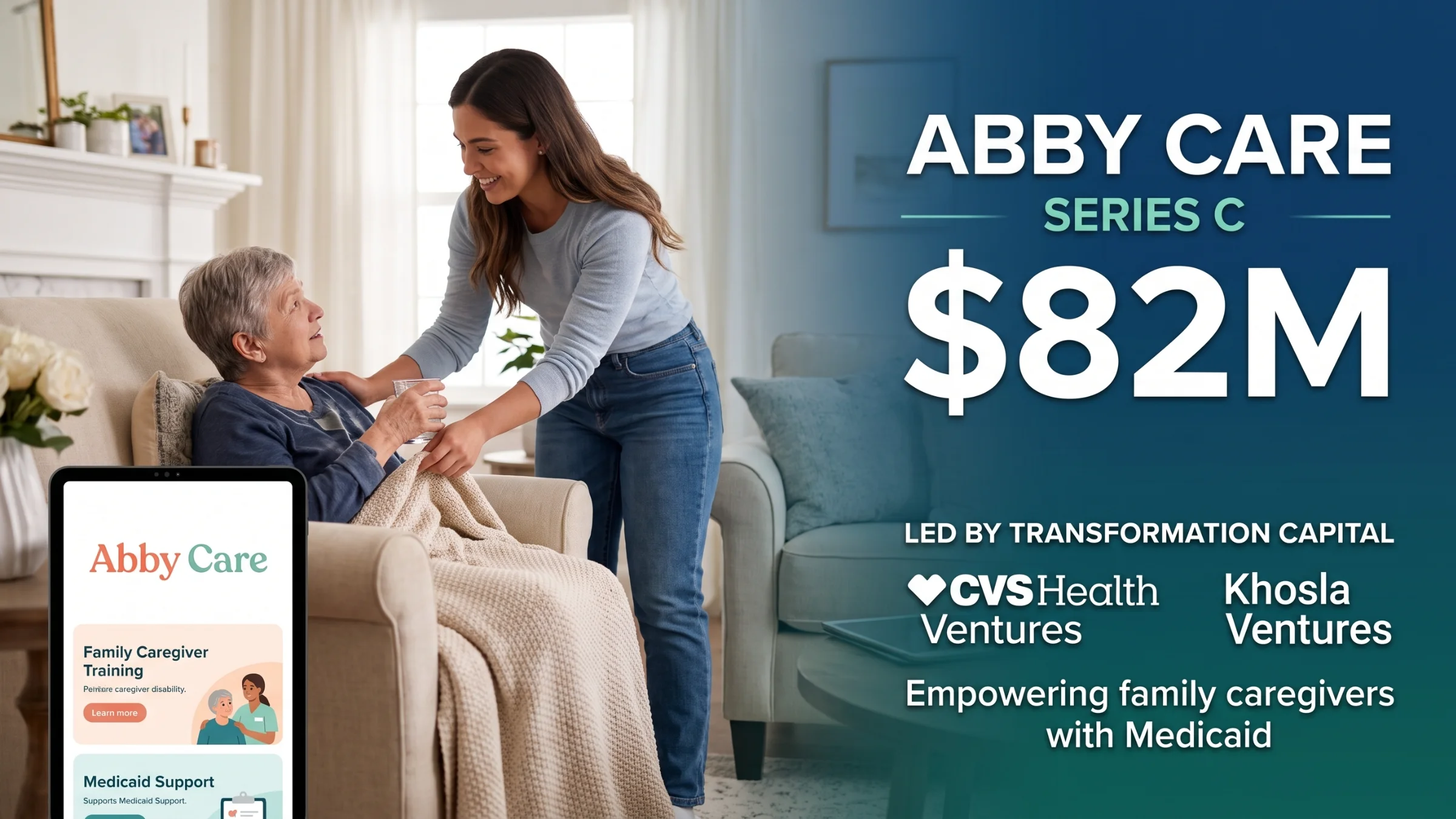
- 01Abby Care, a four-year-old San Francisco startup, raised an $82 million Series C led by Transformation Capital.
- 02CVS Health Ventures, Frist Cressey Ventures and Pivotal Ventures joined; Khosla Ventures, Thrive Capital and Sequoia Capital returned as existing investors.
- 03The company trains and pays family members to provide Medicaid-covered care at home.
- 04An earlier raise of $35 million was reported on 21 August 2025.
Abby Care, a four-year-old San Francisco startup that trains and pays family members to provide Medicaid-covered care at home, has raised an $82 million Series C round led by Transformation Capital. CVS Health Ventures, Frist Cressey Ventures and Pivotal Ventures joined the round, alongside earlier backers Khosla Ventures, Thrive Capital and Sequoia Capital.
The deal matters because it puts sizeable venture and healthcare-linked capital behind a model that treats relatives as the paid workforce for home care, rather than recruiting more outside workers. For investors tracking home care startup funding and digital health funding rounds, it shows where money is flowing in Medicaid home care.
What happened
Abby Care closed an $82 million Series C round led by Transformation Capital, according to the funding announcement. The company, based in San Francisco and about four years old, builds its business on training family members and paying them to deliver care that Medicaid covers at home.
Participation was broad. New names in the round include CVS Health Ventures, Frist Cressey Ventures and Pivotal Ventures. Three existing investors also stepped up: Khosla Ventures, Thrive Capital and Sequoia Capital.
The round follows a smaller raise. On 21 August 2025, a report described Abby Care as a startup that had recently raised $35 million and was working to certify caregivers, including parents who care for children.
Key figures at a glance
- Series C size: $82 million, led by Transformation Capital.
- Company age: four years, based in San Francisco.
- Earlier raise: $35 million, reported on 21 August 2025.
- New investors named: CVS Health Ventures, Frist Cressey Ventures, Pivotal Ventures.
- Returning investors named: Khosla Ventures, Thrive Capital, Sequoia Capital.
How does Abby Care's family caregiver model work?
Abby Care trains family members and pays them to provide care that Medicaid already covers at home. The pitch is that a relative who would otherwise leave a job to look after a loved one can instead become a compensated caregiver.
The August 2025 report framed the service as a response to an "often impossible choice": continuing to work or caring for loved ones. It featured a mother who used the startup's service to become a licensed, compensated caregiver for her 9-year-old son, who was recovering from a health event.
That example shows the product reaches families caring for children as well as adults. The 2025 report also described the company's work as certifying caregivers, which is the step that turns an informal helper into a paid one.
Who is backing it, and why does the investor mix stand out?
The investor list combines healthcare specialists with generalist technology funds. Transformation Capital leads the round. CVS Health Ventures, the venture arm tied to the pharmacy and health services group, and Frist Cressey Ventures add healthcare-sector backing.
Pivotal Ventures also joined. Khosla Ventures, Thrive Capital and Sequoia Capital are previous investors that returned. A round in which several existing backers participate again is typically read by market observers as continued confidence, though the announcement material available does not include any investor comment on that point.
The mix is relevant to readers following CVS Health Ventures investments, since the corporate venture arm of a large healthcare company is now on the cap table of a company whose model depends on Medicaid coverage for home care.
Why it matters
The raise matters because it backs a different answer to the caregiver shortage than hiring more nurses or aides. Abby Care's approach draws on family members who are already providing unpaid care and offers them training and pay through Medicaid-covered services.
For the sector, the round is a data point in home health care startups attracting late-stage capital. A Series C of $82 million, following $35 million raised earlier, signals that investors are willing to fund companies built around paid family caregiver programs.
For families, the model speaks to the financial pressure of leaving work to provide care. The company's pitch, as presented in the 2025 report, is that a relative can keep income while caring for a loved one.
What are the risks and open questions?
The model rests on Medicaid coverage, so its economics depend on public payers continuing to cover care delivered by trained relatives. The material available does not detail state-by-state rules, reimbursement rates, or how the company earns revenue per caregiver, so those points cannot be assessed here.
The announcement also does not provide the valuation, the number of caregivers or families served, or revenue figures. Without them, it is not possible to compare the round with peers in digital health funding rounds or to gauge the pace of growth since the $35 million raise.
Quality and oversight are further questions any program paying relatives for care has to answer. Abby Care's certification and training steps are its stated approach, but outcomes data were not part of the information reported.
What to watch next
The announcement names no dated milestones, so the following are the open items readers can track as the company deploys the capital.
- Whether Abby Care discloses its valuation, revenue or caregiver numbers after the Series C.
- How the company uses the $82 million, and whether it expands beyond its current footprint.
- Any further commentary from Transformation Capital, CVS Health Ventures or other investors on the thesis.
- Changes in Medicaid home care coverage that affect pay for family caregivers.
- Whether other home care startups raise rounds built around paying relatives.
Sources:axios.com
UCapital Asset Management LLP or group companies may have commercial relationships with the companies mentioned. This content is not financial advice.
Sign up for free to ask the AI about this article.
Discover UCapital Capital Markets: Deal Flow, data room, target investors.