
Intesa Sanpaolo and EIB back student and social housing in Italy with a €300 million agreement
Intesa Sanpaolo and the European Investment Bank have agreed €300 million for student housing and social housing in Italy. The deal adds to a run of public and private housing projects across the country.

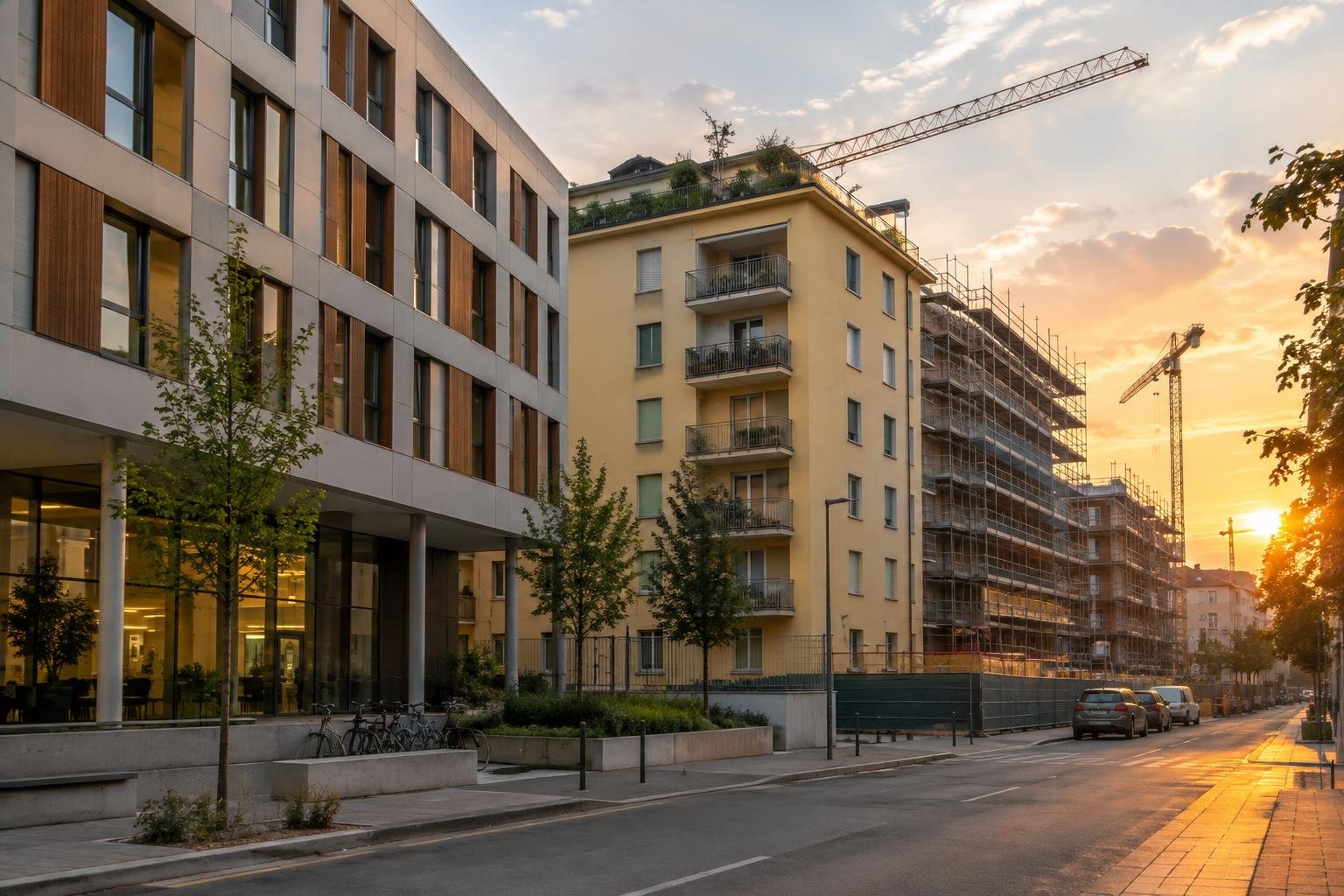
- 01Intesa Sanpaolo (ISP.MI) and the European Investment Bank have agreed €300 million for student housing and social housing in Italy.
- 02Emilia-Romagna's €300 million plan, reported on 26 August 2026, aims at 5,000 social housing units with a 30-year EIB loan of up to €200 million.
- 03Invel Real Estate committed €18 million on 15 June 2026 to student residences in Milan and Padova, totalling about 1,100 beds.
- 04Intesa Sanpaolo's next results are due on 2026-10-30; its latest quarter showed EPS of 0.16 against an estimate of 0.14.
Intesa Sanpaolo (ISP.MI) and the European Investment Bank (EIB) have agreed €300 million to fund new student housing and social housing in Italy. The agreement targets two segments where public and private projects have recently multiplied.
The deal matters for investors because it links Italy's largest retail banking franchise with EU-backed long-term funding in a sector that is attracting regional governments, municipalities and property investors. Other recent operations point the same way, from regional social housing plans to private student residence developments, and they set the context for how the agreement may affect the Italian real estate market.
What happened
Intesa Sanpaolo (ISP.MI) and the European Investment Bank (EIB) have agreed a €300 million package to fund new student housing and social housing in Italy. The agreement pairs the Italian bank with the EU's long-term lending arm and covers two segments of the residential market where demand for affordable places has drawn growing attention. Beyond the headline amount and the two target segments, the available sources give no further terms.
The size of the deal is the same as another recent partnership between the two institutions. On 8 July 2026 Intesa Sanpaolo, the EIB and the European Space Agency launched a separate €300 million lending facility for small and medium-sized companies in the aerospace supply chain, backed by European funding and guarantee instruments. That operation concerns a different sector and is not part of the housing agreement, but it shows how the bank has used EIB-backed resources in targeted programmes during 2026.
What does the agreement cover?
The package is aimed at two kinds of residential projects. The first is student housing, meaning residences for university students. The second is social housing, meaning homes for households that struggle to afford market rents.
The sources do not state how the €300 million will be divided between the two segments, which projects or cities will receive money, or what maturities and pricing will apply. Nor do they say how many beds or homes the funds are expected to create. Those details are therefore not reported here, and any figures on volumes will depend on future announcements by the two institutions.
How does it fit with earlier EIB–Intesa operations?
Intesa Sanpaolo has worked with the EIB before on large Italian projects. On 10 July 2025 the EIB, the export credit agency SACE and the bank provided €1.5 billion for Terna's Adriatic Link, the submarine power line connecting the Marche and Abruzzo regions. That financing combined a €750 million EIB loan, a €500 million Intesa Sanpaolo loan and an additional €250 million credit line from the bank with indirect EIB funding.
The housing agreement follows a similar logic of combining the bank's lending with EU-backed funding, although its terms have not been disclosed.
- Amount of the housing agreement: €300 million
- Parties: Intesa Sanpaolo and the European Investment Bank
- Target segments: student housing and social housing in Italy
- Separate EIB–Intesa aerospace facility, 8 July 2026: €300 million for SMEs
- Adriatic Link financing, 10 July 2025: €1.5 billion in total
Why it matters
The agreement between Intesa Sanpaolo (ISP.MI) and the European Investment Bank matters because it pairs Italy's largest retail banking franchise with EU-backed long-term funding in two housing segments where public and private projects are multiplying. The €300 million package covers student housing and social housing. The sources give no further terms, so the effect on the market is read from the projects already under way around it.
The link between a commercial bank and the EIB is not new for Intesa Sanpaolo. On 10 July 2025 the EIB, SACE and the bank provided €1.5 billion for Terna's Adriatic Link, and on 8 July 2026 the bank signed an EIB-backed €300 million lending agreement for aerospace SMEs. The housing deal extends that model of EU-backed funding channelled through the bank into a new sector.
Why is housing drawing so much funding now?
Public bodies, the EIB and property investors are all committing money to Italian housing at the same time. Regional governments are using EIB credit to renovate existing stock, and private investors are moving into student residences. The €300 million agreement adds bank lending to that mix.
- Emilia-Romagna aims to mobilise €300 million over five years for 5,000 social housing units, including a 30-year EIB loan with a credit limit of €200 million, according to regional councillors on 26 August 2026.
- The EIB signed a €40 million framework loan with the City of Naples on 8 June 2026, with new affordable housing among the main interventions.
- Invel Real Estate committed €18 million on 15 June 2026 to two Stonehill International Group student projects in Milan and Padova, supporting about 1,100 beds.
What could limit the impact?
The sources do not say how the €300 million will be split between student and social housing, over what period, or which projects will receive it. Without that, the number of beds or homes it will finance cannot be estimated. The scale is also modest next to the other operations: the Emilia-Romagna plan alone is of the same size.
Delivery is a further uncertainty. Giovanni Paglia, the Emilia-Romagna regional councillor for housing policy, described how the plan depends on local authorities making properties available:
As and when the local authorities make the properties available for renovation or regeneration, the plan will move forward.
Giovanni Paglia, regional councillor for housing policy, in comments reported on 26 August 2026. Funding agreements therefore do not by themselves produce homes, and the timing of any effect on supply remains open.
What other housing projects are under way in Italy?
Housing projects are under way across Italy, from regional social housing plans in Emilia-Romagna to municipal regeneration in Naples and a fund-backed scheme in Milan, and the European Investment Bank (EIB) features in each of them. Together they show how EU long-term lending is reaching the sector through regions, cities and real estate funds.
What is Emilia-Romagna planning?
The Emilia-Romagna region is preparing a housing plan that aims to mobilise €300 million over five years to provide 5,000 social housing units, both refurbished properties and new builds. According to the Il Sole 24 ORE report of 26 August 2026, the plan rests on €50 million from the region and a further €50 million from the European Regional Development Fund, which was reallocated in recent months.
The remainder comes from a 30-year EIB loan with a credit limit of €200 million. Davide Baruffi, the region's councillor for the budget and European fund planning, said the region had been able to secure the loan thanks to European and regional resources.
Giovanni Paglia, the regional councillor for housing policy, said the region expects to start drawing on the EIB loan in January, when rental income should already be generating positive cash flow to fund repayments. He said the first refurbished homes should be allocated between the end of the year and early January. The plan advances only as local authorities make properties available, a dependency that leaves the timetable open.
What has the EIB financed in Naples and Milan?
The EIB signed a €40 million framework loan with the City of Naples, dated 8 June 2026 in its public register and announced on 9 June. The funds will help implement the city's 2025–2027 Investment Programme, whose main interventions include new affordable housing units, energy efficiency work on public buildings and the enhancement of the historic centre. The register puts the total cost of the project at about €97 million.
In Milan, the EIB signed a €34 million loan with Investire SGR on 27 November 2023 to build more than 200 housing units in the city centre. The operation runs through the Ca' Granda Fund, which is owned by Fondazione IRCCS Ca' Granda Ospedale Maggiore Policlinico di Milano, CDP Real Asset SGR and Fondazione Cariplo. It was the EIB's first direct financing operation with a real estate fund dedicated entirely to social housing.
How do the projects compare?
- Emilia-Romagna: €300 million plan, 5,000 units, EIB loan of up to €200 million over 30 years (26 August 2026).
- Naples: €40 million EIB framework loan, signed 8 June 2026, including new affordable housing.
- Milan: €34 million EIB loan to Investire SGR, more than 200 units (27 November 2023).
How is private capital entering student housing?
Private capital is entering Italian student housing through partnerships between international property investors and developers, as shown by Invel Real Estate's move on 15 June 2026. The company made its entry into the Italian student residence market with an initial investment of €18 million. The money is earmarked for two development projects promoted by Stonehill International Group, one in Milan and one in Padova.
The operation supports the creation of about 1,100 beds across the two locations. Invel described it as the first step of a strategic partnership with Stonehill, which indicates that further commitments between the two groups are part of the plan.
What does the Invel deal show about the market?
The transaction shows that student residences are being treated as a distinct real estate segment, with investors committing capital at the development stage rather than buying completed buildings. Both cities are major university centres, and the two projects are being built from scratch, so the beds they add would be new supply.
The size of the commitment is also worth noting. At €18 million, the initial investment is modest next to the €300 million agreement between Intesa Sanpaolo (ISP.MI) and the European Investment Bank, but it is presented as the opening stage of a longer relationship rather than a one-off.
How does private money sit alongside public funding?
Private operations of this kind run in parallel with publicly backed programmes. Emilia-Romagna's housing plan, for instance, combines 50 million euros from the region and 50 million from the European Regional Development Fund with a 30-year EIB loan of up to 200 million euros, according to the region's councillors on 26 August 2026. There, local authorities hand rental income to the region for 30 years, a different logic from a developer-led student project.
Fund structures offer another route for investors. In November 2023 the EIB signed a €34 million loan with Investire SGR to build more than 200 housing units in central Milan through the Ca' Granda Fund. It was the bank's first direct financing operation with a real estate fund dedicated entirely to social housing.
What remains uncertain?
The Invel announcement states the initial amount and the number of beds, but it does not set out a full project budget or completion timetable. How much further capital the Invel and Stonehill partnership will commit therefore remains to be seen. Whether other investors follow with similar developer partnerships is likewise not yet visible in the available information.
What is the 'grey zone' the housing plans target?
The 'grey zone' is the group of Italian households whose income is too high to qualify for social housing but too low to afford market-rate rent. Emilia-Romagna uses the term for the families its regional housing plan is designed to reach, according to the region's own description of the scheme on 26 August 2026.
Under the plan, traditional public housing, known as ERP, will become 'ERS', or social residential housing. The scheme is aimed at households with an ISEE, the Italian indicator of equivalent economic situation, of between 8,000 and 35,000 euros. The regional authorities describe this segment as increasingly large.
How is the Emilia-Romagna plan structured?
The region aims to mobilise 300 million euros over five years to provide 5,000 social housing units, made up of both refurbished properties and new builds. It has asked local authorities to express interest in funding works in three areas:
- ERP homes where renovation costs exceed 25,000 euros;
- ERP properties needing energy efficiency upgrades;
- areas to be regenerated or buildings to be redeveloped, such as former offices or disused old schools.
The region pays for the renovation work and, in return, the local authorities transfer the rental income to the region for 30 years.
Where is demand strongest, and how is it funded?
Giovanni Paglia, the regional councillor for housing policy, said the region has already gathered the information from councils. The cities that sent the most applications are Reggio Emilia and Ferrara, with more than 200 each, he said.
The plan is funded by 50 million euros from the region and a further 50 million from the European Regional Development Fund, reallocated in recent months. Davide Baruffi, Councillor for the Budget and European Fund Planning, said these resources allowed the region to secure a 30-year loan from the European Investment Bank with a credit limit of 200 million euros.
What are the uncertainties?
The plan's pace depends on the councils. Paglia said work will only begin if there is a tenant interested, and that the plan will move forward as and when local authorities make properties available for renovation or regeneration.
The region also expects to start drawing on the EIB loan in January, by which time Paglia expects positive cash flow from rental income to fund the repayments. He said the aim is to allocate the first refurbished homes between the end of the year and early January.
The Emilia-Romagna scheme shows how the middle-income segment is being defined in Italian policy, and it is a regional case rather than a national measure. The sources do not say whether the Intesa Sanpaolo and EIB agreement for student and social housing will target the same income bracket.
How is Intesa Sanpaolo performing?
Intesa Sanpaolo (ISP.MI) beat analyst estimates in its latest reported quarter, with earnings per share of 0.16 against an estimate of 0.14 and revenue of 7.38 billion against an estimate of 6.97 billion, the latter in the reporting currency. The figures come from market data compiled by UCapital Markets, which gives no date for the quarter in question.
The gap between actual and expected results is the key point for readers following the bank's role in the housing agreement. On earnings, Intesa Sanpaolo came in about 14% above the consensus figure. On revenue, it exceeded the estimate by roughly 6%. Those percentages are derived from the published numbers and are not figures stated by the bank.
What do the valuation figures show?
The bank's trailing price-to-earnings ratio stands at 10.98, according to the same market data. That means the shares trade at about eleven times the earnings per share the group reported over the past twelve months. The data carries no as-of time, so the multiple cannot be tied to a specific trading session.
The multiple says nothing about the housing agreement itself. The sources give no breakdown of how much of the €300 million Intesa Sanpaolo will lend, and none of what the operation adds to its earnings. Any link between the new financing and the bank's results would therefore be conjecture.
Key figures at a glance
- Earnings per share in the latest reported quarter: 0.16, against an estimate of 0.14.
- Revenue in the latest reported quarter: 7.38 billion, against an estimate of 6.97 billion.
- Trailing price-to-earnings ratio: 10.98.
- Next results report: 30 October 2026.
What are the limits of these numbers?
A single quarter beating estimates does not settle how the bank is performing over a longer period. The market data does not give the prior-year comparison, the net profit, the capital ratios or the quarter's segment breakdown. It also does not say what management expects for the rest of the year, so the picture here is partial.
The beat also reflects the estimates against which it is measured. Estimates can move between reporting dates, and the data does not say when the 0.14 and 6.97 billion figures were set. The next results, due on 30 October 2026, will show whether the pattern holds and may give more detail on lending activity.
What to watch next
The next dated catalyst for Intesa Sanpaolo (ISP.MI) is its quarterly report on 30 October 2026, the first scheduled data point after the €300 million agreement with the European Investment Bank (EIB) for student and social housing. The sources give no date for the first disbursements under that agreement, so the calendar below rests on the other dated events they name.
Which dates matter for Intesa Sanpaolo and the housing plans?
- 30 October 2026: Intesa Sanpaolo publishes its next results, according to the market data calendar.
- September 2026: Emilia-Romagna expected to start work and spend its first funds, once the agreement with local councils is signed, according to regional housing councillor Giovanni Paglia on 26 August 2026.
- End of 2026 to early January: first refurbished homes expected to be allocated to families, according to Paglia.
- January: the region expects to start drawing on its EIB loan, a 30-year facility with a credit limit of 200 million euros.
What will the results show?
Intesa Sanpaolo's report on 30 October will be set against its latest reported quarter, when earnings per share came in at 0.16 against an estimate of 0.14. Revenue in that quarter was 7.38 billion against an estimate of 6.97 billion, and the trailing price-to-earnings ratio stood at 10.98. Those figures give the benchmark for the next release.
The housing agreement is one of several EIB-linked operations involving the bank. The sources do not say how much of the €300 million is expected to be deployed in any given period, so the results are unlikely to be read against a disclosed housing target unless the bank provides one.
How will Emilia-Romagna's plan be tested?
Emilia-Romagna's regional housing plan will be tested from January, when drawdown on the EIB loan is due to begin. Paglia said that by then the region expects positive cash flow from rental income, which would fund the loan repayments. He added that the plan will move forward as local authorities make properties available for renovation or regeneration.
That sequence carries a dependency: works start only where local authorities hand over properties and tenants are interested. The region said the cities with the most applications are Reggio Emilia and Ferrara, with more than 200 each. How quickly those requests turn into homes will show whether the plan, which aims at 5,000 units over five years, keeps to its schedule.
For the wider market, the signals to follow are therefore the bank's October figures, the regional start of works and the first EIB drawdown in January.
Sources:borsaitaliana.itUCapital Markets (ucapital.com)en.ilsole24ore.comeib.orgeib.orgeib.orgilsole24ore.comeib.orgeib.orgeib.org
UCapital Asset Management LLP or group companies may have commercial relationships with the companies mentioned. This content is not financial advice.
Sign up for free to ask the AI about this article.
Create a free business page: clients, leads and releases in one place.