
HURBA and electric two-wheelers: range and charging limits shape adoption
Electric two-wheeler adoption depends on range, charging times, infrastructure and after-sales support as much as price. Italian maker HURBA, with swappable batteries, operates in this context.

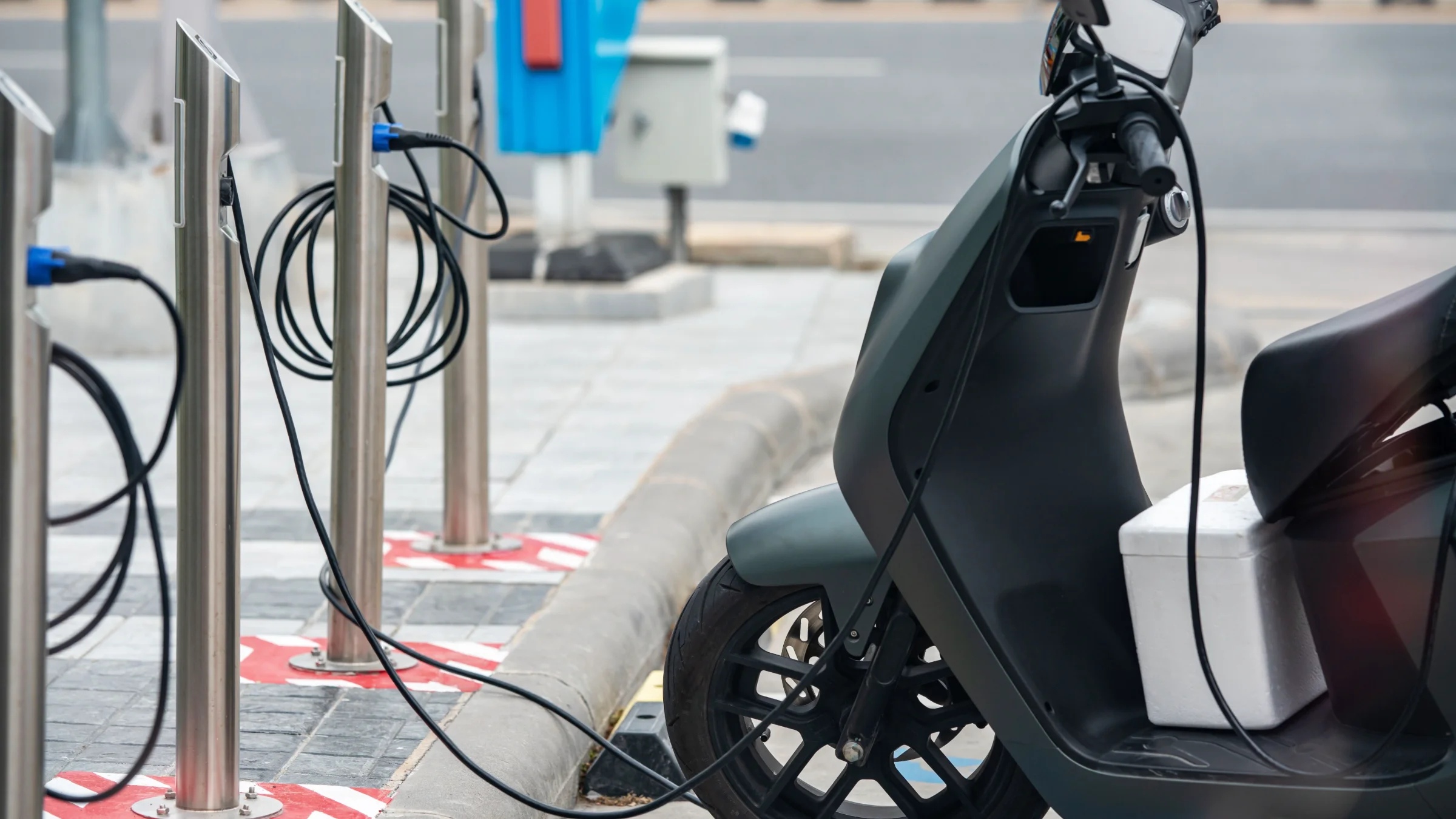
- 01Range, charging times, infrastructure and after-sales support remain decisive for everyday use of electric two-wheelers.
- 02Battery swapping can reduce downtime but needs compatible modules, exchange stations and shared standards.
- 03HURBA's UCapital Dealflow profile reports a €5 million fundraising target and €2.5 million revenue over the last twelve months.
- 04The company is commercially active in Italy and plans expansion into European and Middle Eastern markets.
The transition toward more environmentally sustainable mobility is not limited to cars and public transportation. Electric scooters and motorcycles can play an important role in urban travel, particularly for short and medium-distance journeys, professional activities and last-mile mobility.
However, the market faces a series of obstacles that go beyond motor technology. Real-world range, the availability of charging points, the time required to recharge and battery costs all affect a vehicle's economic appeal and users' habits.
For those who use a scooter every day, the ability to charge easily at home or at work can be decisive. For people without a private garage, charging can become an operational constraint. Businesses operating fleets must also assess downtime, maintenance, vehicle availability and overall operating costs.
The industrial challenge, therefore, is to turn a technically sound electric vehicle into a practical, reliable and competitive solution compared with traditional alternatives.
Range and Charging: Two Sides of the Same Problem
Advertised range is one of the most visible factors when choosing an electric vehicle, but it does not tell the whole story of the user experience. Actual energy consumption depends on speed, temperature, riding style, load, route and battery condition.
A vehicle designed for urban travel may meet different needs from one intended for longer journeys or roads outside urban areas. For this reason, comparing models solely on the basis of their rated range risks overlooking real-world operating conditions.
Charging introduces a second variable. With a fixed battery, users must have access to a compatible power outlet or charging point. If a vehicle is used intensively throughout the day, the time required to recharge can reduce its operational availability.
The issue is particularly relevant for commercial fleets. A vehicle stopped for charging cannot be used for deliveries, technical assistance or other services. In these cases, the economics of the vehicle depend not only on energy efficiency but also on the ability to keep it operational.
This has fueled interest in fast-charging systems, swappable batteries and integrated energy services. Each solution involves trade-offs in terms of cost, standardization, safety and the infrastructure required.
The Infrastructure and Standardization Challenge
The expansion of electric mobility requires an ecosystem in which vehicles, batteries, charging points and services are compatible and easily accessible.
For scooters and motorcycles, infrastructure cannot simply be designed by replicating the model used for cars. Urban spaces, user needs and usage patterns differ. An effective network must account for population density, the most common travel routes, parking availability and charging habits.
Battery swapping can reduce downtime, but it requires compatible modules, exchange stations and effective management of available batteries. If different systems adopt different standards, users risk becoming dependent on separate networks with limited interoperability.
Conventional charging infrastructure also requires investment and coordination. Public authorities must integrate charging points into urban planning, while private operators need to assess their economic viability and utilization rates.
The European Commission, through the European Urban Mobility Observatory, has highlighted how the expansion of electric micromobility services must address issues involving safety, public-space management and regulation. [Source: European Urban Mobility Observatory].
Market growth therefore also depends on the ability to establish appropriate operating conditions, preventing vehicle innovation from advancing faster than the ecosystem needed to support it.
Total Cost of Ownership Beyond the Purchase Price
The competitiveness of an electric vehicle must be assessed by considering its total cost of ownership, not just its initial price.
Energy, maintenance, insurance, financing, depreciation and battery lifespan can all significantly affect overall costs. Comparisons with internal combustion vehicles also depend on mileage, energy and fuel prices, and charging arrangements.
For private users, potential savings may come alongside a higher initial investment or logistical constraints. For businesses, value may also stem from better fleet management, more predictable operating costs and the ability to deploy electric vehicles in urban areas subject to restrictions.
In both cases, economic viability must be assessed under real-world conditions. A vehicle with greater range is not necessarily the best choice for every user, just as a swappable battery does not automatically guarantee lower costs.
The market must therefore offer differentiated products supported by services that address specific needs. Customer support, maintenance, warranties, spare-parts availability and battery management can become differentiating factors just as important as vehicle performance.
From Vehicle Sales to Mobility Services
One possible evolution of the sector involves integrating vehicles with energy and technology services. Selling the vehicle may represent only one part of the customer relationship, while maintenance, connectivity, support and charging management can contribute to a broader offering.
For manufacturers, this approach can create recurring revenue opportunities and strengthen customer relationships. For it to succeed, however, the service must solve a real problem while keeping costs sustainable.
Connectivity may also play an increasingly important role. Rider-assistance systems, vehicle monitoring and digital tools can improve safety and the user experience, provided they are designed for the specific conditions of two-wheeled vehicles.
The industrial challenge therefore involves integrating products, software and services. Competitive advantage does not necessarily depend on having the most advanced individual component, but on the ability to deliver a reliable system that reduces the everyday difficulties faced by users.
HURBA and the Search for a More Comprehensive Electric Mobility Model
HURBA, an Italian company that designs and assembles premium electric scooters and motorcycles, operates in this context. According to its profile on UCapital Dealflow, its portfolio includes six models, and its offering incorporates technological solutions such as ARAS, an advanced rider-assistance system, and HELIOS, a long-term energy platform built around the concept of swappable batteries.
The company states that it is commercially active in Italy and plans to expand into European and Middle Eastern markets through distribution partners. Its profile reports a fundraising target of €5 million and revenue of €2.5 million over the last twelve months. These figures are reported in the company's profile and should be verified against subsequent updates.
For HURBA, as for other manufacturers in the sector, growth will depend on its ability to translate product performance into a competitive commercial offering, supported by an adequate distribution network and customer service infrastructure. The development of charging solutions, the actual adoption of proprietary technologies and the evolution of manufacturing costs will also be important factors to monitor.
The underlying issue concerns the entire electric two-wheeler market: moving from experimentation to everyday use requires more than an efficient motor. Range, charging, reliability and services must work together. This integration will determine whether an electric vehicle can become a genuinely practical alternative for an increasing number of users.
UCapital Asset Management LLP or group companies may have commercial relationships with the companies mentioned. This content is not financial advice.
Sign up for free to ask the AI about this article.
Create a free business page: clients, leads and releases in one place.