
Iran War at Six Months: A Costly Stalemate
After six months of U.S. and Israeli military strikes, Iran's war has entered a grinding endgame — marked by economic blockade, regional anxiety, and no clear victor in sight.
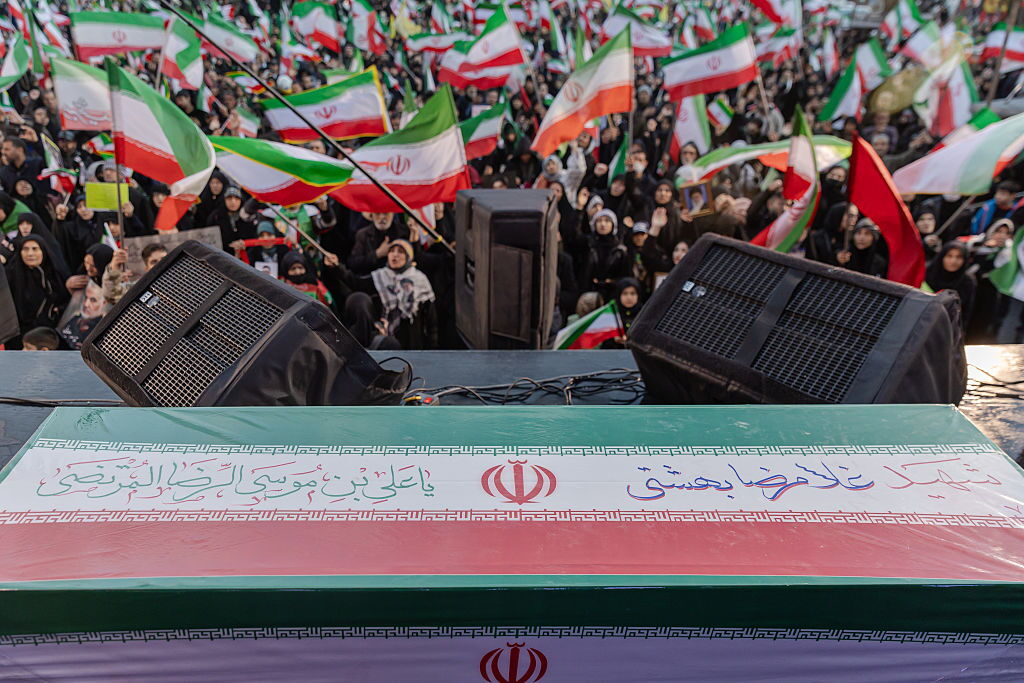
Six Months In: How the Iran War Reached a Stalemate
Six months after the United States and Israel launched coordinated airstrikes against Iran's military and nuclear infrastructure, the conflict has settled into a costly strategic deadlock. Neither Washington nor Tehran has achieved its core objectives. The battlefield has shifted from kinetic strikes to economic coercion and asymmetric pressure, and the prospect of a decisive resolution grows more remote with each passing week. The Iran war stalemate of mid-2026 is not merely a military impasse — it is a political, economic, and diplomatic crisis with consequences that extend well beyond the Persian Gulf.
The Arc of the Conflict: From Airstrikes to Attrition
The campaign began in March 2026, when U.S. and Israeli forces conducted a series of intensive strikes targeting Iran's nuclear enrichment facilities, ballistic missile stockpiles, and command infrastructure. The initial phase was designed to degrade Iran's nuclear breakout capability and compel a fundamental shift in Tehran's strategic posture. Early assessments suggested significant damage to key sites, including facilities at Fordow and Natanz, and the destruction of substantial portions of Iran's integrated air defense network.
By April and May 2026, however, the limits of the air campaign became apparent. Iran's nuclear program, dispersed and hardened over decades in anticipation of precisely such an attack, proved more resilient than pre-war intelligence had indicated. Tehran retained sufficient centrifuge capacity and enriched material to preserve a latent nuclear option. Simultaneously, Iran's retaliatory posture — calibrated to avoid triggering a full-scale ground war — demonstrated a strategic discipline that frustrated Washington's escalation calculus. By June, the Trump administration had effectively concluded that airstrikes alone would not achieve the desired outcome, and the primary instrument of pressure shifted accordingly.
Why Neither Side Has Won
Washington entered the conflict with two maximalist objectives: the verifiable elimination of Iran's nuclear weapons capability and a fundamental change in the Islamic Republic's regional behavior, including the dismantlement of its proxy network. Neither goal has been achieved. Iran's nuclear infrastructure has been damaged but not destroyed, and its network of regional partners — in Iraq, Yemen, Lebanon, and Syria — remains operationally active, if degraded.
Tehran, for its part, sought to demonstrate that it could absorb a U.S.-Israeli military campaign without capitulating, thereby preserving the regime's legitimacy and deterring future coercion. On that narrow metric, it has partially succeeded. But the economic cost has been severe, and the regime faces a domestic environment more volatile than at any point since the 2019 fuel protests. The result is a mutual exhaustion that has produced stalemate rather than resolution.
Trump's Pivot: From Airstrikes to Economic Warfare
Facing the demonstrated limits of military force, the Trump administration has repositioned its Iran policy around an intensified economic campaign. The strategic logic is straightforward: if airstrikes cannot eliminate Iran's nuclear capability outright, sustained economic pressure may eventually compel Tehran to negotiate from a position of weakness. The tools being deployed are sweeping in scope and aggressive in enforcement.
The Blockade Strategy: Cutting Off Iran's Economic Lifelines
The centerpiece of the economic campaign is a naval and trade blockade targeting Iran's oil export revenues — the primary source of hard currency for the Islamic Republic. U.S. naval assets in the Persian Gulf and the Gulf of Oman are interdicting tankers suspected of carrying Iranian crude, while the Treasury Department has dramatically expanded its secondary sanctions regime, threatening financial penalties against any third-party institution or government that facilitates Iranian oil transactions.
The sanctions net has been extended to Iran's petrochemical sector, its metals exports, and its import supply chains for industrial and agricultural goods. Washington has applied particular pressure on China and India — historically the largest buyers of discounted Iranian crude — warning that access to the U.S. financial system will be conditioned on compliance. The effectiveness of this enforcement has been uneven: some buyers have curtailed purchases, while others have developed workarounds through shadow fleets and alternative payment mechanisms that partially insulate Iranian revenues from U.S. interdiction.
Limits of Economic Coercion: Lessons from Past Sanctions Regimes
History offers a sobering precedent for the current strategy. The Obama-era sanctions campaign that preceded the 2015 Joint Comprehensive Plan of Action did succeed in bringing Iran to the negotiating table — but only after years of sustained pressure, and only because Tehran calculated that a nuclear deal offered tangible economic relief without requiring it to abandon its regional influence strategy. The agreement that resulted was a nuclear-specific arrangement, not the comprehensive behavioral change Washington sought.
The Trump administration's first-term "maximum pressure" campaign, launched after the 2018 JCPOA withdrawal, inflicted severe economic damage — Iran's GDP contracted sharply, the rial lost the majority of its value, and oil exports fell dramatically — yet produced no strategic concessions from Tehran. The Islamic Republic's leadership demonstrated a consistent willingness to impose economic hardship on its population rather than alter its fundamental strategic posture. There is limited evidence that the current, more intensive campaign will produce a different outcome in the near term.
Iran's Calculus: Surviving the Pressure and Betting on Time
Tehran's leadership has arrived at a strategic conclusion that shapes every dimension of its current behavior: survival itself constitutes victory. If the Islamic Republic can endure the U.S.-Israeli military campaign, absorb the economic blockade, and maintain internal cohesion, it will have demonstrated to the region and to its own population that the world's most powerful military alliance cannot compel it to submit. That narrative, Tehran calculates, will eventually erode the political will sustaining the coalition arrayed against it.
Asymmetric Responses: Proxies, Shipping Disruption, and Cyber
Iran is unlikely to respond to sustained economic pressure through conventional military escalation, which would risk a devastating and potentially regime-ending U.S. response. Instead, Tehran is expected to intensify its use of asymmetric tools. Its regional proxy network — Hezbollah in Lebanon, Houthi forces in Yemen, and affiliated militias in Iraq — provides Iran with the ability to impose costs on U.S. partners and interests without direct attribution. Houthi attacks on Red Sea and Gulf of Aden shipping, which disrupted global trade lanes in 2024 and 2025, represent a template Iran may seek to replicate or expand.
The Strait of Hormuz remains Iran's most potent asymmetric lever. Any credible threat to navigation through the strait — through which approximately 20 percent of global oil trade passes — carries the potential to spike energy prices and impose economic costs on U.S. allies far exceeding the damage inflicted by the blockade. Iran has also demonstrated a growing cyber warfare capability, and attacks on Gulf state energy infrastructure, U.S. financial institutions, or regional military networks represent a plausible escalatory option that falls below the threshold of conventional conflict.
Domestic Unrest vs. Regime Resilience
The economic hardship facing ordinary Iranians is acute and measurable. The rial has lost substantial value since the conflict began, inflation has accelerated into triple digits for essential goods, and shortages of fuel, medicine, and food staples have become widespread in major urban centers. Public discontent is visible and growing, with sporadic protests reported in Tehran, Isfahan, and Ahvaz.
Yet the Islamic Republic's security apparatus — the Islamic Revolutionary Guard Corps, the Basij militia, and the intelligence services — has demonstrated across four decades a consistent capacity to suppress domestic unrest without altering the regime's strategic course. The 2009 Green Movement, the 2019 fuel protests, and the 2022 Mahsa Amini uprising each generated significant internal pressure without producing a fundamental change in governance or foreign policy. The current leadership has every historical reason to believe it can repeat that pattern, even under conditions of unprecedented economic stress.
Gulf States Caught Between Stalemate and Instability
Saudi Arabia, the United Arab Emirates, and other Gulf Cooperation Council members occupy an increasingly uncomfortable position as the conflict enters its seventh month. These governments broadly welcomed the initial U.S.-Israeli campaign, viewing sustained pressure on Iran as aligned with their long-standing security interests. But the emergence of a prolonged, unresolved stalemate has introduced a set of risks that a swift, decisive military outcome would not have generated.
Energy Market Vulnerability and the Hormuz Factor
Gulf energy exporters are acutely exposed to any Iranian action targeting Strait of Hormuz navigation. Saudi Arabia, the UAE, Kuwait, and Iraq collectively account for a substantial share of global oil supply, and the overwhelming majority of their exports transit the strait. An Iranian mining operation, naval interdiction campaign, or missile strike on Gulf port infrastructure would impose immediate and severe costs on the very states that have tacitly supported the anti-Iran coalition. Global oil markets have already priced in a meaningful risk premium reflecting Hormuz vulnerability, and any escalation in that theater would transmit rapidly to energy prices worldwide.
Gulf Diplomatic Signaling: Quiet Calls for an Off-Ramp
Behind the scenes, Gulf governments have begun signaling — through intermediaries in Oman, Qatar, and Turkey — that they favor a negotiated outcome over an open-ended confrontation. Riyadh and Abu Dhabi are not publicly advocating for dialogue with Tehran; to do so would risk damaging their relationship with Washington and undermining their own security posture. But their private communications to U.S. interlocutors reflect a growing anxiety that the stalemate, if allowed to persist, poses greater long-term risks to regional stability than the original threat it was designed to address.
The Endgame: Diplomatic Off-Ramps and What Comes Next
With both sides exhausted but unwilling to concede, the conflict's resolution — if any — will require a diplomatic framework that allows each party to claim a credible measure of success. The conditions for such a framework remain distant, but the logic of mutual exhaustion is gradually creating space for back-channel engagement.
Conditions for a Negotiated Settlement
A viable diplomatic off-ramp would need to address the core demands of both parties without requiring either to publicly abandon its stated position. For Washington, the minimum acceptable outcome is a verifiable cap on Iranian uranium enrichment — likely below the 60 percent level at which Iran was operating before the conflict — combined with enhanced inspection access and a credible mechanism for sanctions relief sequencing. For Tehran, any agreement must preserve the Islamic Republic's right to a civilian nuclear program, provide meaningful and rapid sanctions relief, and include security assurances against future military action.
The distance between these positions remains substantial. Washington has conditioned sanctions relief on behavioral changes that extend beyond the nuclear file, including Iran's regional proxy activities. Tehran has categorically rejected any agreement that constrains its regional influence. Bridging that gap will require either a significant shift in the domestic political calculus of one or both parties, or the emergence of a mediating framework — potentially involving China, the European Union, or Oman — capable of providing the face-saving architecture that direct negotiations cannot.
Scenarios: Frozen Conflict, Escalation, or Breakthrough
Three trajectories define the plausible range of outcomes over the next six to twelve months. The most probable, given current dynamics, is a frozen conflict: the military campaign remains suspended, the economic blockade continues at varying intensity, and neither side moves toward either escalation or negotiation. This scenario preserves the status quo but allows Iran's nuclear program to reconstitute gradually and regional instability to compound.
The second scenario is renewed escalation, triggered either by an Iranian asymmetric action — a Hormuz incident, a proxy attack on a U.S. partner, or a significant cyber operation — that compels a U.S. military response, or by a domestic political development in Washington or Tehran that shifts the incentive structure. This scenario carries the highest risk of regional destabilization and energy market disruption.
The third, least probable but most consequential scenario is a diplomatic breakthrough: a negotiated framework, brokered through intermediaries, that produces a partial nuclear agreement and a mutual de-escalation of economic pressure. Such an outcome would require political courage from leaderships on both sides that have, to date, shown little appetite for the domestic costs of compromise.
What is clear, six months into a conflict that neither side fully anticipated would reach this point, is that the costs of continued stalemate are accumulating — for Iran's population, for Gulf energy markets, for U.S. strategic credibility, and for the broader architecture of Middle Eastern security. The endgame has arrived; the exit, as yet, has not.
Disclaimer: This article is intended for informational purposes only and does not constitute financial or investment advice. References to energy markets and economic conditions reflect analytical assessments based on available geopolitical knowledge and should not be construed as the basis for any investment decision.
UCapital Asset Management LLP or group companies may have commercial relationships with the companies mentioned. This content is not financial advice.
Sign up for free to ask the AI about this article.
Elections, tariffs, sanctions and reforms: what changes for markets, countries and supply chains.